Butterflies of Venezuela
Venezuela is home to about 1,500 butterfly species and world-famous for its tepuis — ancient sandstone table mountains with high levels of butterfly endemism.
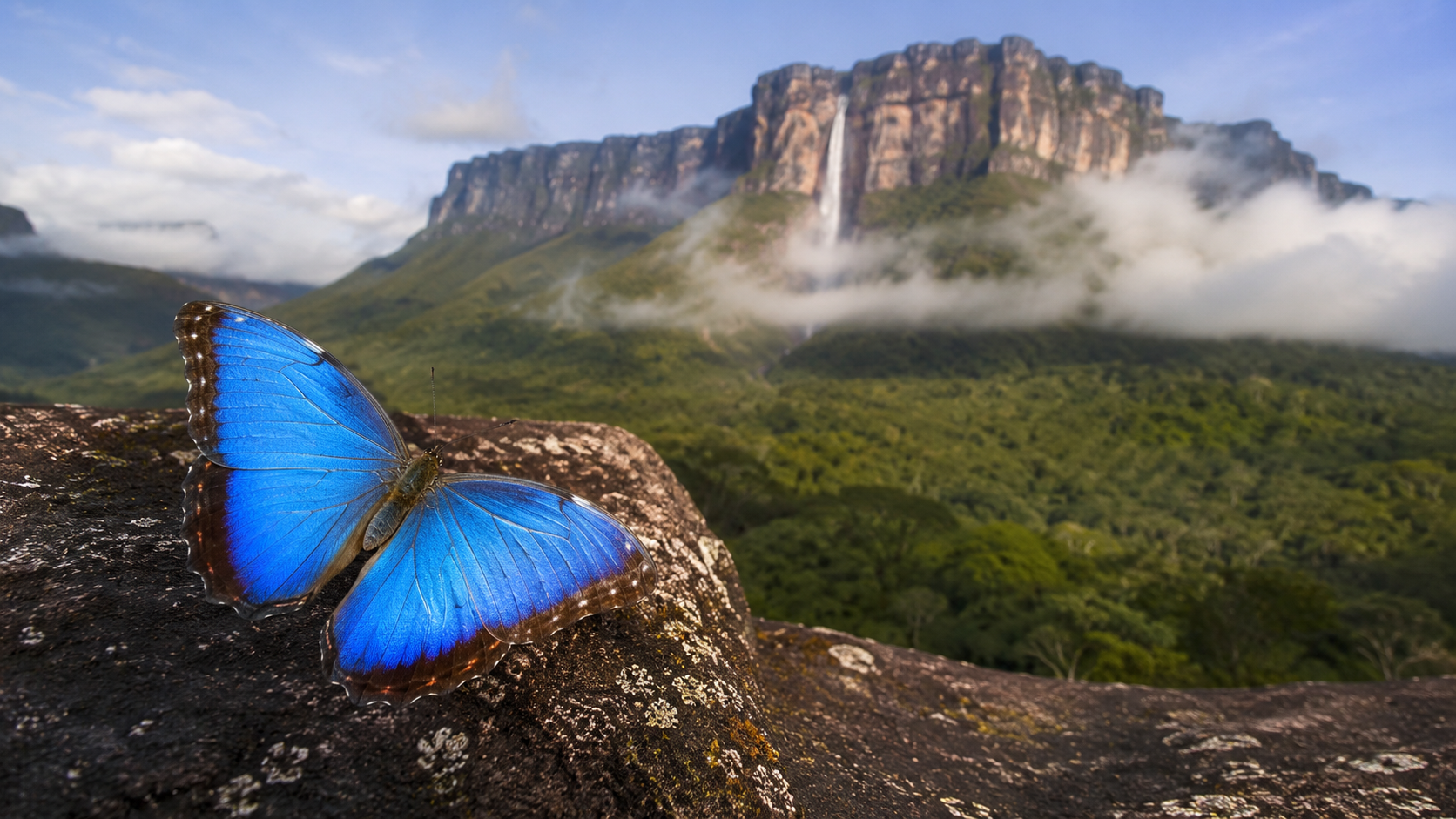
Venezuela: table mountains and tropical butterflies
Venezuela spans an extraordinary range of landscapes from the Caribbean coast in the north to the Amazon basin in the south, and from the Andean peaks of Mérida in the west to the ancient Gran Sabana plateau in the east. The country's most distinctive geographical feature — the tepuis — gives its butterfly fauna a character found nowhere else on Earth. About 1,500 species of day-flying butterflies are recorded here.
The tepuis: islands in the sky
The tepuis (from the Pemón language: tepuy, "house of the gods") are flat-topped sandstone mountains rising abruptly from the Gran Sabana grasslands in Bolívar and Amazonas states. Their vertical walls of 600–1,000 m isolate their summits as effectively as ocean separates islands. The most famous is Roraima (2,810 m), shared with Brazil and Guyana.
Because the tepui plateaux have been geographically isolated for tens of millions of years, many animal and plant species are found only on a single summit. In butterflies this means several strictly endemic species — forms that evolved from ancestral lowland populations that colonised the plateaux and then diverged in isolation. The cloud forests and boggy tepui meadows at high elevations hold these relict populations.
Canaima National Park (UNESCO World Heritage Site) encompasses the Angel Falls — the world's highest uninterrupted waterfall — and dozens of tepuis. This is the primary gateway for observing both tepui endemics and Amazonian lowland species on the approach rivers and trails.
Amazon basin (southern Venezuela)
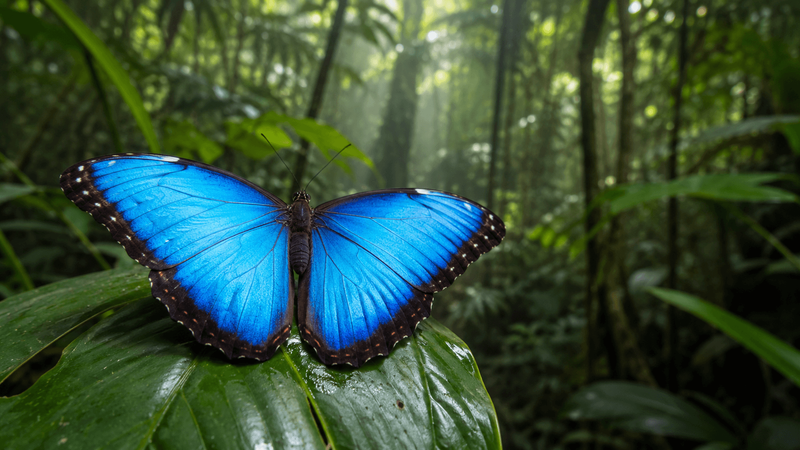
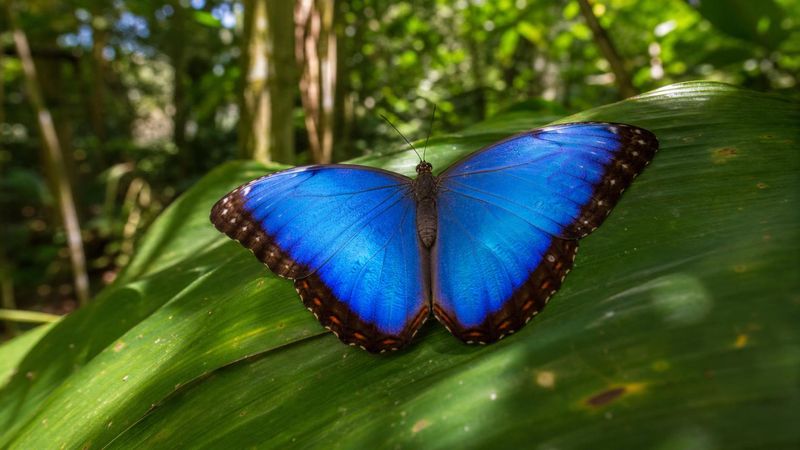
Southern Venezuela (Bolívar and Amazonas states) is part of the Amazon and Orinoco basins. Primary forest here harbours a standard Amazonian butterfly fauna: morphos (Morpho deidamia, M. helenor), owl butterflies (Caligo), Agrias with vivid red-and-blue patterns, Heliconius postman butterflies, and Prepona nymphalids that stay in the forest canopy.
River beaches along the Caura, Caroní, and Orinoco tributaries produce impressive puddling aggregations — sometimes dozens of species on a single wet sand patch.
Andean region (Mérida)
The Venezuelan Andes in the west, centred on Mérida state, rise to 5,007 m (Pico Bolívar). The cloud forest belt between 1,500 m and 3,000 m supports a mountain butterfly fauna distinct from both the tepuis and lowland Amazonia.
Common here are high-altitude swallowtails, mountain morphos, and a variety of blues and coppers adapted to the cooler Andean environment. The Mérida cloud forests are biologically connected with the Colombian Andes fauna to the north.
Llanos: seasonal savanna
The Llanos — Venezuela's vast seasonally flooded savanna — occupies the central Orinoco basin. During the dry season (December–April) the Llanos harbour open-country butterfly fauna: many sulphurs, whites, and skippers. Dramatic seasonal pulses of flowering plants during the first rains (May–June) trigger butterfly activity spikes. The Llanos are best known for birds and caimans, but entomologically they are underexplored.
Caribbean coast and Henri Pittier National Park
Venezuela's Caribbean coast and the mountains immediately behind it hold some of the most accessible butterfly observation in the country. Henri Pittier National Park — established in 1937, Venezuela's oldest — protects cloud forest descending from about 2,400 m to sea level within 50 km.
The park's northern slopes receive moisture from the Caribbean, creating lush forest at mid-elevations. The bird community is famous, but the butterfly fauna is equally rich: dozens of Heliconius forms, glasswing ithomiines, and spectacular swallowtails are regularly encountered on the Rancho Grande trail system. The reserve is approximately 100 km from Caracas.
Iconic species
Morpho deidamia — the predominant morpho species of Venezuelan Amazonia; large (wingspan 120–140 mm), brilliant metallic blue. Males patrol river edges at dawn.
Agrias amydon — a nymphalid with a bold pattern of red, blue, and black; inhabits primary forest canopy; descends to fermented fruit on the forest floor.
Parides sesostris — a large swallowtail with green patches on velvety black wings; found in lowland and foothill forest; larva feeds on Aristolochia.
Prepona antimache — a powerful, fast-flying nymphalid of the forest interior; metallic-blue bands on dark wings; attracted to rotting fruit traps.
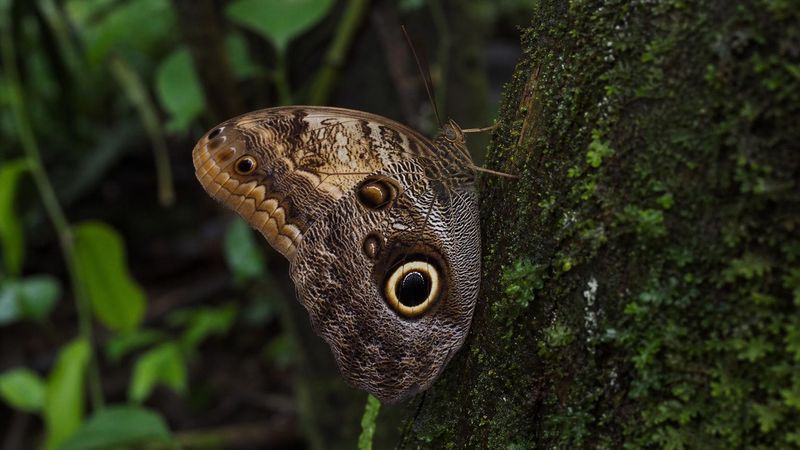
Caligo idomeneus — the large owl butterfly common in lowland Venezuela; the prominent "owl eye" spots on the underwing deter bird predators.
Best observation sites
Canaima National Park (Bolívar state) — UNESCO site; access by light aircraft from Ciudad Bolívar or Puerto Ordaz. Combines tepui scenery, Angel Falls, and excellent Amazonian butterfly fauna on riverside approaches.
Henri Pittier National Park (Aragua state) — 2–3 hours from Caracas by road; the Rancho Grande research station has trails through cloud forest with excellent morning butterfly activity.
Mérida and surroundings (Mérida state) — Andean city at 1,600 m; cable car access to high altitudes; mountain trails in Los Nevados National Park reach páramo zone where altitude-adapted species fly.
Caura river basin (Bolívar state) — remote but exceptional; one of Venezuela's last large untouched river systems; river beaches produce remarkable puddling assemblages.
Observation season
The best conditions in most of Venezuela coincide with the dry season: December–April. Roads are passable, trails are dry, and butterfly activity peaks at puddles and mineral licks along rivers. In the Llanos the dry season concentrates animals around permanent water, making observation easier.
In Amazonian southern Venezuela, butterflies fly year-round. The tepui summits are accessible mainly in the dry season, when helicopter and hiking access is feasible. The Caribbean slope (Henri Pittier) is good from December through March.
Conservation
Venezuela's butterfly habitats face several distinct threats. In the north, rapid expansion of cattle ranching and charcoal production has reduced and fragmented cloud forests along the coastal mountains. In the south, illegal gold mining (garimpo) contaminates rivers and destroys forest in Bolívar and Amazonas states. The tepui summits are relatively well protected within Canaima National Park, but illegal climbing and waste affect the most-visited summits.
Interesting facts
- Roraima tepui (Venezuela/Brazil/Guyana) inspired Arthur Conan Doyle's novel The Lost World (1912). The plateau's fauna does indeed include archaic isolated forms, including several unique butterfly species.
- The Canaima National Park covers 30,000 km² — roughly the area of Belgium — and contains more tepuis than any other protected area in the world.
- Some tepui butterfly species are known from fewer than ten collected specimens; their ecology and larval host plants remain completely unknown.