What Do Butterflies Eat?
Adult butterflies feed on flower nectar, fruit sap, and minerals from soil. Caterpillars eat leaves of strictly specific host plants.
Two Different Diets in One Life
A butterfly feeds in fundamentally different ways at different life stages. The caterpillar is a machine for consuming and processing plant matter. The adult is an elegant consumer of liquids. Both strategies fit their tasks: the caterpillar stores substances for metamorphosis; the imago maintains strength for reproduction and dispersal.
What the Adult Butterfly (Imago) Eats
Nectar — the main food
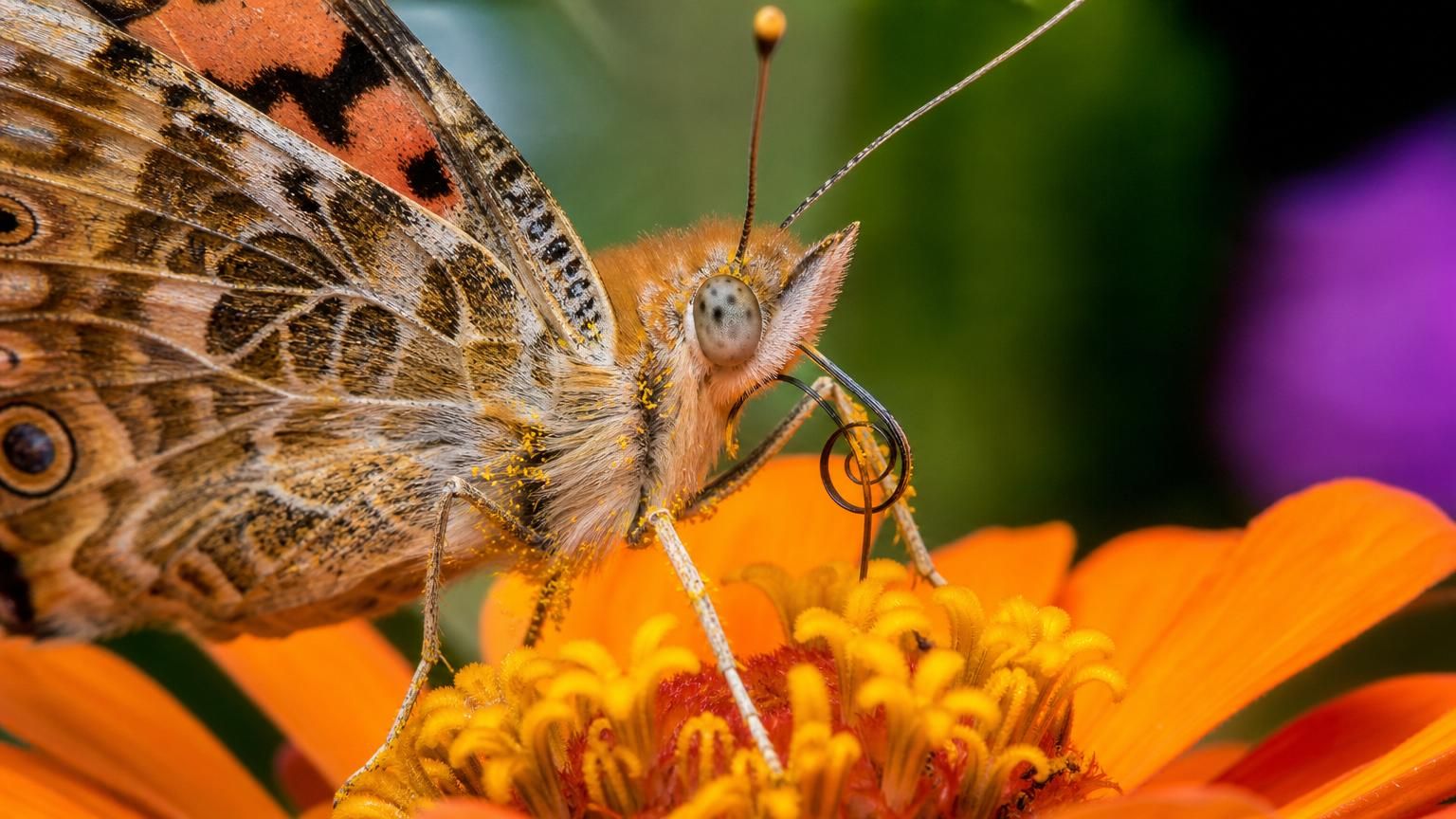
Most butterflies feed on flower nectar. Nectar is a sugar solution that flowers produce to attract pollinators. Butterflies take it up with the proboscis — a long, flexible organ coiled in a spiral at rest and unrolled when feeding.
The proboscis is formed from two elongated labial palps fused into a tube. The butterfly inserts it into a flower and sucks nectar. Proboscis length varies by species: those visiting deep tubular flowers have longer proboscises.
Favorite nectar plants of temperate-climate butterflies include:
- Thistles (Cirsium, Carduus)
- Clover (Trifolium)
- Ground ivy and other mints (Lamiaceae)
- Yarrow (Achillea)
- Lilac (Syringa) — in gardens
- Knapweeds (Centaurea)
- Butterfly bush (Buddleja davidii) — planted specifically to attract butterflies
Overripe fruit and tree sap
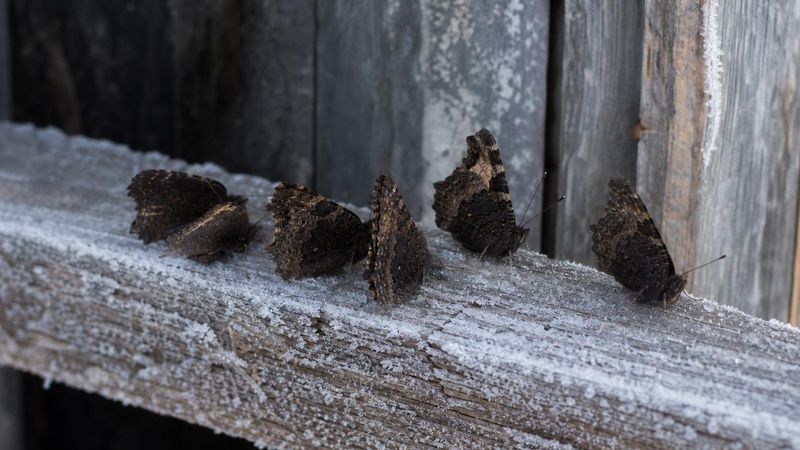
Several species readily feed on sap from overripe and fallen fruit — pears, plums, apples, berries. The mourning cloak, red admiral, and some nymphalids often gather at fermenting fruit under trees. Carbohydrates and amino acids from rotting fruit are a valuable food source.
Some species drink tree wounds — places where sap ferments under the bark (for example, oak sap attracts certain emperor moths and saturniids).
Puddling — feeding on minerals
Puddling (from English puddling) is behavior in which butterflies (mostly males) gather in groups on damp soil, at puddles, along riverbanks, or on animal carcasses and drink fluid.
This is not ordinary thirst: butterflies extract sodium, amino acids, and other minerals from soil and moist substrates that are scarce in nectar. Males transfer some collected minerals to females with the spermatophore during mating, which improves egg survival.
Puddling is common in many groups: blues, whites, swallowtails. Dozens of butterflies at a single puddle is an impressive sight.
Sweat, tears, and other fluids
In the tropics, butterflies feeding on sweat and tears of animals (including humans) are documented. In temperate climates this is rare but occurs. Butterflies landing on human skin are often drinking sweat for its salts.
Species that do not feed as adults
Some butterflies and many moths lack mouthparts entirely or have a rudimentary proboscis. They live on fat reserves accumulated as caterpillars. This includes many Saturniidae (giant silkmoths) — large, striking, but living only a few days as adults.
What the Caterpillar Eats
The caterpillar is the growth and storage stage. Its diet: leaves, stems, flowers, and sometimes fruit. Most species are quite selective about host plants.
Narrow and broad specialists
Some caterpillars are monophagous: they eat only one species or genus of plant.
- Small tortoiseshell caterpillar — only nettle (Urtica)
- Clouded Apollo caterpillar — only corydalis (Corydalis)
- Apollo caterpillar — only stonecrop (Sedum) and related succulents
Others are oligophagous: they accept several related plants.
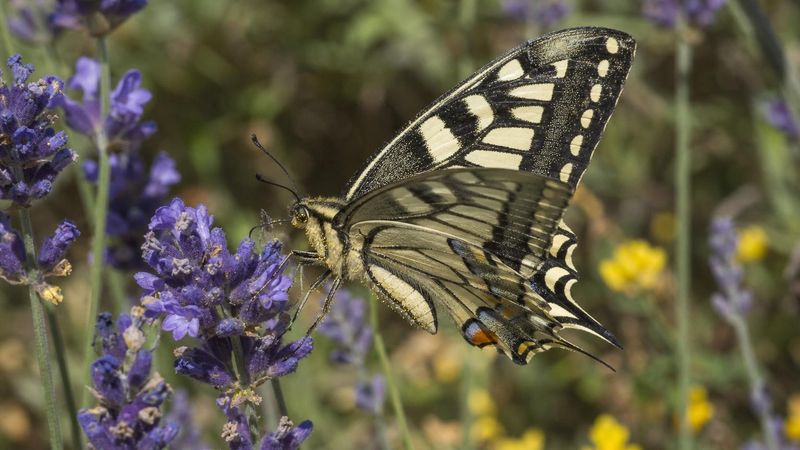
- Swallowtail caterpillar eats various umbellifers: carrot, dill, hogweed, angelica
- Large white caterpillar — crucifers: cabbage, radish, mustard
A third group are polyphagous: they eat a wide range of plants.
- Painted Lady caterpillar accepts thistles, nettle, mallow, pea, and many others
- Mourning cloak caterpillar — willow, aspen, birch, elm
Host plants and butterfly conservation
Availability of host plants is a key factor in species survival. When meadows with corydalis are plowed or converted to fields, the clouded Apollo disappears from the area. Loss of field flowers to herbicides deprives adults of nectar sources.
Want to attract butterflies to your garden? Plant nettle (for small tortoiseshell and peacock), parsley or dill (for swallowtail), clover and thistles (for painted lady and red admiral). Avoid insecticides on at least part of the plot.
For more on butterflies in ecosystems, see role of butterflies in nature.
See also