Butterfly Life Cycle
The butterfly life cycle has four stages: egg, caterpillar, pupa, and adult. Complete metamorphosis lasts from several weeks to several years.
Four Stages — One Life
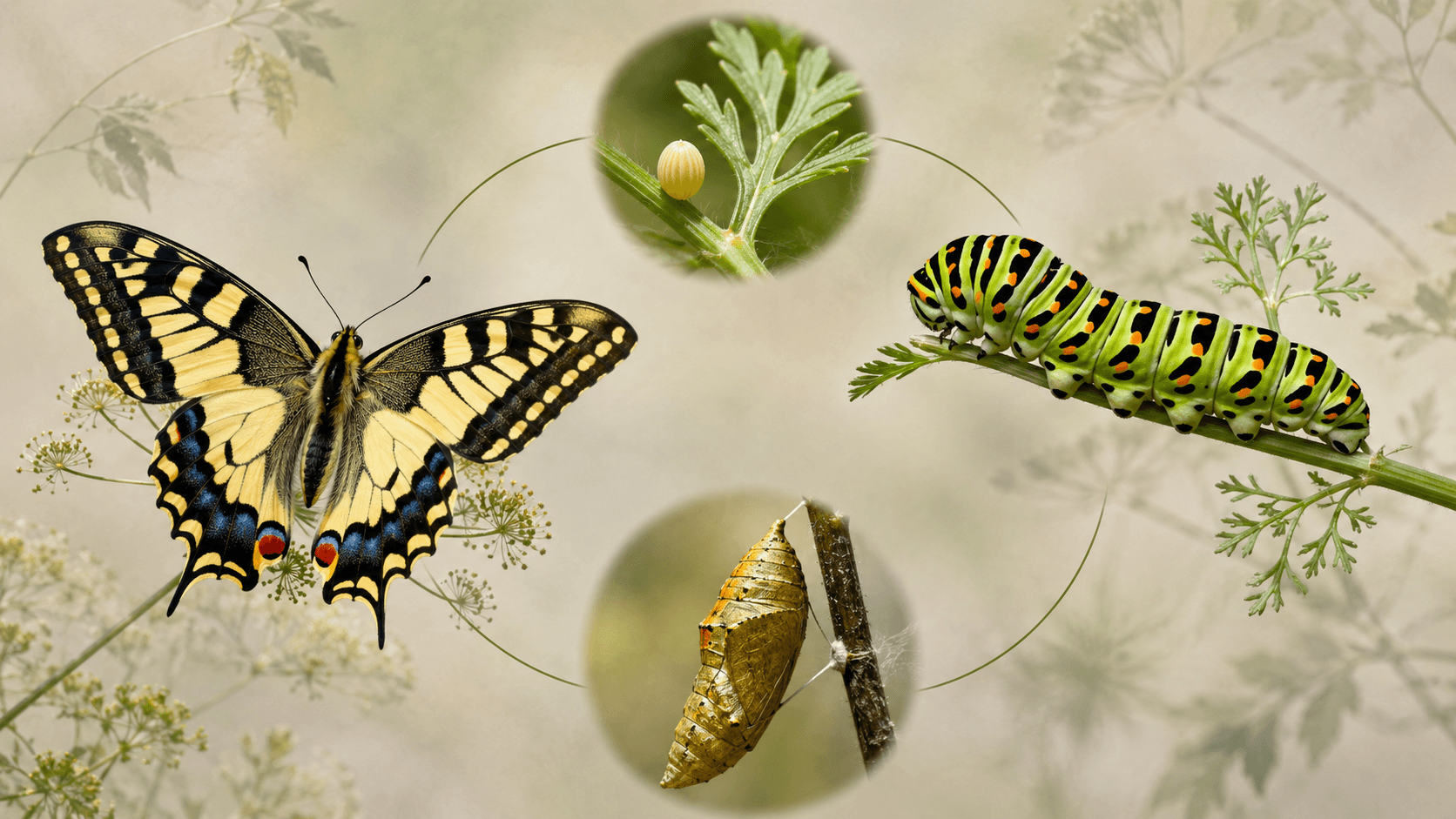
The butterfly life cycle is one of the clearest examples of complete metamorphosis in nature. The insect passes through four completely different stages, each optimized for its task. The larva grows, the pupa transforms, and the adult butterfly reproduces and disperses.
The full cycle of most temperate-climate species fits within one year — one generation per season. Some species produce 2–3 generations per summer; others stretch the cycle over two years.
Stage 1: Egg
The cycle begins with an egg. The female lays it precisely on the caterpillar's host plant — or in its immediate vicinity. Site selection is extremely precise: a mistake dooms the caterpillar.
Butterfly eggs vary in shape: spherical, barrel-shaped, ribbed, flat — each species lays eggs of its own form. Size ranges from fractions of a millimeter to 2–3 mm. Color is often green or cream, helping camouflage on foliage.
An embryo forms inside the egg. In warm weather the process takes 5–14 days. Eggs of species that overwinter at this stage survive several months at subzero temperatures.
Stage 2: Caterpillar
The newly hatched caterpillar first eats the egg shell — a source of valuable nutrients. Then the main work begins: eating leaves, stems, and flowers.
The caterpillar grows in steps: it molts 4–6 times, shedding its tight skin. Each interval between molts is called an instar. A first-instar caterpillar and a final-instar caterpillar can differ 100-fold in mass.
Stage duration varies greatly:
- 2–4 weeks — summer generations of most species
- 8–10 months — species that overwinter as caterpillars (some fritillaries, checkerspots)
- up to 2 years — individual arctic and alpine species
Before pupation the caterpillar stops eating, empties its gut, and chooses a pupation site.
Stage 3: Pupa
The pupa is the most mysterious stage. Outwardly it appears motionless, but inside a radical restructuring occurs: caterpillar tissues literally dissolve and reassemble into an entirely different creature.
Butterfly pupae are called chrysalides (from Greek chrysos — gold: some species have golden spots on the pupa). Unlike many nocturnal species, butterflies do not spin a cocoon — the pupa is exposed, attached to a plant or soil.
Attachment methods:
- Silk girdle + cremaster (hook on the tail) — most nymphalids and whites
- Cremaster only, head down — many species
Pupal coloration is often cryptic: green (on leaves), brown (on bark), gray (on stones).
Duration: 1–4 weeks in summer, 3–8 months for species that overwinter at this stage (swallowtail, large white).
Read more in the article pupa.
Stage 4: Imago
An adult butterfly — imago — emerges from the pupa. The wings are initially crumpled; the butterfly spreads them by pumping hemolymph and waits several hours until they harden.
The adult butterfly does not grow: its size and wing pattern are fixed from emergence. The imago's task is to find a mate and leave offspring. After laying eggs most females die.
Imago stage duration: from several days (species without a mouth) to 12 months (brimstone). Read more — how long butterflies live.
How Many Generations per Year
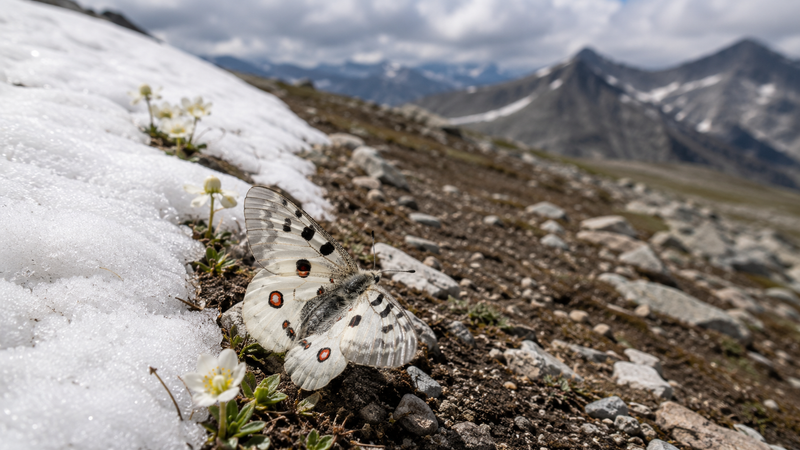
One generation (univoltine species) — most large species in temperate climates: swallowtail (in the north), Apollo, most fritillaries. The cycle takes exactly one year.
Two generations — large white, brimstone, some checkerspots. The first generation flies in spring (April–May), the second in summer (July–August).
Three or more generations — painted lady, large white in the south, some blues. In warm regions three to four generations complete per season.
Two years — arctic species: some tiger moths, individual satyrs and skippers in harsh climates.
Overwintering: At Which Stage Does a Butterfly Spend Winter
Different species "pause" the cycle at different stages:
| Overwintering stage | Example species |
|---|---|
| Imago | Small tortoiseshell, brimstone, peacock, mourning cloak |
| Pupa | Large white, swallowtail, scarce swallowtail |
| Caterpillar | Many fritillaries, checkerspots, some blues |
| Egg | Gypsy moth, some blues |
Read more in the article how butterflies overwinter.
Life Cycle and Seasonal Calendar
In Russia's temperate climate the active season runs from March through October. Species that overwinter as adults appear first — small tortoiseshell and brimstone (March–April). Peak diversity is June–July. The last butterflies disappear in September–October.
To study metamorphosis in detail — see the site's glossary section.
See also