Where Butterflies Live
Butterflies inhabit all climatic zones except Antarctica. We explore biotopes: tropics, meadows, forests, mountains, steppes, tundra, and cities.
Butterflies Everywhere — Except Antarctica
Lepidopterans have colonized nearly all terrestrial ecosystems on Earth: from tropical rainforests to arctic tundra, from sea level to altitudes above 5,000 m in the Himalayas. The only place without butterflies is Antarctica: there are no plants, and therefore no food base for caterpillars.
But species diversity is extremely unevenly distributed. One hectare of Amazon forest can contain more species than the entire territory of Great Britain.
Tropical Rainforests: Center of Diversity
The greatest number of species is concentrated in the tropical belt — especially in South America, Central Africa, and Southeast Asia.
Why the tropics are so rich:
- Warmth year-round — no cold season interrupting the life cycle. Many species produce 6–12 generations per year.
- Plant richness — a tropical forest hectare may hold 200–300 tree species. Since many butterflies are narrow specialists (caterpillars eat one plant genus), more plants = more butterfly species.
- Area and stability — tropical forests have existed continuously for millions of years without glaciations, allowing enormous diversity to accumulate.
The Amazon basin contains about 3,000 species of day-flying butterflies — more than all of Europe and Russia combined. Morphos with dazzling structurally blue wings, giant birdwings, and glasswings with transparent wings live here.
Temperate Meadows and Glades
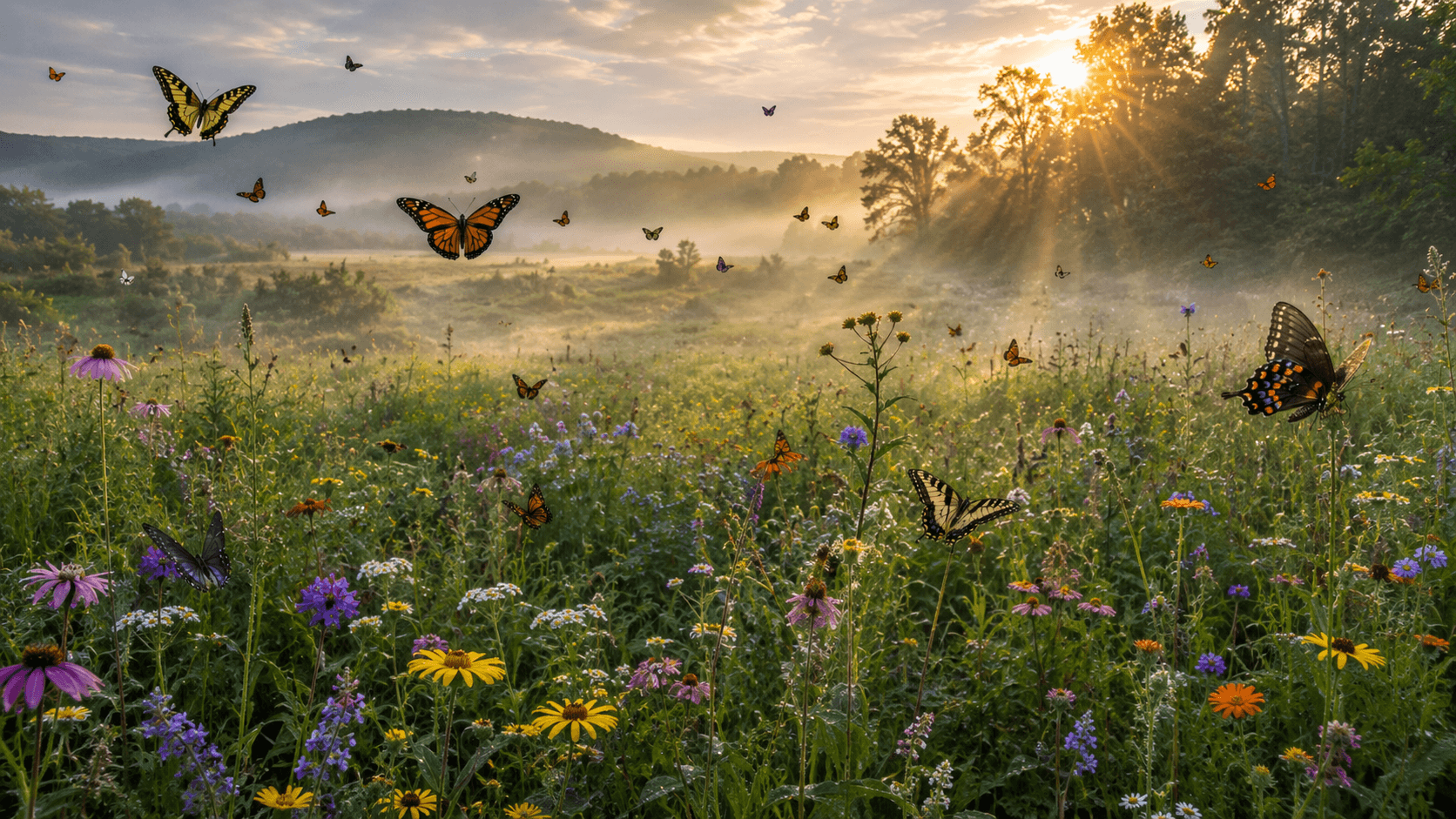
In Russia and Europe, meadows are the richest biotope for day-flying butterflies. Open space, diverse forbs for caterpillars, and flowers for nectar create ideal conditions.
What determines meadow richness:
- Diverse flora — meadows with 30–40 flowering plant species support many times more butterfly species than grass monocultures.
- Moderate use — traditional hay meadows (mown 1–2 times per year) are richer than intensively grazed or completely abandoned ones.
- Edge habitats — forest margins, shrub patches, and ditches add diversity: both meadow and forest species occur here.
On a good meadow in the central zone in summer you can find 30–40 day-flying butterfly species in a single day of observation.
Forests: Conditions for Specialists
Dark forest has few nectar flowers, so many species are absent. But light deciduous forests, glades, and river floodplains are biotopes with rich specialized fauna.
Deciduous forest (oak woods, alder groves, floodplain willow stands):
- Large and small purple emperor — males "patrol" tree tops
- White admirals — along aspen and poplar forest edges
- Hairstreaks — near oaks and birches
- Woodland fritillaries — in light openings
Coniferous forest (spruce and pine stands):
- Poorer than deciduous forest
- Blues on sun-warmed forest edges
- Some ringlets in mountain spruce forests
Mountains: Altitudinal Zonation
In mountains each altitudinal belt has its own set of species. The general trend: higher up, fewer species, but more specialized.
Lower belt (foothills, up to 800–1000 m): mix of lowland and mountain species. Often richer than the plain itself due to varied relief.
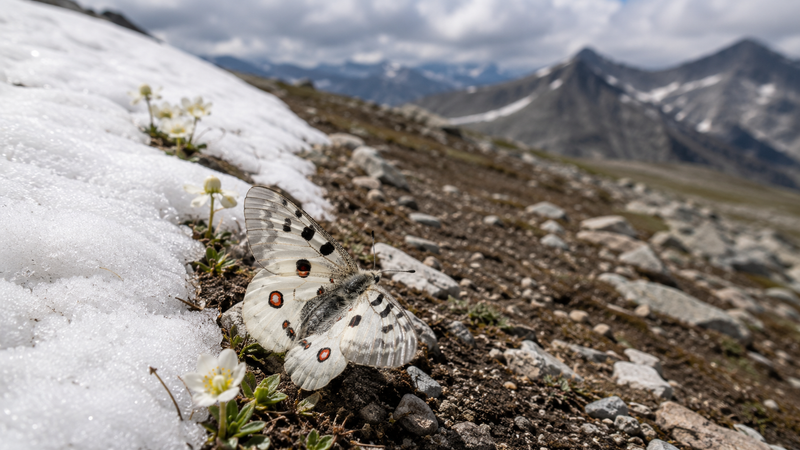
Subalpine belt (1000–2000 m): meadows with Apollo, ringlets, mountain blues, and sulphurs. Especially rich in the Caucasus and Altai.
Alpine belt (above 2000 m): extremely specialized fauna. Ringlets (Erebia) — the most species-rich mountain genus in Eurasia: about 30–40 species in Russia, many endemics of individual ranges. Apollo of Phoebus, high-mountain parnassians.
Why mountains have many endemics: isolation of mountain "islands" creates conditions for speciation. Two ranges separated by a valley — populations isolated for thousands of years diverge into separate species.
Steppes and Semideserts
Russia's steppe zone — from Orenburg to Altai and from Rostov to Stavropol — supports a specific steppe fauna.
- Sulphurs (Colias) — yellow and orange, fast darting flight
- Blues (Polyommatus, Lysandra) — many steppe specialists
- Eastern dappled white (Zegris eupheme) — white with orange; steppes only
- Scarce swallowtail — near steppe shrubs (blackthorn, steppe cherry)
- Checkerspots and fritillaries — on diverse steppe grasslands
Steppe fauna has suffered especially from plowing: most southern Russian steppes have been converted to fields. Intact steppes with rich butterfly communities survive only in nature reserves and on chalk slopes.
Tundra: Few but Hardy
Arctic and subarctic tundra holds a fair number of species — about 30–50 depending on zone. But all are exceptionally cold-tolerant.
- Flight season very short — 3–5 weeks per year
- Caterpillars may develop 2–3 years, overwintering several times
- Small species: blues, ringlets (in mountain tundra), sulphurs
- Clouded sulphur (Colias palaeno) — one of the northernmost species; reaches arctic forest-tundra
Some species penetrate to 70–72° N. Tundra butterflies are important pollinators: few other insects live there.
Islands and Coastal Zones
Islands are evolution laboratories. Isolated populations eventually become separate species. Madagascar, Sri Lanka, and the Canary Islands have high percentages of endemics.
Sea coasts themselves are not species-rich, but dunes and coastal meadows hold specific species: coastal blues, several whites.
Cities and Agroecosystems
Urban environments are complex biotopes. Synanthropic species have adapted well:
- Small tortoiseshell, peacock — wherever nettles grow on vacant lots
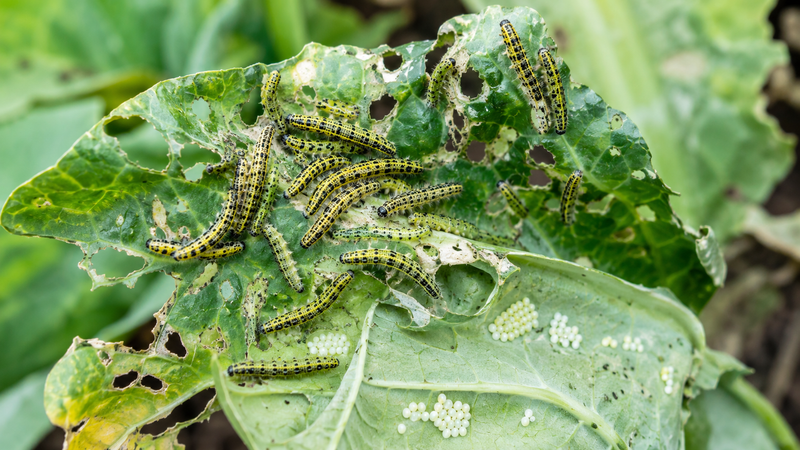
- Large white, green-veined white — on allotments with crucifers
- Red admiral, painted lady — in gardens with thistles and buddleia
- Brimstone — in parks with buckthorn
Urban "green islands" — parks, botanical gardens — can support 20–30 butterfly species even in large cities.
What Determines a Species' Range
For most butterflies distribution is limited by the caterpillar's host plant. No plant — no butterfly. Additional factors:
- Minimum temperature — many tropical species cannot tolerate frost
- Humidity — some species are strictly tied to bogs, others to dry slopes
- Soil — for example, Apollo is tied to limestone outcrops where stonecrop grows
- Specific conditions — Apollo blue requires both thyme and ants of a particular species: without both components it cannot survive
Where to Watch Butterflies in Russia
Maximum diversity:
- Primorsky Krai — intersection of Siberian and East Asian fauna; unique Far East species
- Caucasus — mountain meadows, subtropical gorges, more than 200 day-flying species
- Altai — mountain and steppe species, many endemics
Accessible places:
- Any diverse meadow in the central zone in June–July
- Deciduous forest edges with rich understory
- River banks with willows and umbellifers
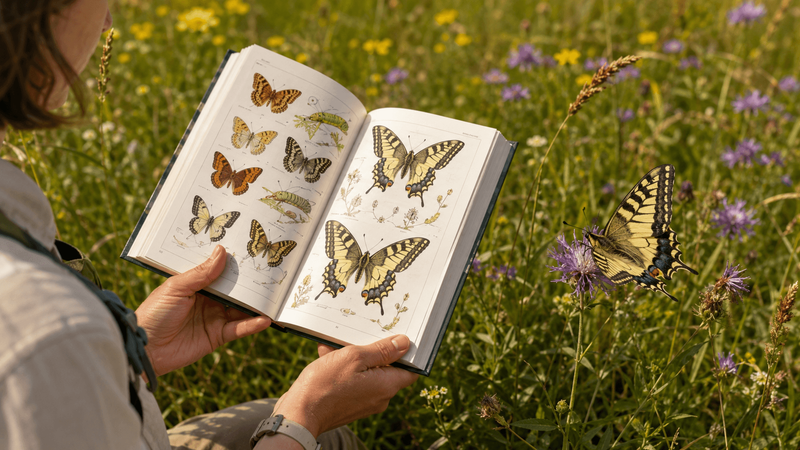
More on species by region — in the atlas. On biotopes for identification — in the identification guide by location.
See also