Russia
Guide to butterflies of Russia: from tundra to Caucasus subtropics — more than 300 species of day-flying butterflies in the world's largest country.
Butterflies of Russia: overview
Russia is the world's largest country, and its Lepidoptera fauna matches that scale. More than 300 species of day-flying butterflies occur here, and together with nocturnal moths the total number of Lepidoptera species exceeds 2,000. This diversity is explained by the enormous range of landscapes: from Arctic tundra to the subtropics of the Black Sea coast, from European forests to the Manchurian taiga of Primorye.
Climate zones and their butterflies
Tundra and forest-tundra
In Arctic and subarctic areas species diversity is minimal. Mainly hardy species occur here: certain blues, sulphurs (genus Colias), and Arctic fritillaries. The flight season is very short — July–August.
Taiga
The coniferous forests of Siberia and the Russian North support moderate diversity. Characteristic species include the Mourning Cloak (Nymphalis antiopa), Brimstone (Gonepteryx rhamni), several fritillaries and checkerspots. The further south, the richer the fauna.
Mixed forests and forest-steppe
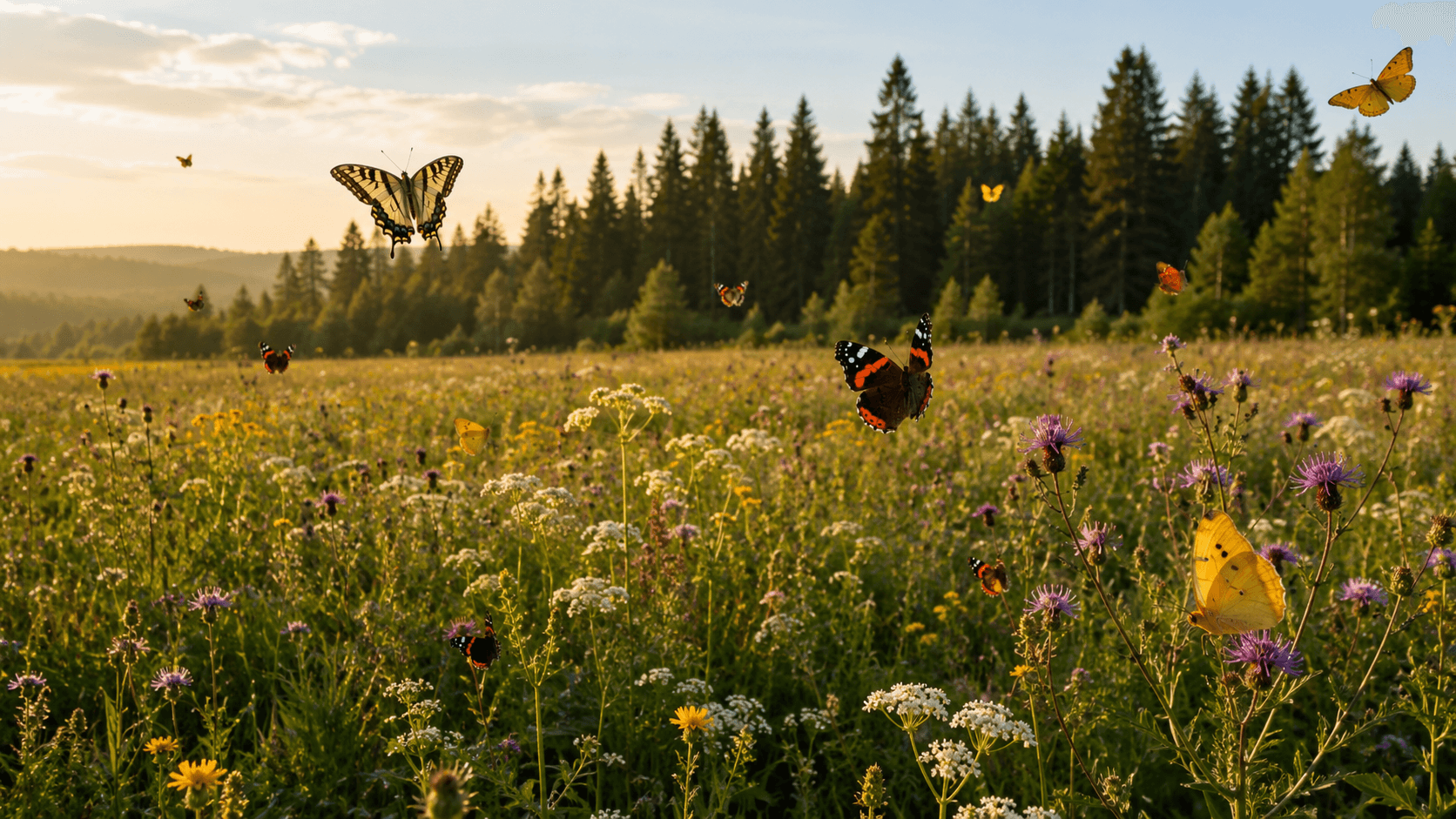
The zone of greatest species diversity in European Russia. Most familiar species live here: Small Tortoiseshell, Peacock, Red Admiral, numerous fritillaries and blues. Steppe species appear in the forest-steppe — coppers, dark-winged whites, and several checkerspots.
Steppes
The open steppes of southern Russia are rich in unique species. Steppe blues, Orange Tip (Anthocharis cardamines), Dryad (Minois dryas), and a number of rare fritillaries occur here.
Caucasus
The Caucasus mountain system is Russia's richest region for butterfly species. Diversity of altitudinal belts allows subtropical, montane, and steppe species to coexist. Caucasian endemic subspecies and rare species live here, including those listed in the Red Data Book.
Urals and mountains of southern Siberia
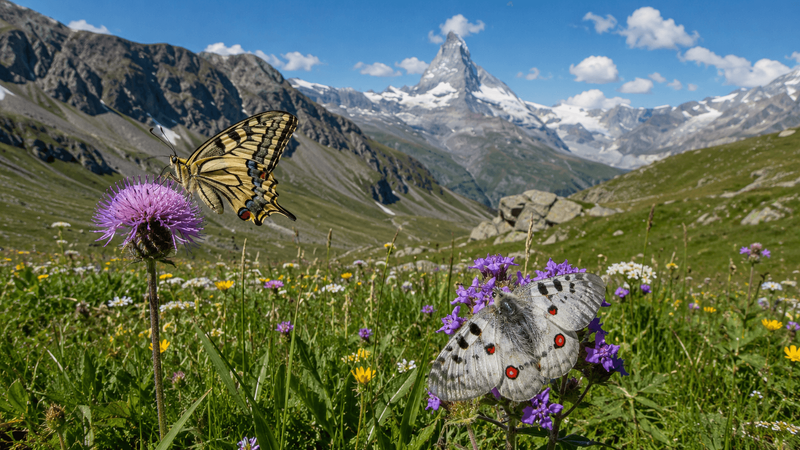
Mountain areas — the Urals, Altai, Sayan Mountains — are distinguished by high-altitude species: Apollo (Parnassius apollo), several species of apollos and high-mountain blues.
Primorye and the Russian Far East
The Russian Far East is a separate biogeographic region with Manchurian and East Asian elements in its fauna. Species that occur nowhere else in Russia are found here: Maack's Swallowtail (Papilio maackii), Great Purple Emperor, and the relict Great Capricorn Beetle. Cedar-broadleaf forests of Primorye are especially important for butterflies.
Most common species
Several species occur throughout Russia's temperate zone and are familiar to everyone:
- Small Tortoiseshell (Aglais urticae) — orange with black spots and blue marginal spots. One of the first butterflies in spring: overwinters as an adult.
- Brimstone (Gonepteryx rhamni) — bright yellow male and whitish-green female. Holds the record for longevity among European butterflies — up to 12 months.
- Large White (Pieris brassicae) — white with black corner spots. Found everywhere crucifers grow.
- Peacock (Aglais io) — dark maroon with four bright "eyes" on the wings. Overwinters as an adult, flies from early spring.
- Red Admiral (Vanessa atalanta) — dark brown with a scarlet band. Partial migrant, arriving from the south.
- Swallowtail (Papilio machaon) — yellow with black pattern and characteristic "tails" on the hindwings. Russia's best-known large butterfly.
Rare and protected species
Several species are listed in the Red Data Book of the Russian Federation:
- Apollo (Parnassius apollo) — white with red spots, lives in mountains, population declining.
- Clouded Apollo (Parnassius mnemosyne) — semi-transparent white, without tails, found in forest areas with Corydalis.
- Large Blue (Phengaris arion) — blue with black spots, a rare species of steppes and limestone slopes.
When and where to observe
Best period: mid-May — end of August. Peak diversity — June–July.
Good locations:
- Meadows and edges of mixed forests
- River banks with diverse herbaceous vegetation
- Mountain meadows of the Caucasus and Altai (July)
- Forest clearings with nectar plants
Practical tip: butterflies are most active on warm sunny days from 10 a.m. to 4 p.m. In cloudy weather most species hide in foliage.
How to use the atlas
If you encounter an unfamiliar butterfly, use the wing colour field guide or the size field guide. To understand systematics, start with the butterfly families section: nymphalids, swallowtails, whites, blues.
See also