How Long Do Butterflies Live?
A butterfly’s lifespan depends on the species: some live only a few days, others nearly a year. Here is what determines longevity.
The Adult Is Not the Whole Life
When people ask “how long does a butterfly live,” they usually mean the adult stage — the imago. But the full life cycle has four stages: egg, caterpillar, pupa, and imago. Together they can last from a few weeks to several years.
The adult stage is often the shortest. Its biological task is simple: find a mate, mate, and lay eggs. For that, a long life is not required.
Short-Lived Species: Days and Weeks
Most butterflies live only briefly as adults — from a few days to about a month.
The large white (Pieris brassicae) lives about 2–3 weeks as an adult. In one summer it can produce 2–3 generations.
The swallowtail (Papilio machaon) is large and striking, yet its adult stage in temperate climates lasts only 2–4 weeks. The caterpillar is conspicuous and lives several weeks.
Fritillaries (Argynninae) and melitaeas (Melitaea) — most species in these groups live 2–4 weeks as adults.
Blues are small but important pollinators. Most species live 1–3 weeks as adults.
Some species are true records for brevity: certain small moths live only 2–5 days as imagos, and some lack a mouth entirely.
Long-Lived Species: Nearly a Year
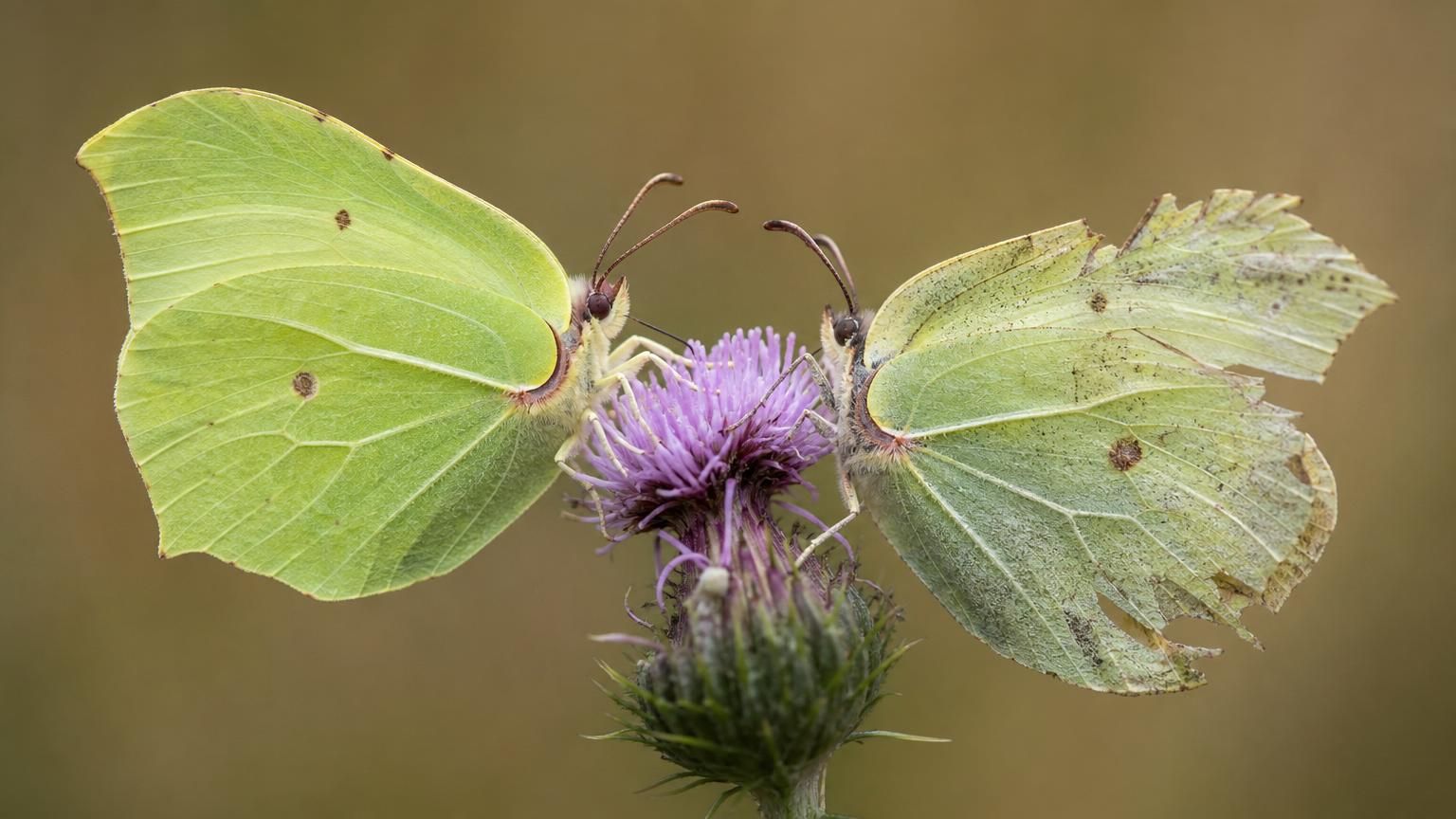
Among European day-flying butterflies, the longevity record belongs to the brimstone (Gonepteryx rhamni) — it can live up to 10–12 months.
In summer the brimstone builds fat reserves, enters diapause in evergreen foliage (ivy, mistletoe) in autumn, and wakes early in spring — one of the first butterflies of the year. This strategy lets it survive winter without warm shelters.
Other long-lived species:
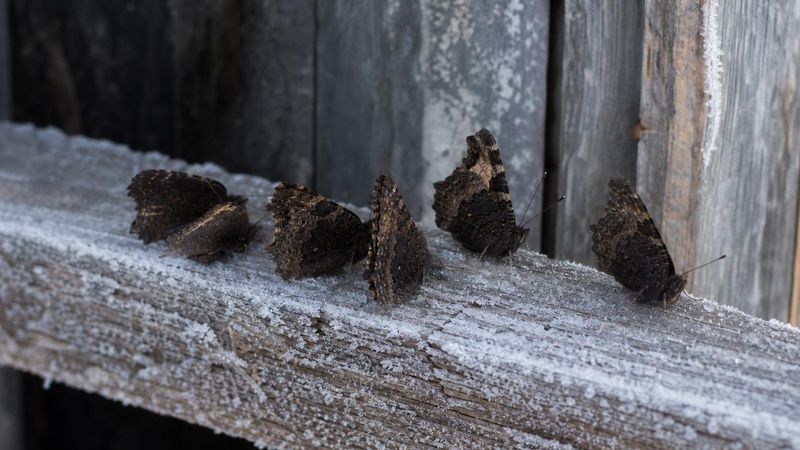
The small tortoiseshell (Aglais urticae) lives about 9–10 months. In autumn it finds winter shelter: an attic, cave, or tree cavity, and overwinters in torpor.
The European peacock (Aglais io) follows a similar strategy to the small tortoiseshell, living 8–10 months.
The mourning cloak (Nymphalis antiopa) is among the longest-lived in North America and Eurasia, up to about 10–11 months.
The red admiral (Vanessa atalanta) — in warm parts of its range it overwinters as an adult and lives 6–9 months.
Monarch: the Long-Distance Migrant
A special case is the monarch (Danaus plexippus). Its generations live very differently. Summer “ordinary” generations live 2–5 weeks. But the autumn “migratory” generation lives 6–8 months: butterflies fly thousands of kilometers to overwintering sites in Mexico or California, winter there, and begin the return journey in spring.
The Full Life Cycle
From egg to natural death of the adult, most temperate species complete the cycle in one year (one generation per year). Some species produce 2–3 generations per season in favorable conditions. Certain alpine and arctic species stretch the cycle to two years.
For developmental stages in detail, see metamorphosis.
What Affects Lifespan
Temperature. Warmth speeds metabolism and shortens life. In cool conditions adults live longer.
Food. Adults feed on nectar, overripe fruit sap, or not at all. Food availability directly affects survival.
Predators. Birds, spiders, dragonflies, and robber flies are main enemies. Most individuals die before their biological limit because of predation.
Reproductive strategy. Species that lay eggs soon after mating need little time as adults. Species that must survive until the next season have evolved diapause and overwintering.
To learn how butterflies survive winter, read how butterflies overwinter.
See also