Butterflies in Summer
Summer is the peak of butterfly diversity. Which species fly from June to August, where to find and observe them, and their behaviour and reproduction.
Summer — high season for butterflies
From June to August in central Russia and Central Europe between 50 and 100 species of day-flying butterflies fly simultaneously — depending on the region and habitat. This is several times more than in spring or autumn. The summer maximum is created by several waves: the second generation of overwintering adults, new single-brooded species, and the first representatives of the autumn flight.
Species by month
June
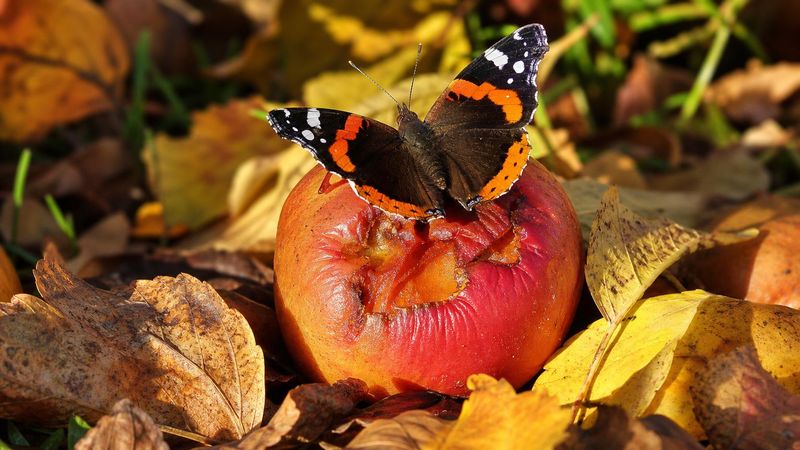
June is the month of swallowtails and fritillaries. Flying are the Old World swallowtail (Papilio machaon), scarce swallowtail (Iphiclides podalirius), Apollo (Parnassius apollo) in the mountains. Of the nymphalids, all fritillaries are active — high brown fritillary (Argynnis paphia), Queen of Spain fritillary (Issoria lathonia), pearl-bordered fritillary (Boloria selene). The red admiral (Vanessa atalanta) is widespread — second spring generation. The flight of browns begins — marbled white (Melanargia galathea) and speckled wood (Pararge aegeria).
July
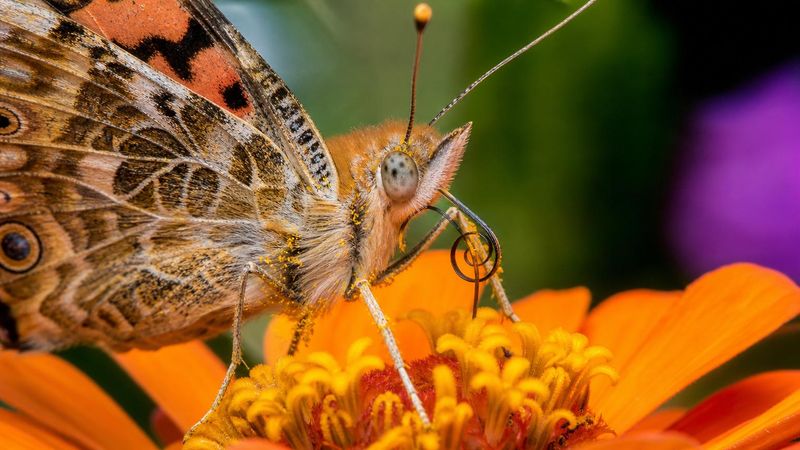
July is the absolute peak. To the June species are added large browns, all generations of blues (common blue Ikarus, Amanda's blue Amanda), the second generation of whites. On meadows with umbellifers the painted lady (Vanessa cardui) flies in numbers. In forests the purple emperor (Apatura iris) appears, associated with willow floodplains.
August
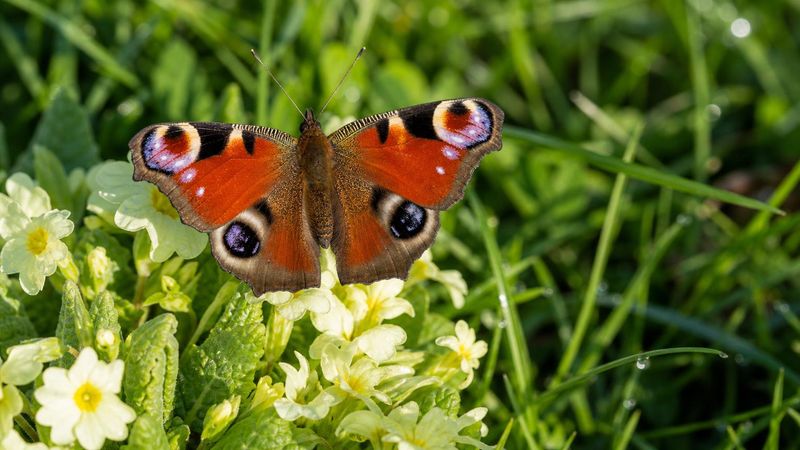
By mid-August diversity begins to decline. Still flying are the second generation of large whites and small whites, blues, and clouded yellows. The first signs of the autumn flight appear: overwintering adults — small tortoiseshell and peacock — shift to "autumn mode," building fat reserves.
Summer behaviour
Thermoregulation
Butterflies are poikilothermic: body temperature depends on the environment. On a hot day at +28–32 °C they spread their wings perpendicular to the sun's rays, warming their thoracic muscles to a working temperature of ~35 °C. When overheating they fold their wings edge-on to the sun or seek shade.
Summer activity is therefore biphasic: morning peak (9–11 h) and evening peak (16–19 h). During midday heat most species are inactive.
Puddling
Hot summer is the puddling season. At puddles, wet roads, and river banks groups of male blues, whites, and swallowtails gather. They suck up water with dissolved mineral salts — sodium, potassium, and amino acids. The obtained substances are passed to the female together with the spermatophore: the "richer" the male, the higher the survival rate of his offspring.
Reproduction
Most species reproduce in summer. Females seek host plants for egg-laying: the small tortoiseshell uses nettles, the large white uses cabbages and mustard, the common blue uses clover and alfalfa. Caterpillars of the summer generation develop faster than spring ones — high temperature speeds up metabolism.
Best summer habitats
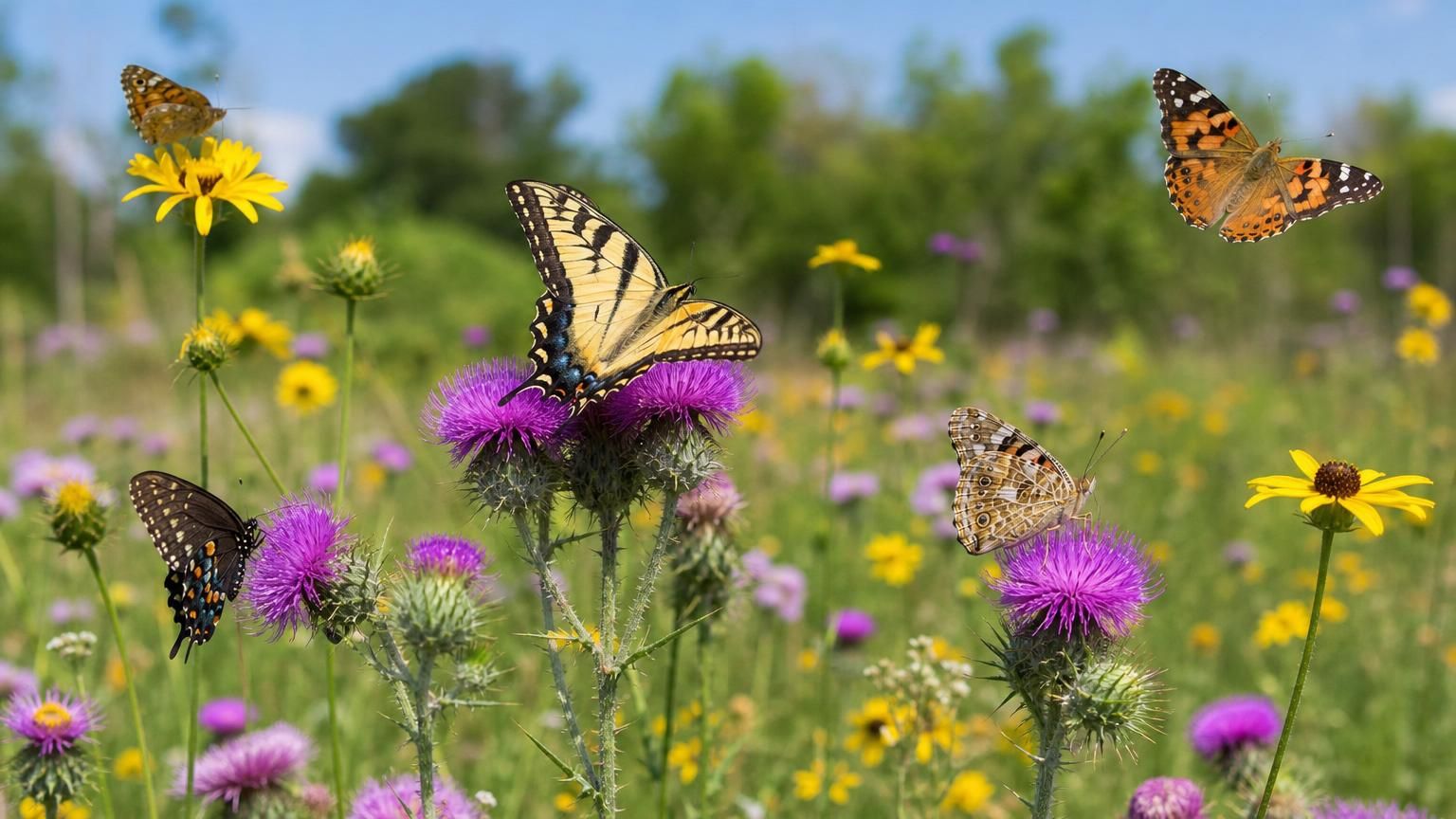
Flowering meadows — the main place for summer butterflies. Thistles, yarrow, clover, and buddleia attract dozens of species. In regions with preserved unmown meadows diversity is at its maximum.
Forest edges and glades — hunting ground for purple emperors, fritillaries, and hairstreaks. An additional requirement — umbellifers for swallowtails.
Mountain meadows and alpine zones — concentration of rare species. In the Caucasus and Altai at 1,500–2,500 m elevation in July one can encounter the Apollo, clouded Apollo, and mountain browns.
River banks — puddling spots and hunting ground for purple emperors. Willow-aspen floodplains are the habitat of the purple emperor (Apatura iris).
Observer's tips
- Arrive at a meadow between 9 and 11 o'clock — when butterflies are already active but not yet as wary as at midday.
- Puddling is easiest to observe at muddy puddles on unpaved roads after rain on a hot day.
- Photographing a summer butterfly is easier with side lighting — the raised forewings cast shadow, and the pattern reads well.
Interesting facts
- In July, up to 60 species of day-flying butterflies have been recorded in the Moscow region in a single day — a record for a temperate climate.
- The red admiral (Vanessa atalanta) undertakes a summer migration from North Africa to Scandinavia — a distance of up to 4,000 km.
- Some summer caterpillars undergo diapause (suspended development) during long days, holding "summer caterpillars" over until autumn — an adaptation to unpredictable climate.