Amanda's Blue
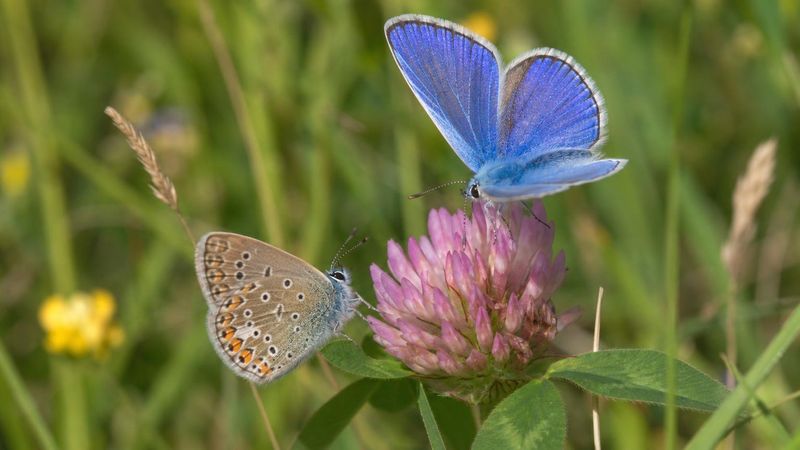
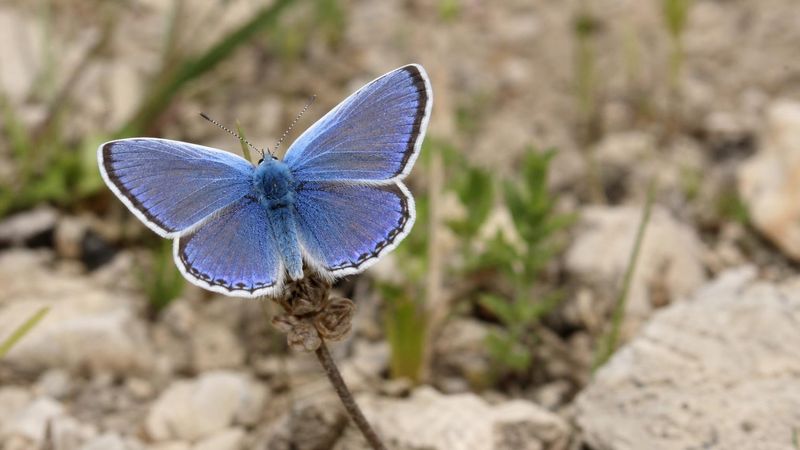
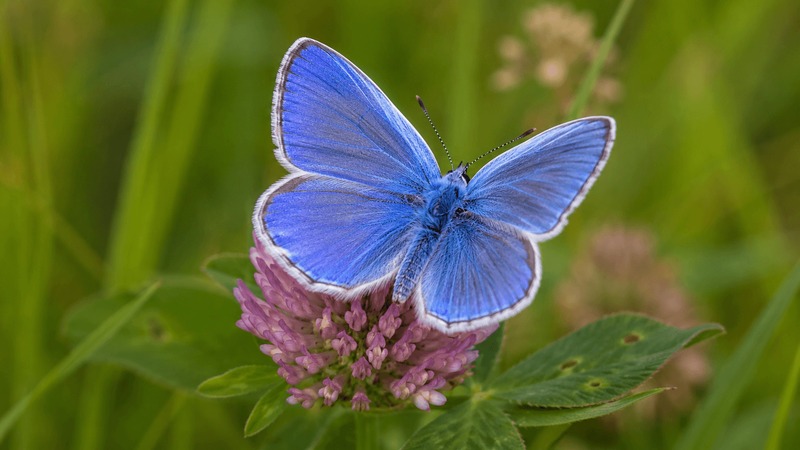
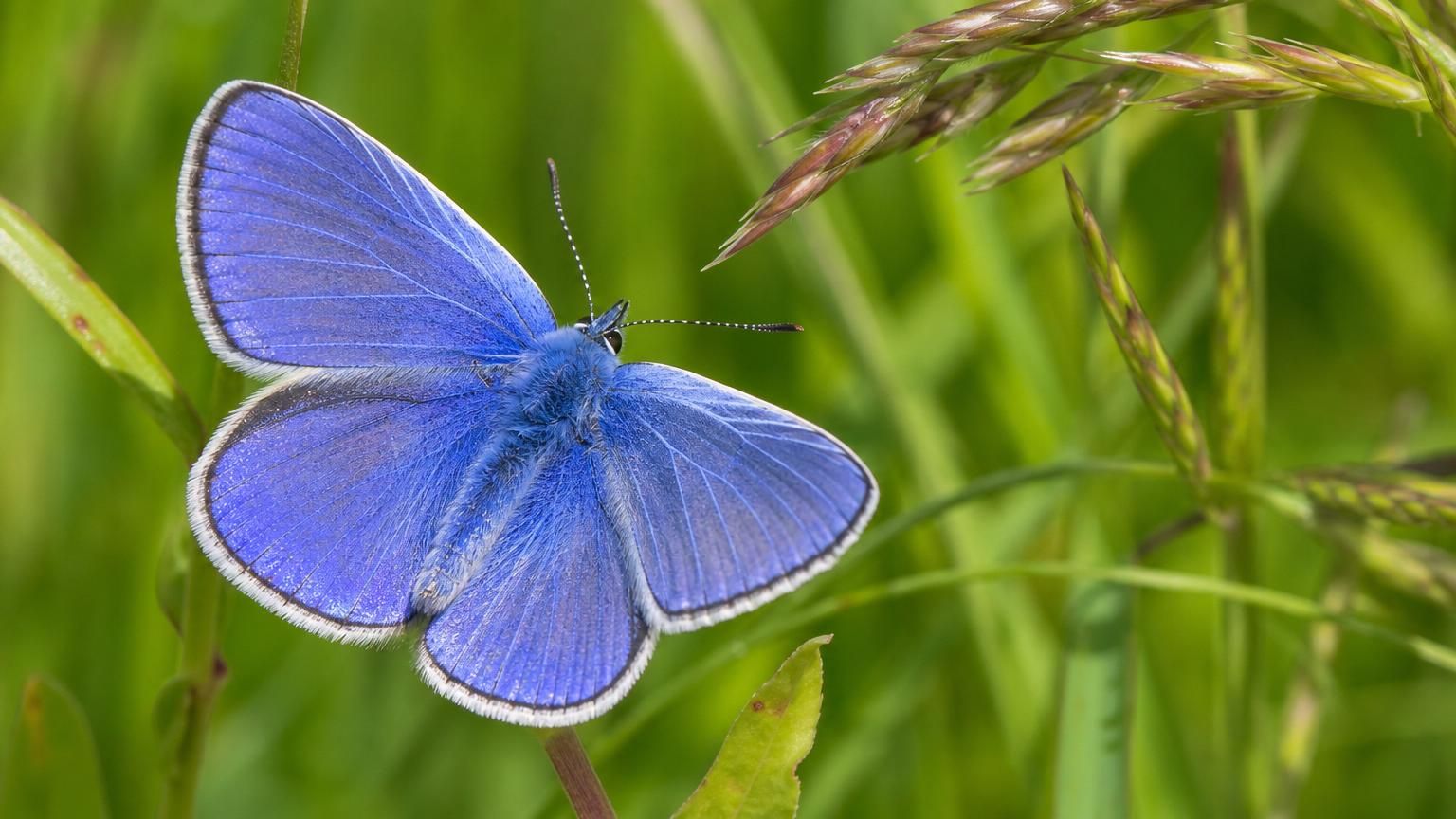
Amanda's blue is a large blue with vivid blue wings. Males are intense blue without orange lunules, unlike most related species.
Key facts
- Latin name
- Polyommatus amandus
- Family
- Lycaenidae
- Wingspan
- 30-40 mm
- Flight season
- May — July
- Host plants
- Mouse vetch, Grass pea, Sweet pea
- Conservation status
- LCLeast Concern
Appearance
Amanda's blue (Polyommatus amandus) is one of the larger blues with a wingspan of 30–40 mm. Male: upper side intensely blue with a broad gray-dark border. Female dark brown, sometimes with slight blue at the wing base.
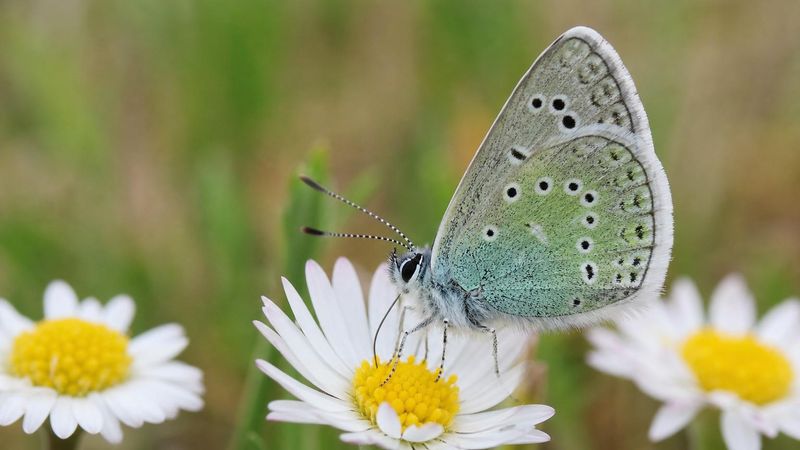
Underside pale gray-brown with rows of black spots in white rings and no orange lunules along the margin — unlike common blue.
Range and habitat
Found in Europe and temperate Asia. In Russia in the European part and Siberia.
It prefers damp meadows, river floodplains, and forest edges and glades. More demanding than common blue — needs abundant vetch and grass pea.
Life cycle
One generation per year. Flight May–July, peak in June.
Eggs on leaves and stems of vetch. Caterpillar green. Like most blues it attracts ants. Pupa overwinters in soil.
Ecology
Amanda's blue is a useful indicator of damp meadow condition. Drainage and intensive mowing reduce numbers across much of Europe.
Butterflies visit nectar plants: clover, thyme, alfalfa. Males aggregate on damp soil patches.