Common Blue
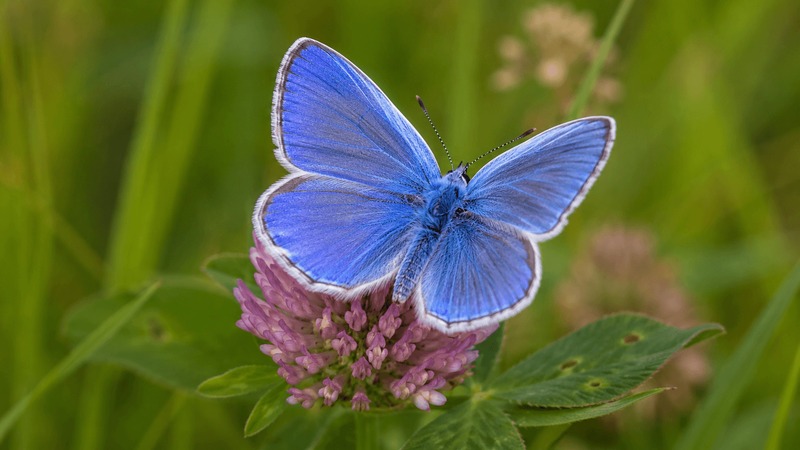
The common blue is one of the most widespread blues of the temperate zone and Eurasia. Males are intensely blue, females brown. It occurs on any meadow with clover.
Key facts
- Latin name
- Polyommatus icarus
- Family
- Lycaenidae
- Wingspan
- 28-38 mm
- Flight season
- April — October
- Host plants
- Red clover, Bird's-foot trefoil, Alfalfa, Vetch
- Conservation status
- LCLeast Concern
Appearance
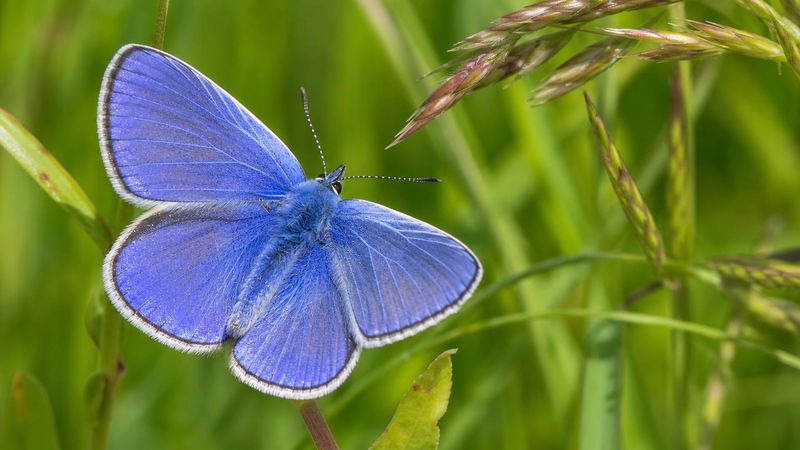
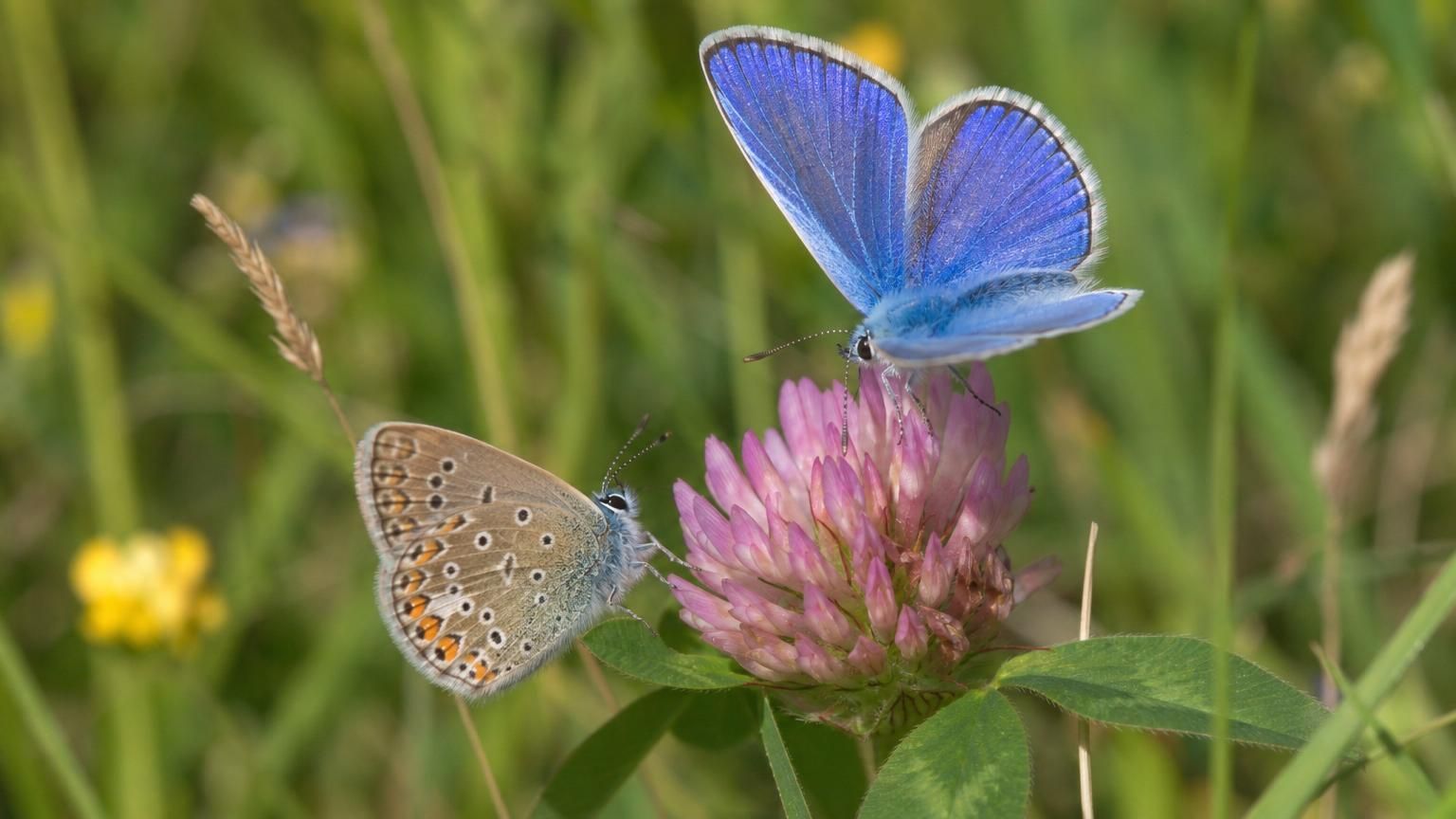
The common blue (Polyommatus icarus) is a small butterfly with a wingspan of 28–38 mm. Male: upper side intensely blue with a narrow black border. Female: brown with a row of orange lunules along the hindwing margin; some females are partly blue (polymorphic "blue" form).
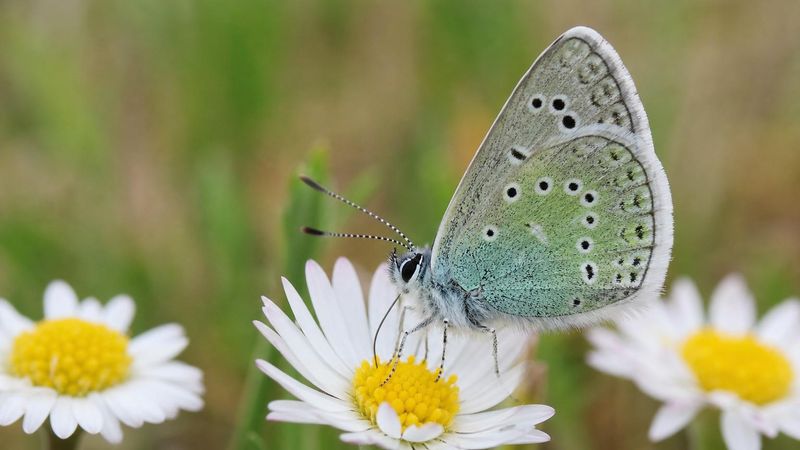
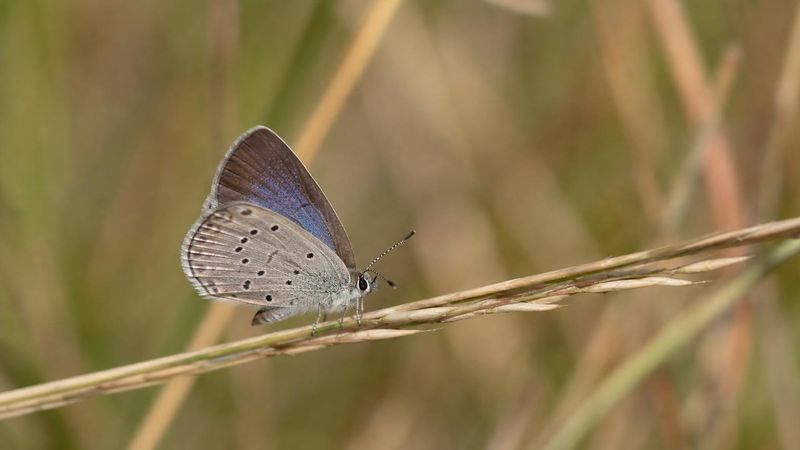
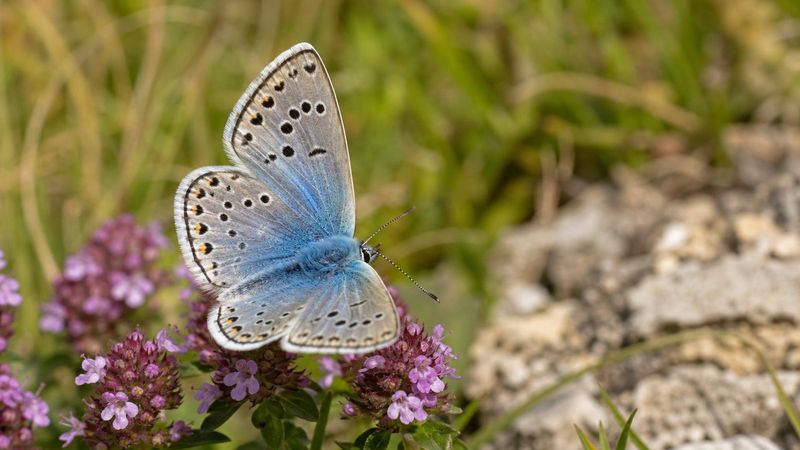
Underside in both sexes gray-brown with numerous black spots in white rings and orange lunules along the margin — the standard "blue" pattern.
Range and habitat
The common blue is one of the most widespread Lepidoptera in the world. It occurs across Europe and temperate Asia to Mongolia. In Russia it is common everywhere.
It lives on open meadows, glades, roadsides, and gardens. The only requirement is legumes. It also colonizes urban lawns with clover.
Life cycle
2–3 generations per year. Caterpillar overwinters. First adults appear in April–May.
Eggs singly on leaves and stems of legumes. Caterpillar green, band-shaped, with pale lateral stripes. It has organs that attract ants, which guard the caterpillar. Pupa squat, olive-colored.
Symbiosis with ants
Like most blues, the caterpillar secretes sweet fluid through a special dorsal gland. Ants "milk" the caterpillar and in return protect it from parasites and predators. More detail — in the article Family Lycaenidae.
Behavior
The common blue is small but very active. Males hold open meadow patches and rise to meet any small butterfly passing nearby. They readily feed on nectar of clover, alfalfa, burdock; while feeding they often quiver their wings. In hot weather they rest with wings folded, hidden in grass. They are inactive in cloudy weather.
Reproduction
The female lays eggs singly on young leaves and stems of legumes. The caterpillar is green, band-shaped, with pale lateral stripes — well camouflaged on clover leaves. On the back is a honey gland (Neck's dorsal organ) that attracts guardian ants. The pupa is squat, olive-colored; it often "pastures" under ant guard near the nest entrance. A young caterpillar overwinters.
Overwintering
The common blue overwinters as a young caterpillar at the base of host plants or in an ant nest. The caterpillar enters diapause when it cools and awakens with the first spring warmth. Thanks to camouflage and ant care, winter survival is high. First adults appear in April–May. There are 2–3 generations per year.
Interesting facts
- The male's blue is not pigment but structural: tiny wing scales act like nanoprisms, scattering blue light.
- Females in some populations are partly blue ("blue" form) — polymorphism found in 10–30% of individuals.
- In experiments without ants, caterpillar survival drops by half: the symbiosis is mutual and practically essential.
- The species is named after Icarus — perhaps for the sky-blue color "soaring" over the meadow.