Small Blue
The small blue is the smallest blue in Europe, with inconspicuous gray wings in both sexes; it lives on poor dry meadows with vetch.
Key facts
- Latin name
- Cupido minimus
- Family
- Lycaenidae
- Wingspan
- 18-26 mm
- Flight season
- May — August
- Host plants
- Kidney vetch, Mouse vetch
- Conservation status
- LCLeast Concern
Appearance
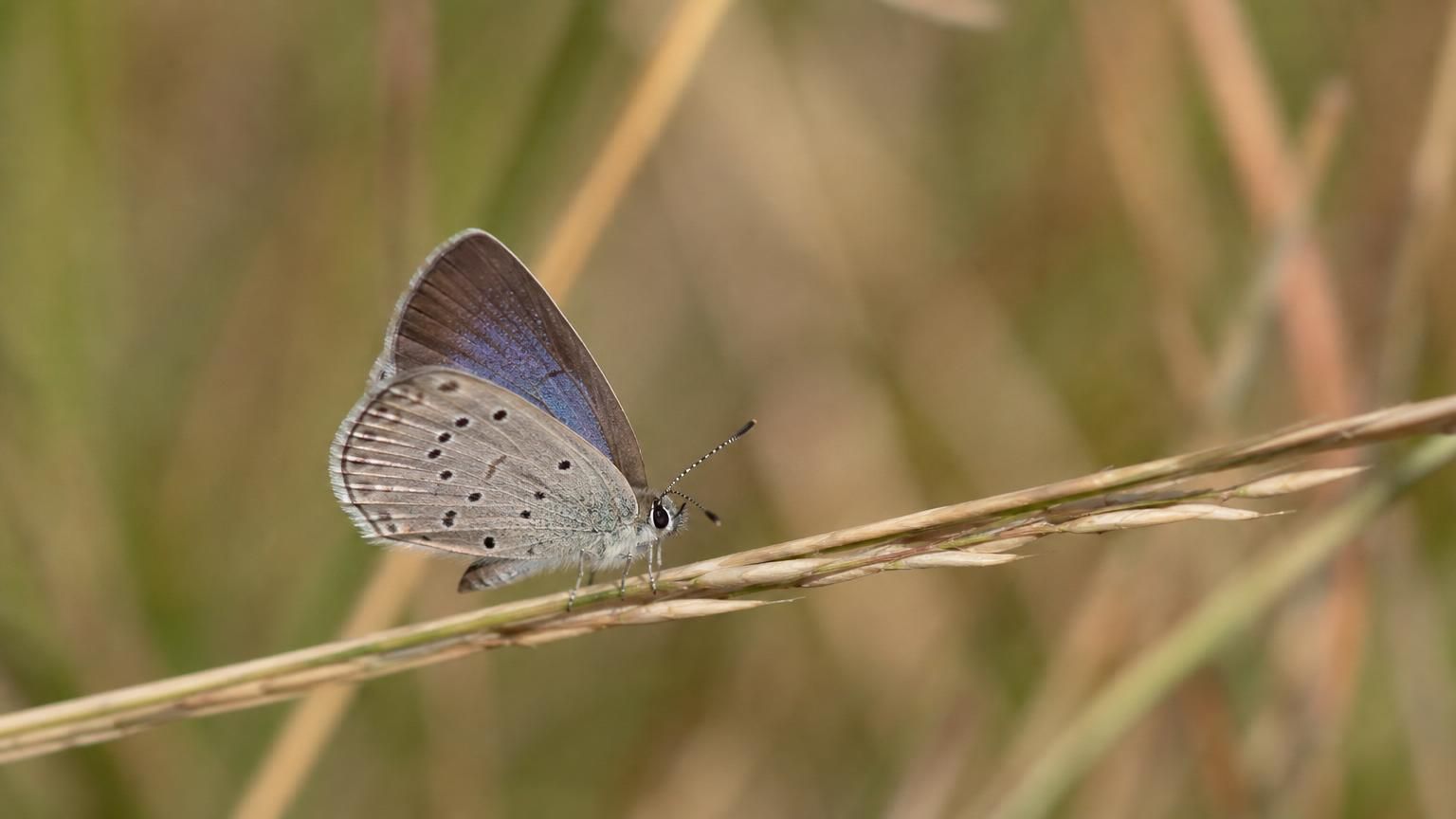
The small blue (Cupido minimus) is the smallest day-flying butterfly in Europe with a wingspan of 18–26 mm. The upper side in both sexes is dark brown, almost black; males have barely visible bluish dusting at the base. There is no bright blue typical of other blues.
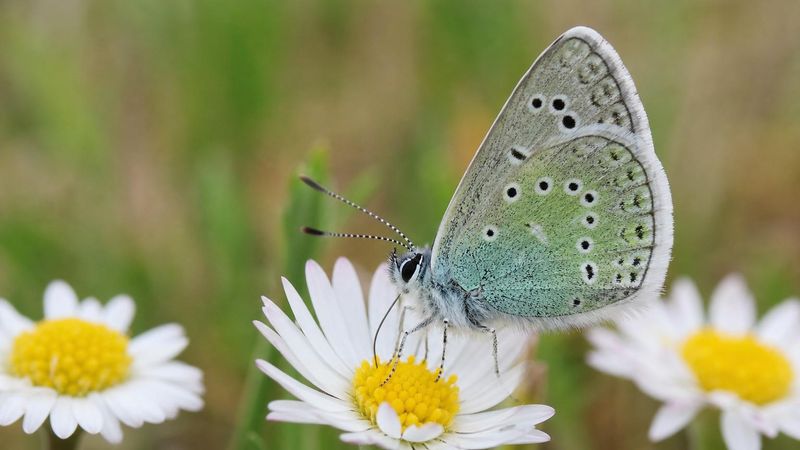
The underside is pale gray with rows of small black spots in white rings. The pattern is classic "blue" but very fine and sharp.
Range and habitat
From Western Europe to western Siberia. In Russia in the European part and Siberia.
It lives on poor dry meadows, limestone and chalk slopes, and forest edges. The caterpillar's host — kidney vetch — grows in such conditions.
Life cycle
1–2 generations per year depending on region. Flight May–August.
Eggs on flowers and buds of kidney vetch. Caterpillar green, very small. Pupa overwinters.
Like other blues, the small blue associates with ants: caterpillars are guarded by Lasius colonies in exchange for honeydew.
Small but noticeable
Despite modest size, the small blue is easy to spot in flight — fast, fluttering style. Males actively patrol territory, chasing larger rivals. The name minimus ("smallest") reflects size, not shy behavior.