Small Apollo
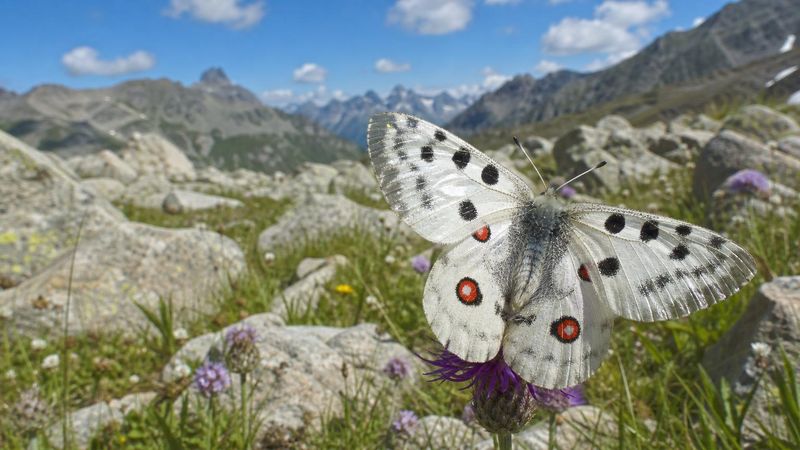
The small Apollo is a mountain Papilio with white wings similar to the Apollo but smaller. It lives in high mountains of the Altai, Siberia, and Central Asia.
Key facts
- Latin name
- Parnassius phoebus
- Family
- Papilionidae
- Wingspan
- 50-65 mm
- Flight season
- July — August
- Host plants
- Biting stonecrop, Saxifrage
- Conservation status
- LCLeast Concern
Appearance
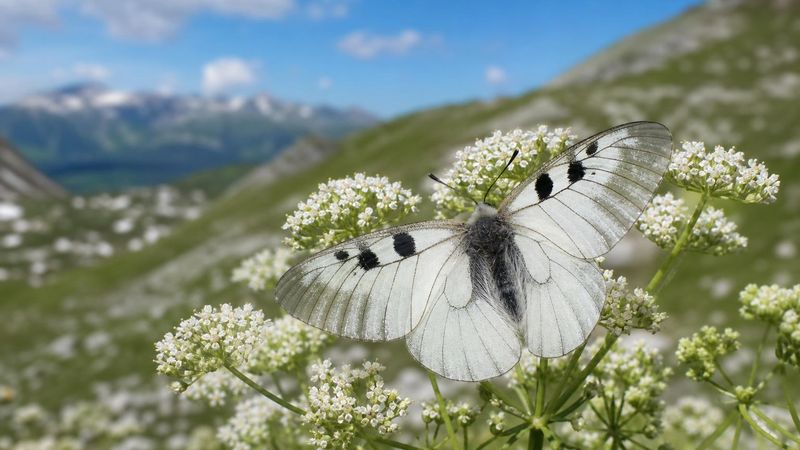
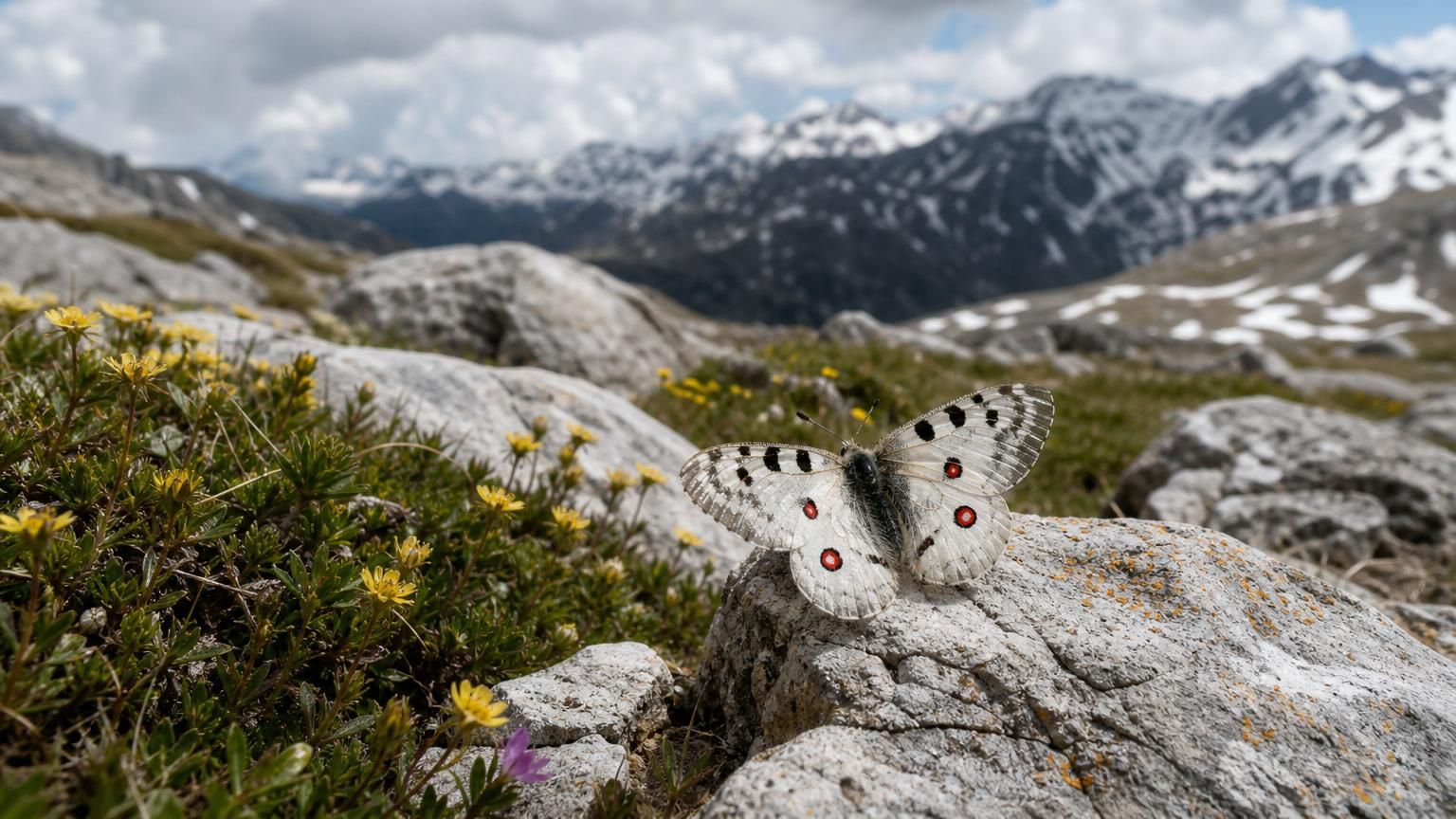
The small Apollo (Parnassius phoebus) is a mountain Papilio with a wingspan of 50–65 mm. Wings are white, slightly translucent. Black spots on the forewings; two red (sometimes orange) "eyespots" with white centers and a thin black border on the hindwings.
Compared with Apollo it is smaller and wings are more transparent. Spot pattern is less variable.
Range and habitat
Small Apollo is an arctic-alpine species with a fragmented range in mountains and the Arctic of North America, Asia, and Europe. In Russia on the Altai, Sayan, Siberian ranges, and the Far East.
It inhabits rocky alpine meadows in the subnival zone. It occurs higher than Apollo.
Life cycle
One generation per year. Flight July–August — a short arctic summer.
Egg or caterpillar overwinters. Development takes 1–2 years because of the short growing season. Caterpillar is active at low temperatures. Pupa in a loose cocoon under stones.
High-mountain life
Above 3,000 m it flies only on sunny days above +15 °C. In cold weather butterflies are motionless, basking on sun-warmed rocks. The active season does not exceed 4–6 weeks.