Old World Swallowtail
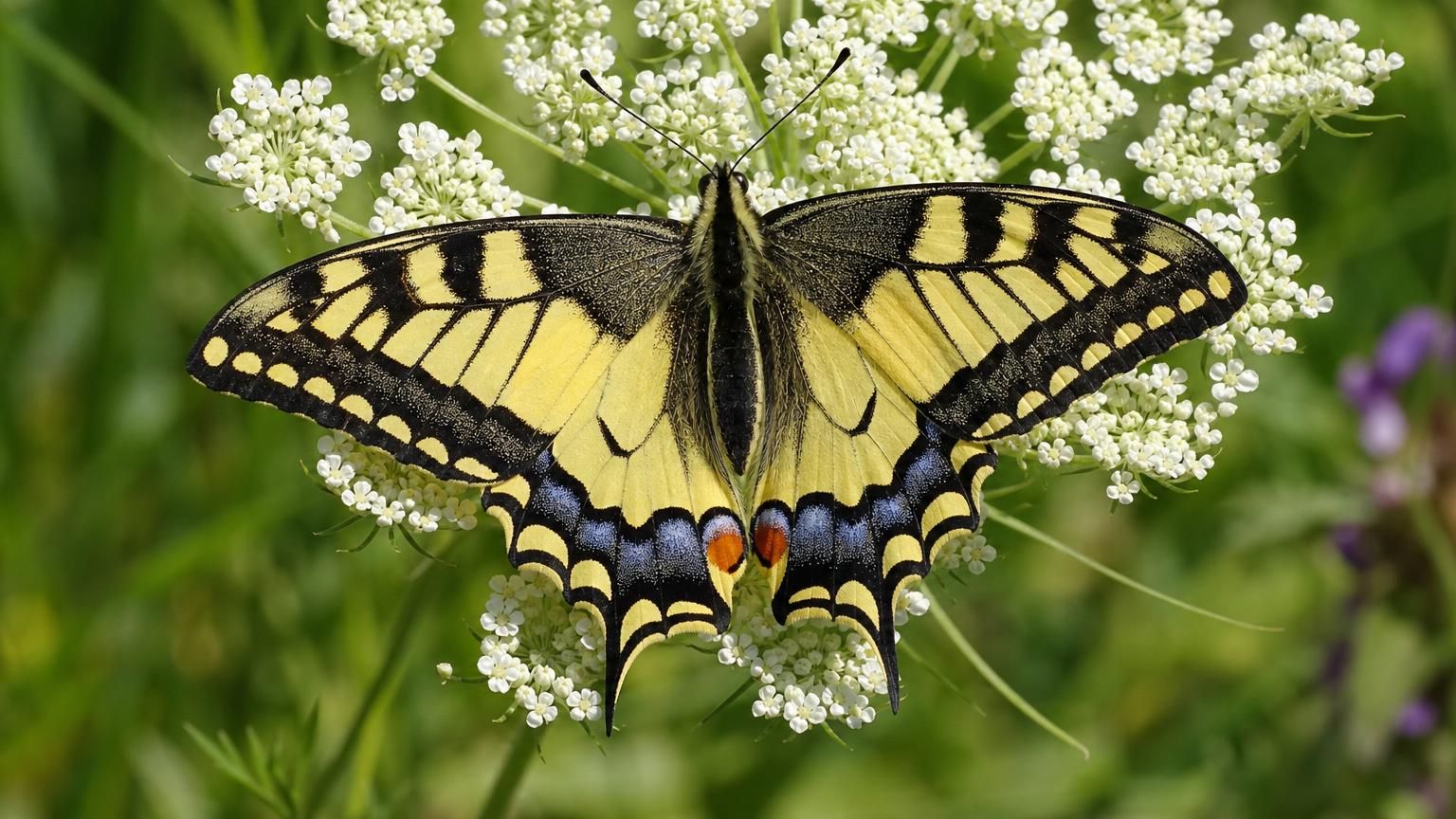
The Old World swallowtail is a large, recognizable swallowtail of the temperate zone: yellow wings, black pattern, and bright 'tails' on the hindwings.
Key facts
- Latin name
- Papilio machaon
- Family
- Papilionidae
- Wingspan
- 65-95 mm
- Flight season
- April — September
- Host plants
- Carrot, Dill, Parsley, Hogweed, Fennel
- Conservation status
- LCLeast Concern
Appearance
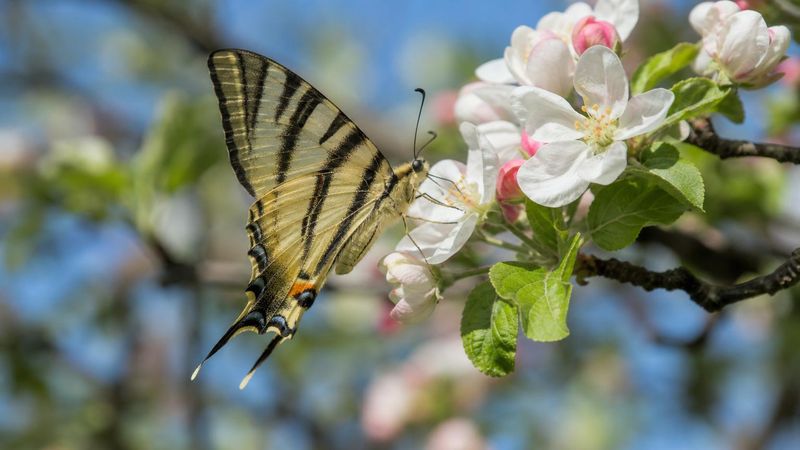
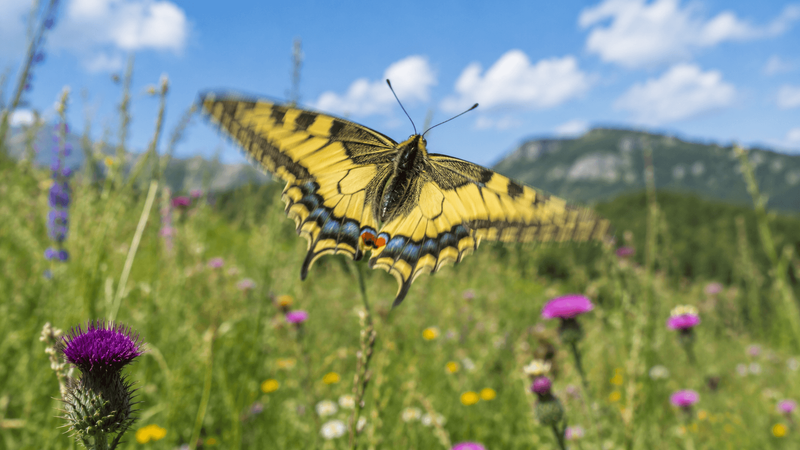
The Old World swallowtail (Papilio machaon) is a large, recognizable swallowtail of the temperate zone with a wingspan of 65–95 mm. Wings are yellow with a broad black border and complex black pattern. On the hindwings are blue lunules and an orange "eyespot," and the lower corner extends into an elegant "tail" — a hallmark of swallowtails.
Males and females are similar; females are slightly larger. Flight is strong, fast, and soaring — hence the family name.
Range and habitat
The swallowtail ranges across Eurasia from Portugal to Japan and also occurs in North America and North Africa. In Russia it is found everywhere — from tundra to steppe.
It prefers open sunny places: meadows, steppes, river valleys, forest edges, and gardens. It is often seen on flower beds and allotments with umbellifers. In mountains it reaches 3,500 m.
Life cycle
In central Russia there are 2 generations per year. The first flies April–June, the second July–September. In the south a third generation is possible.
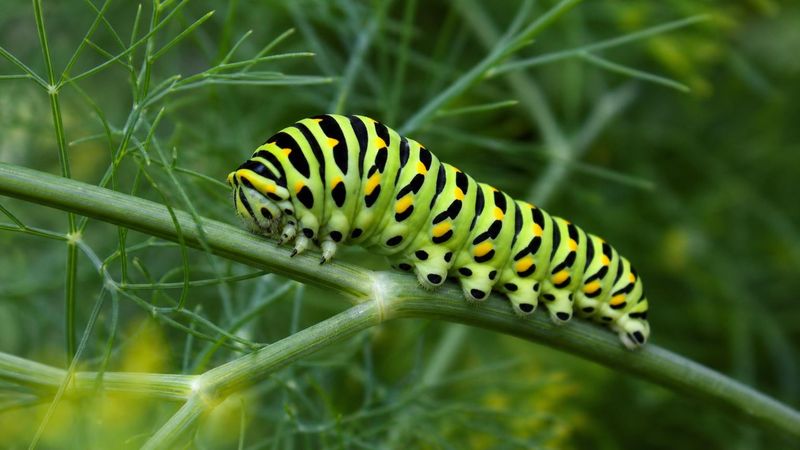
The female lays eggs singly on the upper side of umbellifer leaves. The egg is spherical, greenish yellow. The young caterpillar is dark with a white patch, resembling bird droppings. The mature caterpillar is large (up to 4.5 cm), bright green with black bands and orange spots. It pupates on the plant stem. It overwinters as a pupa.
Behavior
The swallowtail is a powerful, fast flier. Males occupy hilltops and high open points to defend territory — "hilltopping," typical of swallowtails. They readily feed on nectar of tall herbs: hogweed, wild carrot, burdock, alfalfa. In flight they often hover before a flower without landing. Active by day; in hot midday they hide in dense shade.
Reproduction
The female lays eggs singly on umbellifer leaves — carrot, dill, parsley, hogweed. The egg is spherical, greenish yellow. The young caterpillar is dark with a white patch — mimicking bird droppings. The mature caterpillar is large (up to 4.5 cm), bright green with black cross-bands and orange spots. When threatened it extends the osmeterium — a forked orange gland with a sharp citrus smell. The pupa is attached to the stem with a silk girdle; it may be green or brown depending on background.
Overwintering
The swallowtail overwinters as a pupa. The pupa survives frosts to −25 °C through cryoprotectants in the tissues. In spring, with stable warming above +15 °C, the first adults emerge in April. In central Russia there are two generations: April–June and July–September.
Interesting facts
- The species is named after Machaon — a famous physician of the Trojan War, son of Asclepius: umbellifer food plants were used in medicine since antiquity.
- The osmeterium smells like pineapple or citrus.
- It is the only day-flying butterfly in Russia regularly found in forest-tundra and subarctic tundra.
- In the Caucasus and Tien Shan especially large individuals occur with wingspans up to 100 mm.
Conservation
Despite global LC status, in some regions of Russia the swallowtail is listed in Red Data Books. Causes: ploughing of meadows, pesticides on allotments, and collecting. Leaving patches with wild umbellifers is enough to support the species.