Role of Butterflies in Nature
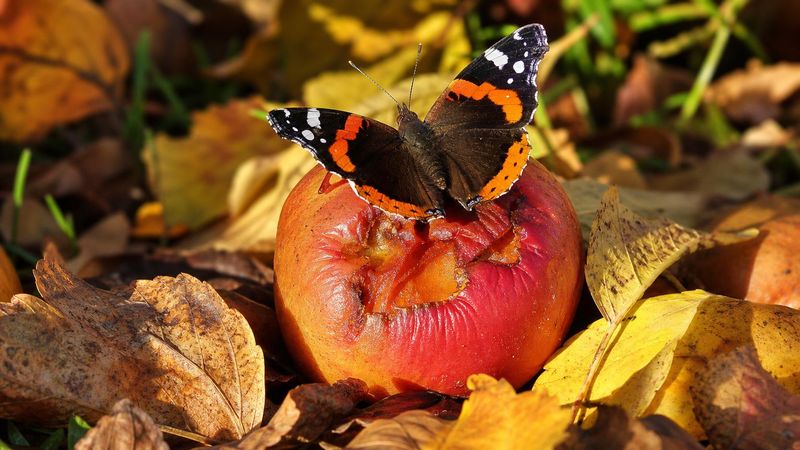
Butterflies pollinate plants, link food chains, and indicate ecosystem health. Without them, balance in many natural communities is disrupted.
Butterflies Are More Than Beauty
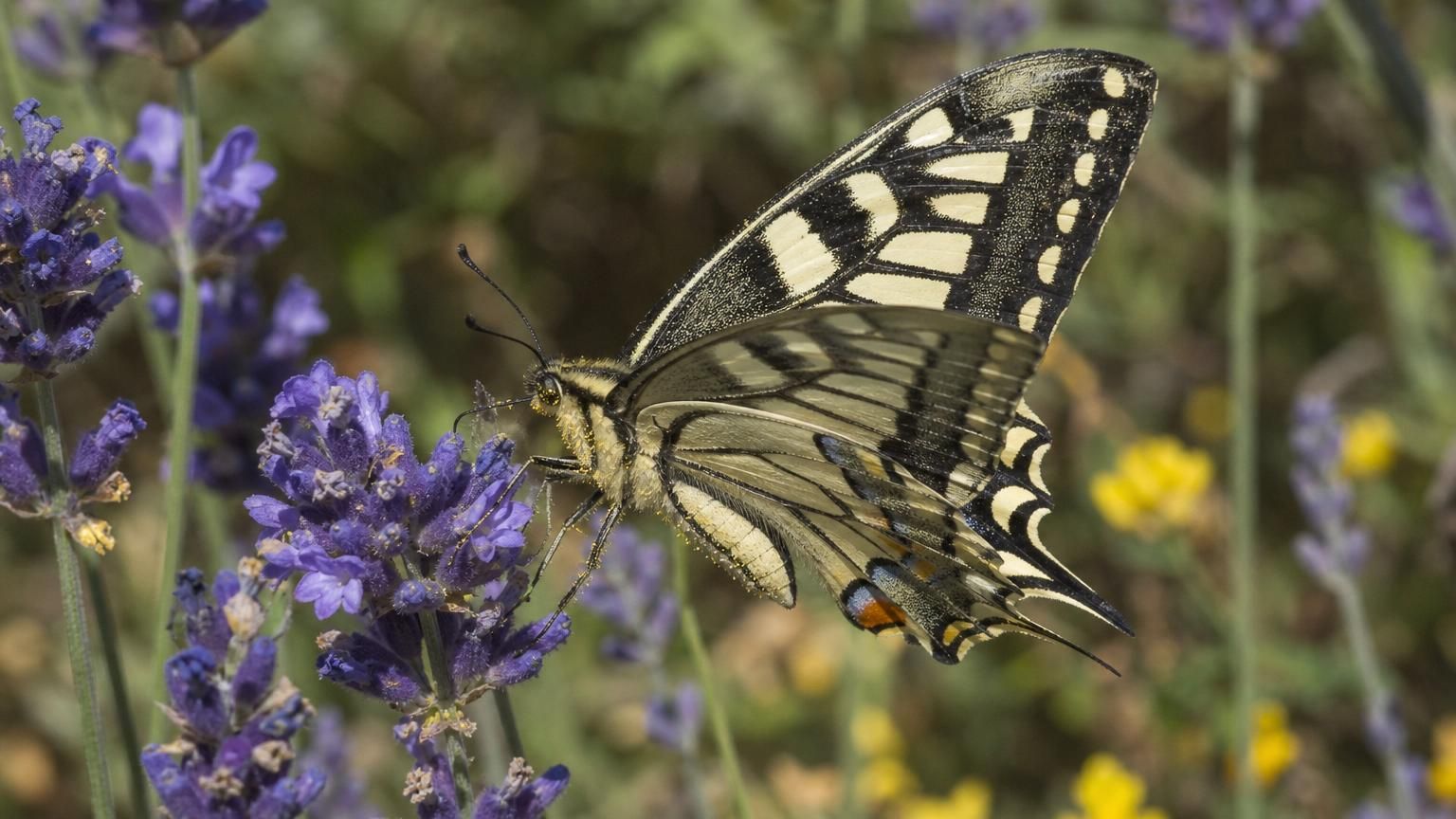
Butterflies seem fragile and short-lived, yet in natural ecosystems they perform several important functions. Their disappearance from a habitat is a warning sign that something in the environment has gone wrong.
Role 1: Pollination of Plants
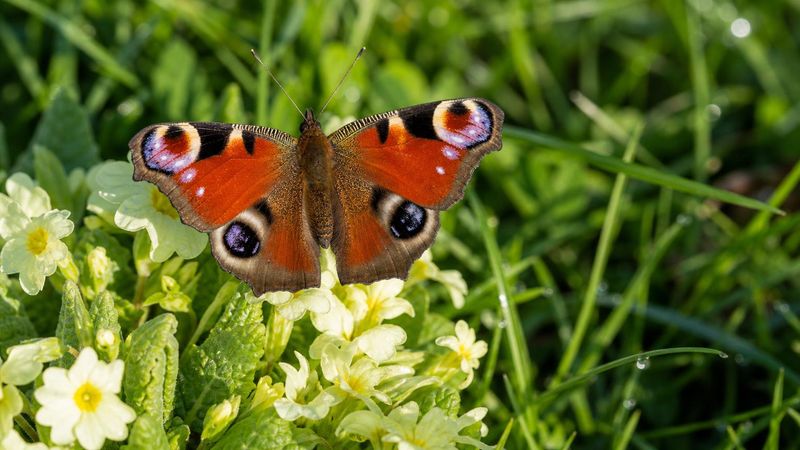
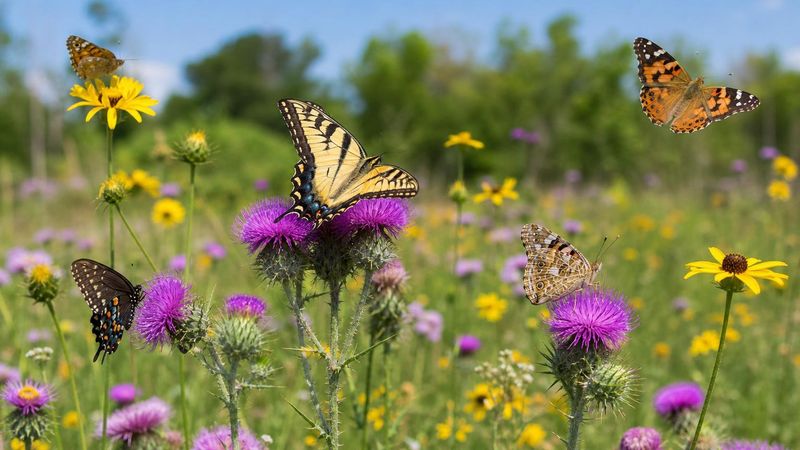
Adult butterflies feed on nectar, visiting flower after flower. In doing so they carry pollen from stamens of one flower to the stigma of another — pollination occurs.
Butterflies are not the main pollinators (bees and other hymenopterans lead), but they matter for many plants. Some flowers are adapted specifically to butterfly pollination:
- Tubular flowers unreachable for bees’ short proboscises but accessible to a long butterfly proboscis.
- Night flowers (white, strongly scented) — aimed at hawkmoths.
- Bright red flowers poorly visible to bees (their color vision does not perceive red well) but conspicuous to butterflies.
Hawkmoths (Sphingidae) play a special role: large nocturnal species with long proboscises that hover before flowers like hummingbirds. They pollinate orchids and other specialized plants.
Role 2: A Link in Food Chains
Butterflies at all life stages are food for many animals.
Caterpillars are eaten by:
- Birds (especially when feeding nestlings — many passerines raise young almost entirely on caterpillars).
- Predatory insects: wasps, beetles, dragonflies.
- Spiders and lizards.
- Parasitoids: ichneumon wasps and tachinid flies lay eggs in or on caterpillars; parasite larvae develop inside the host and eventually kill it.
Pupae are opened by:
- Small mammals: shrews, mice.
- Birds that find pupae in leaf litter.
Adult butterflies are caught by:
- Birds (swallows, swifts, flycatchers hunt in the air).
- Orb-weaver and crab spiders on flowers.
- Dragonflies and robber flies.
- Bats — for nocturnal species.
Thus butterflies form a bridge between plants and carnivores: leaves and nectar pass through caterpillars and adults into food for birds and other animals.
Role 3: Bioindicators of Environmental Health
Scientists have long used butterflies as indicators of ecological health of an area. Reasons include:
- Many species are highly specialized: a given species lives only where its host plant and suitable conditions exist.
- Butterflies respond quickly to change: within 2–3 years after habitat degradation the species composition shifts.
- They are easy to observe and count in the field.
If there are fewer butterflies on a meadow, this may mean pesticide use, trampling, scrub encroachment, or drying out. Monitoring butterfly numbers is a standard method for assessing biodiversity in Europe.
Several species are chosen as “flagship” indicators: their population status reflects whole ecosystems. For example, the large blue (Phengaris arion) requires both thyme and a specific ant species — if either condition fails, it disappears.
Role 4: Caterpillar Feeding — Regulation of Vegetation
Caterpillars consume large amounts of plant biomass. At moderate density this is beneficial: they remove some foliage, stimulate plant growth, and thin dense stands.
During outbreaks (for example brown-tail moth or gypsy moth) caterpillars can defoliate whole orchards and forests. Such outbreaks are usually short and controlled by natural predators and parasites.
Role 5: Aesthetic and Cultural Value
Butterflies are among the most recognizable images of nature in cultures worldwide. They appear in painting, poetry, mythology, and as symbols of transformation, beauty, and transience.
Ecotourism: butterfly watching is a developed pursuit in Europe and North America. Some protected areas draw significant tourist income from butterfly enthusiasts.
Science: butterflies are convenient models for studying evolution, genetics, ecology, and behavior. Many fundamental discoveries in biology were made on Lepidoptera.
Why Butterflies Are Declining
Over the last 50 years, numbers of many butterfly species in Europe and Russia have fallen by 30–80%. Causes include:
- Intensive agriculture: monocultures, herbicides, and insecticides destroy caterpillar host plants and adult nectar sources.
- Urbanization: building on meadows and woodland edges.
- Meadow encroachment: ending traditional mowing lets tall grasses displace the diverse forb cover butterflies need.
- Climate change: shifts in flowering time no longer match caterpillar emergence.
What you can do: leave patches of unmown diverse meadow, plant host and nectar plants (nettle, clover, yarrow), and avoid insecticides in the garden.
For species under threat, see rare butterflies.
See also