Apollo
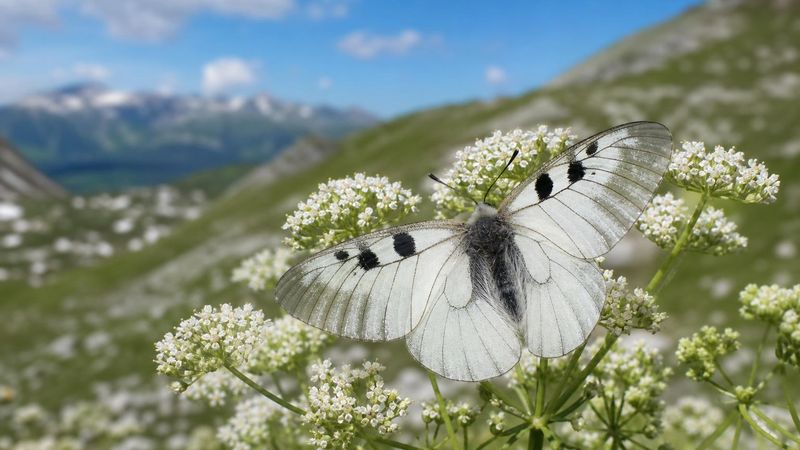
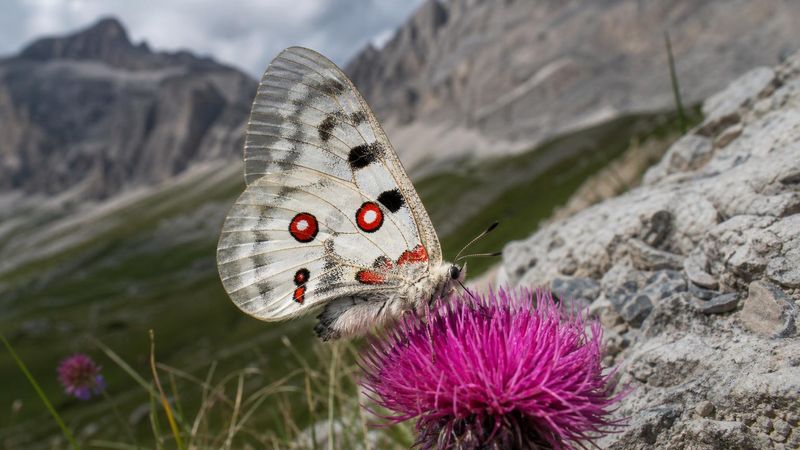
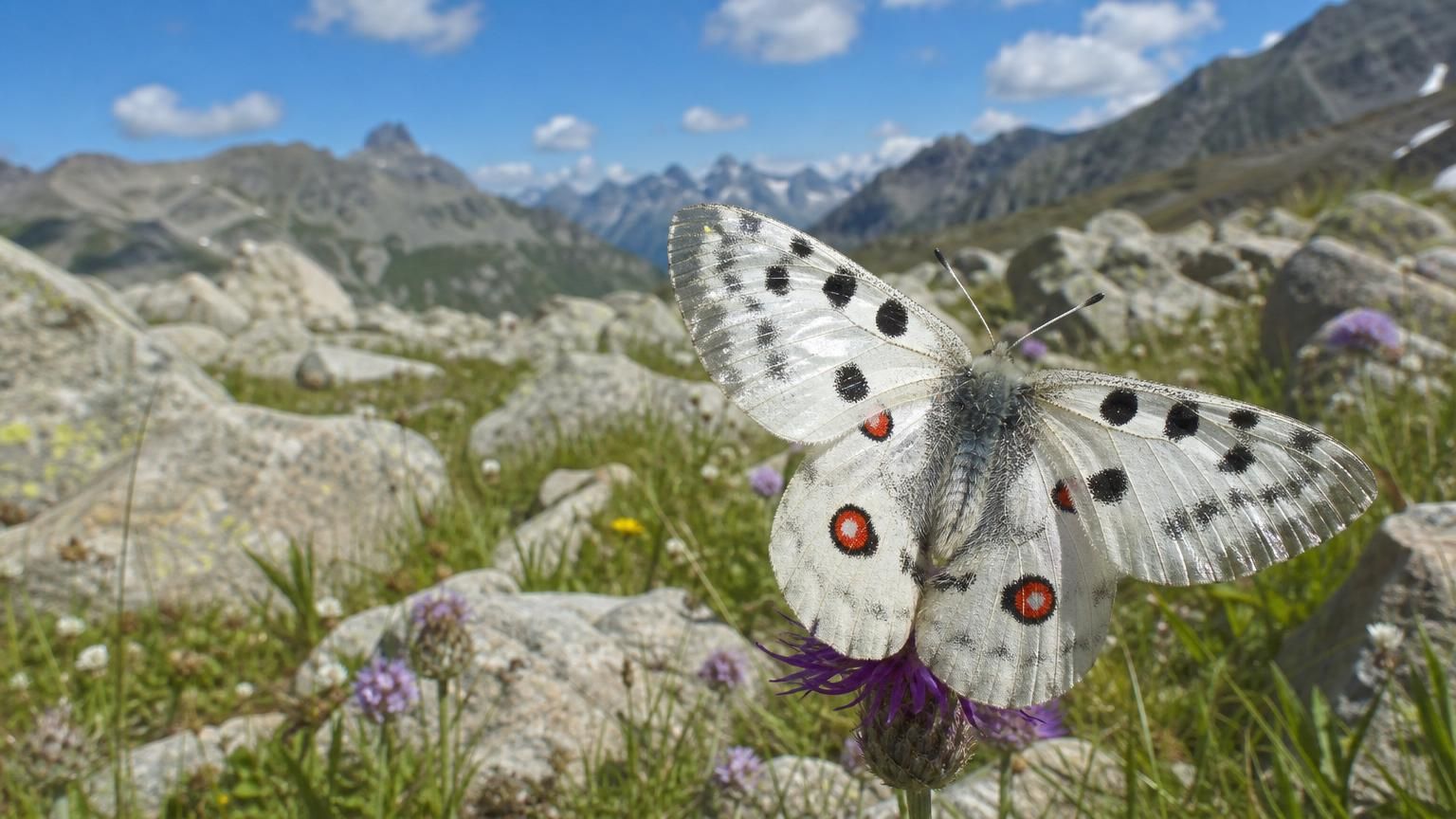
The Apollo is a large mountain butterfly with semi-transparent white wings and red "eyespots." A protected species listed in the Red Data Book of Russia.
Key facts
- Latin name
- Parnassius apollo
- Family
- Papilionidae
- Wingspan
- 58-86 mm
- Flight season
- June — August
- Host plants
- Biting stonecrop, Purple stonecrop, Orostachys
- Conservation status
- LCLeast Concern
Appearance
The Apollo (Parnassius apollo) is a large butterfly with a wingspan of 58–86 mm. Wings are white or slightly cream, partly translucent. Large black spots mark the forewings; two bright red "eyespots" with black and white borders mark the hindwings.
The body is covered with dense white hair. Wings lack tails, unlike most swallowtails. Wing pattern varies: more than 600 subspecies differ in spot size and shape.
Range and habitat
The Apollo is mainly a mountain species. It inhabits rocky alpine meadows, scree, and subalpine belts of the Alps, Carpathians, Altai, Caucasus, and mountain systems of Siberia and Central Asia. In Russia it also occurs on Siberian plains where limestone outcrops provide habitat.
It requires open rocky sites with stonecrop — its only host plant. Loss of such biotopes is the main cause of range contraction.
Life cycle
One generation per year. Flight June–August; above 2,000 m from July. The egg or newly hatched caterpillar overwinters; eggs may overwinter twice.
The caterpillar is active on cool mornings and hides under stones in heat. It feeds on stonecrops. The pupa forms in a loose cocoon under stones or in litter.
Conservation
Protected across most of its range. In Russia it is in the Red Data Book (Category 2 — declining) and CITES Appendix II, which restricts import and export without a permit.