Scarce Swallowtail
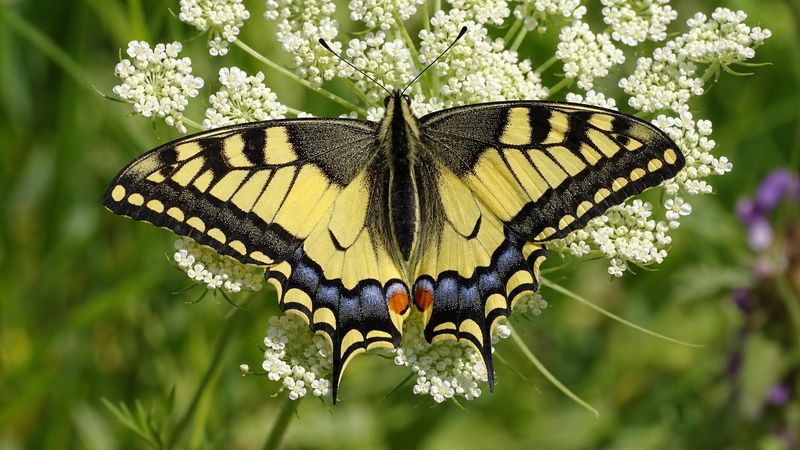
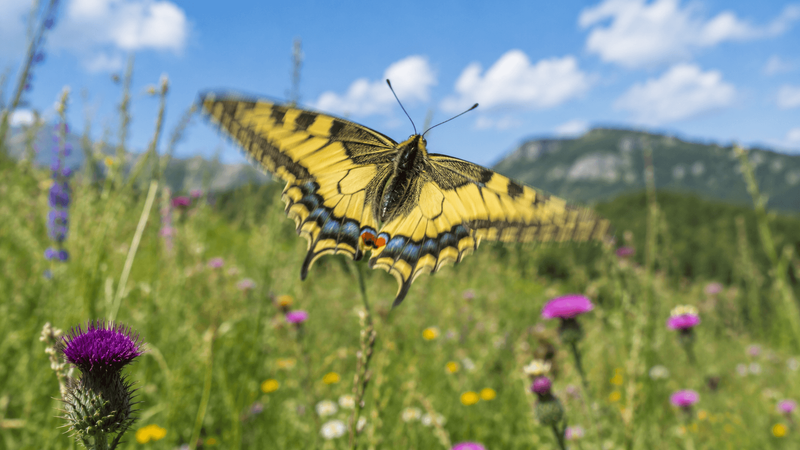
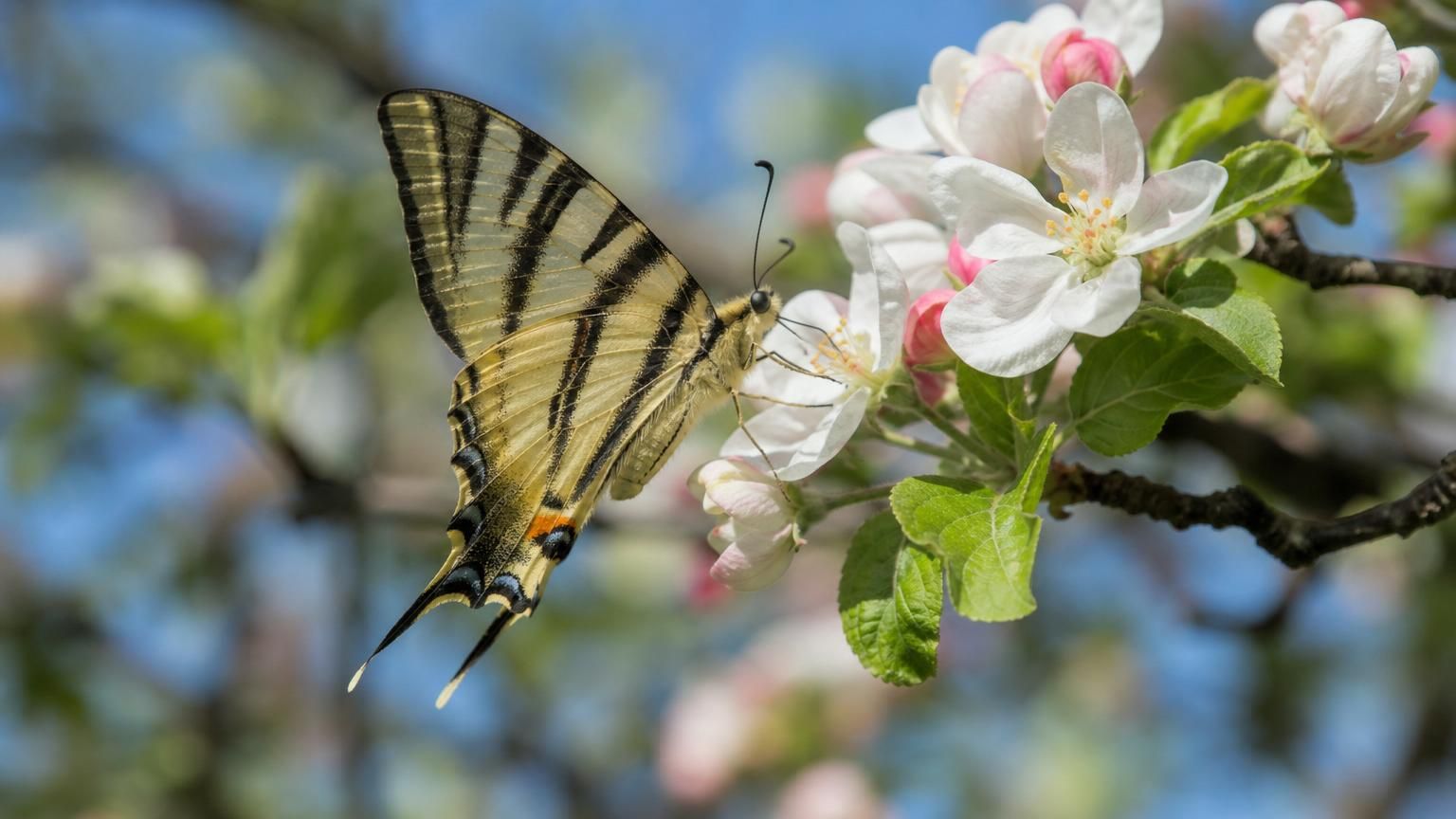
The scarce swallowtail is a large swallowtail with cream-yellow wings and characteristic dark stripes. It is conspicuous in May in fruit orchards.
Key facts
- Latin name
- Iphiclides podalirius
- Family
- Papilionidae
- Wingspan
- 60-84 mm
- Flight season
- April — September
- Host plants
- Blackthorn, Plum, Cherry plum, Cherry, Pear
- Conservation status
- LCLeast Concern
Appearance
The scarce swallowtail (Iphiclides podalirius) is one of the largest swallowtails in Russia with a wingspan of 60–84 mm. The wings are cream-white with several broad black oblique stripes on the forewings. On the hindwings there is a characteristic blue arc and an orange-red spot near the 'tail'. The tails are long and narrow.
Flight is slow, soaring, and graceful — hence the genus name Iphiclides (from Greek 'swift-flying'). Despite its impressive size it flies softly and unhurriedly.
Range and Habitat
It occurs in Europe, Central and Minor Asia, and China. In Russia it is found in the steppe and forest-steppe zones and on the Caucasus.
It prefers edges with blackthorn and wild fruit trees, ravine slopes, orchards, and forest-steppe landscapes.
Life Cycle
In Russia there are two generations per year. The first flies in April–May, the second in July–August. It overwinters as a pupa.
Eggs are laid singly on host plant leaves. The caterpillar is green with yellow side stripes, resembling a leaf. The pupa is angular, greenish or brownish.
Seasonal Forms
The spring brood is somewhat smaller and paler than the summer one. The summer form is larger and more contrasting. Both forms fly in the same habitats but at different times.