Silver-washed Fritillary
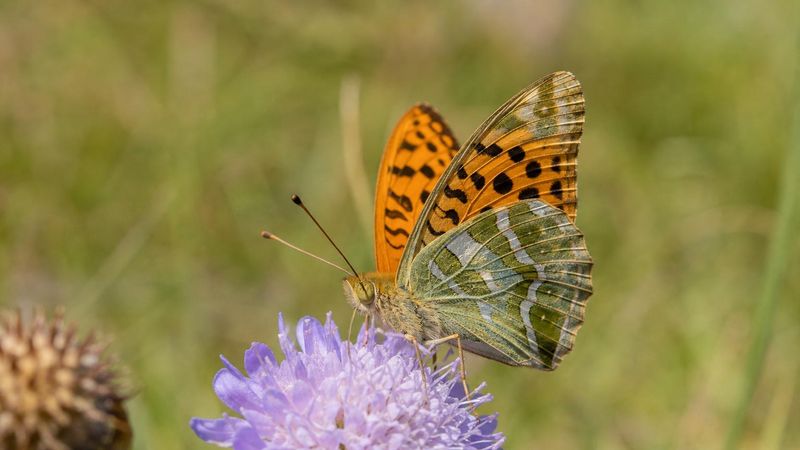
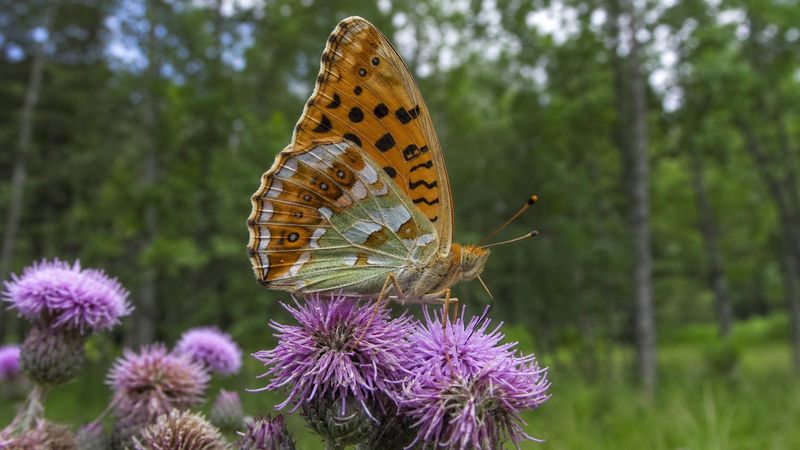
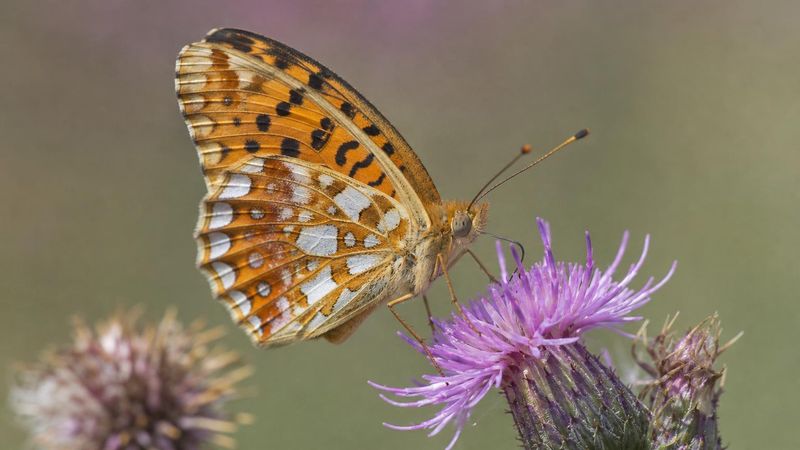
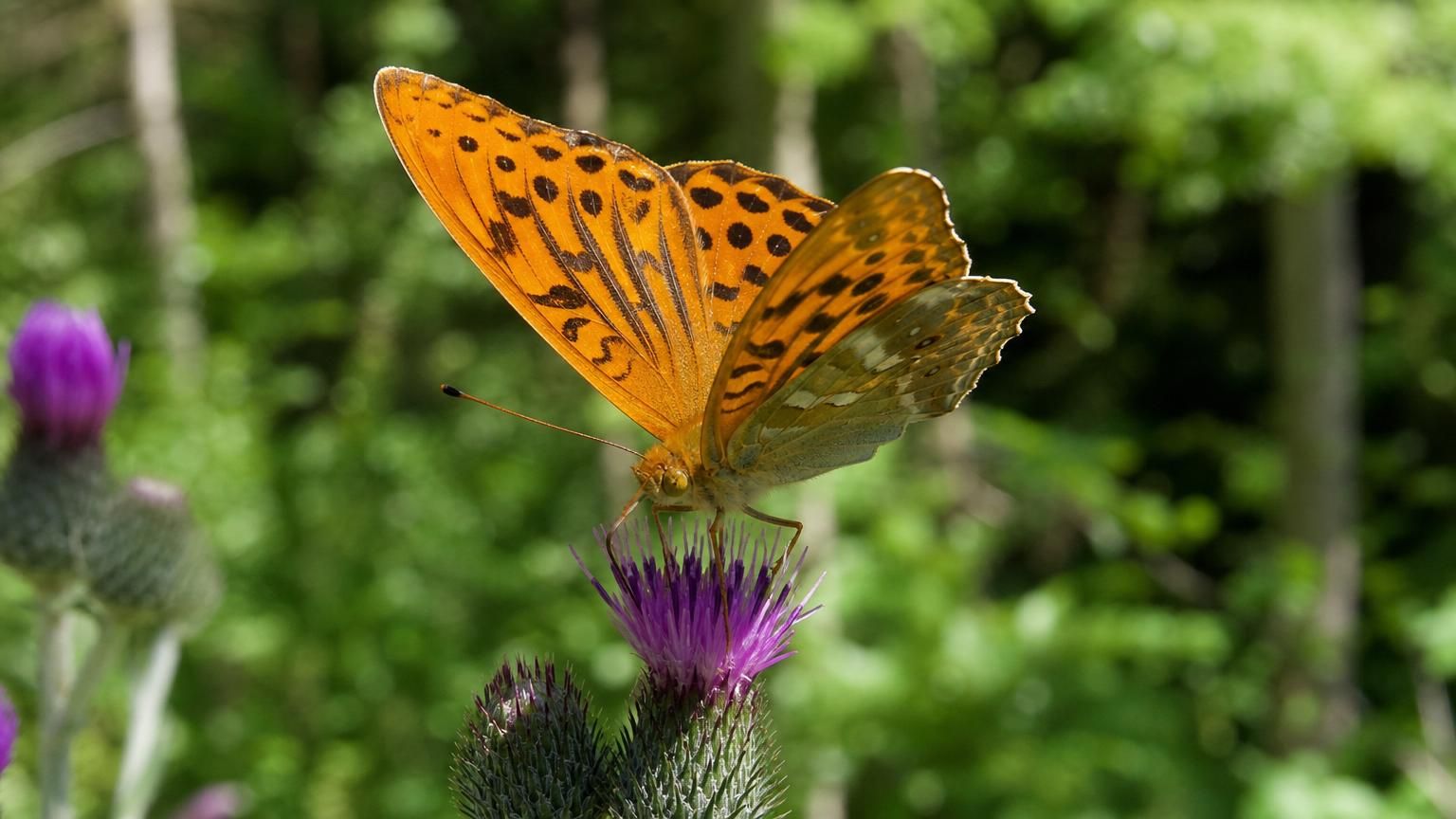
The silver-washed fritillary is a large woodland butterfly with orange wings. The underside of the hindwings shimmers with silvery pearl-like spots.
Key facts
- Latin name
- Argynnis paphia
- Family
- Nymphalidae
- Wingspan
- 56-76 mm
- Flight season
- June — September
- Host plants
- Wild pansy, Marsh violet, Dog violet
- Conservation status
- LCLeast Concern
Appearance
The silver-washed fritillary (Argynnis paphia) is one of the largest fritillaries in Europe with a wingspan of 56–76 mm. The upper side of the wings is bright orange with a black speckled pattern. Males show four thick black vein 'scent stripes' on the forewings — androconial fields that release pheromones to attract females.
The underside of the forewings is orange with a greenish bloom. The hindwings below are pale green with large silvery-white spots with a metallic shine. This pearl-like sheen gave the name to the whole group.
Range and Habitat
It lives in broad-leaved and mixed forests of Europe and Asia (to Japan). In Russia — from the western border to the Far East.
It prefers light forest glades and edges with flowering nectar plants (burdock, buddleia, fireweed). It especially visits buddleia and fireweed.
Life Cycle
One generation per year. Flight from June through September. It overwinters as an egg or a newly hatched first-instar caterpillar.
The female lays eggs in cracks in the bark of oak, pine, or other trees near violet stands. The caterpillar overwinters in shelter, emerges in spring, and feeds on violets. The pupa is suspended, brownish with golden tubercles.
Sexual Dimorphism
The male silver-washed fritillary is easily identified by four black 'scent stripes' along the veins of the forewings. Females lack these stripes. The female is somewhat duller than the male.