Nymphalidae
Nymphalidae — the largest family of day-flying butterflies: tortoiseshells, admirals, fritillaries, checkerspots, and satyrs.
What are nymphalids
Nymphalidae (Nymphalidae) are the most species-rich family of day-flying butterflies in the world: about 6,000 species on every continent except Antarctica. Russia has more than 150 nymphalid species, from the familiar small tortoiseshell to inconspicuous meadow satyrs.
The family is extremely diverse in appearance: from large, bright species with wingspans of 8–10 cm to small brown butterflies that blend with fallen leaves.
The main distinguishing feature
A nymphalid is easy to recognize by its atrophied front legs: in both sexes the first pair of legs is reduced and not used for walking. Butterflies stand on four legs and hold the front pair pressed against the body. For this reason the family is sometimes called “four-legged” or “brush-footed” butterflies (Brush-footed butterflies).
This trait is easy to see if you catch a butterfly: in nymphalids you will not see normally developed front tarsi.
Main nymphalid groups in Russia
True nymphalines (Nymphalinae)
The most familiar part of the family. Bright coloration, often with angular wing margins.
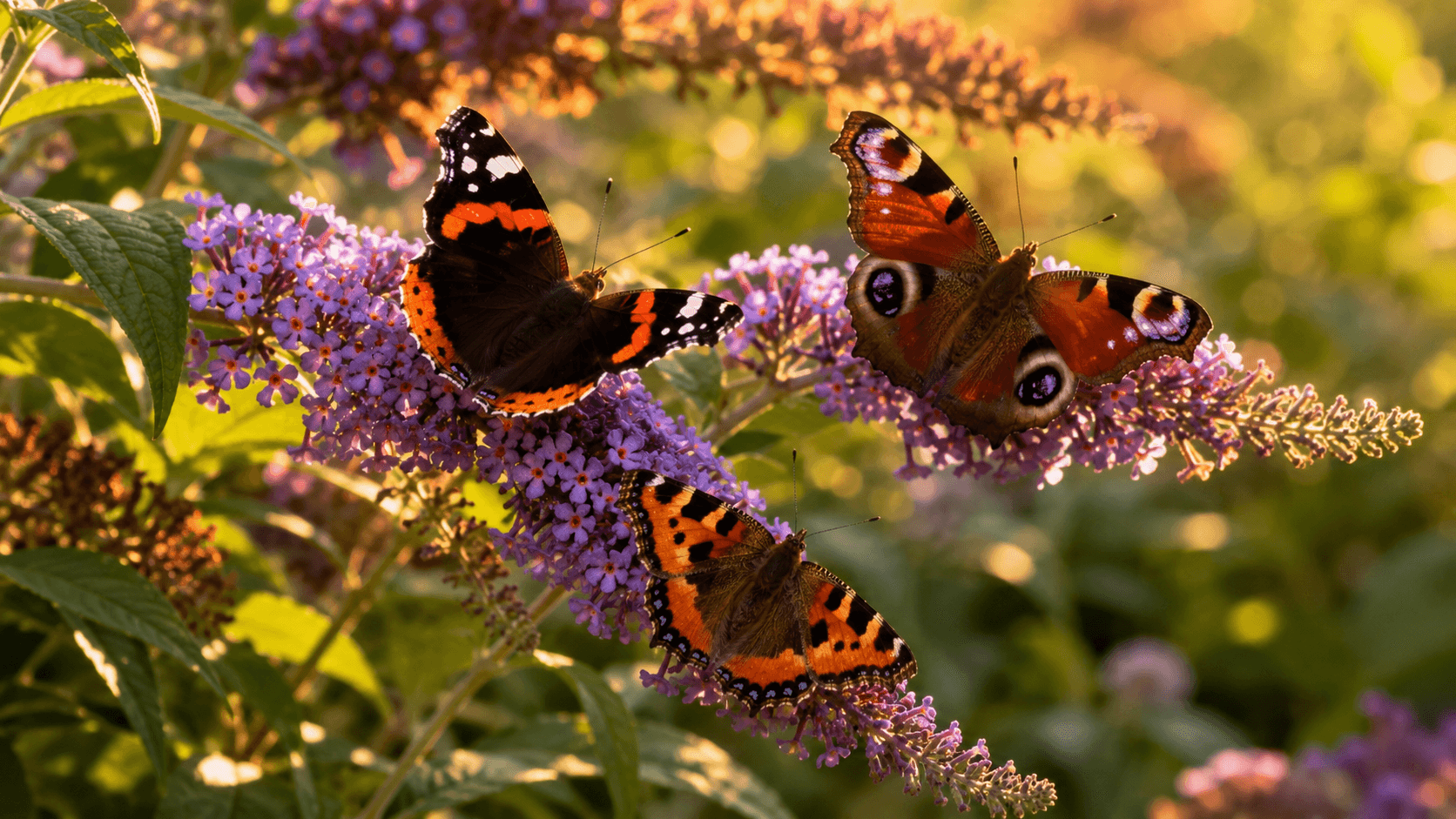
Small tortoiseshell (Aglais urticae) — orange with black spots and a blue border. The caterpillar lives on nettles. Overwinters as an adult and is one of the first spring butterflies. Found throughout Russia’s temperate zone.
Peacock (Aglais io) — maroon-red with four large bright “eyes.” When startled it suddenly opens its wings, displaying the eyespots and startling predators. The caterpillar also feeds on nettles.
Red admiral (Vanessa atalanta) — dark brown with a crimson band and white spots. A partly migratory species: arrives from the south in spring; some individuals overwinter in the middle latitudes.
Painted lady (Vanessa cardui) — orange-brown with a characteristic black-and-white pattern on the wing tips. The only butterfly found on every continent except Antarctica. Migrates annually, sometimes in huge numbers.
Mourning cloak (Nymphalis antiopa) — dark maroon, almost black, with a cream-yellow border and blue spots. Long-lived: lives 10–11 months, overwintering as an adult. One of the largest day-flying butterflies in Russia.
Fritillaries (Argynnini)
Orange above with a black dotted pattern. The main trait is silvery spots on the underside of the hindwings, like mother-of-pearl. They fly mainly in forest clearings and meadows. About 20 species occur in Russia, including the silver-washed fritillary (Argynnis paphia), Niobe fritillary, and high brown fritillary, among others.
Checkerspots (Melitaeini)
Small butterflies with a characteristic checkerboard pattern of orange, yellow, and black cells. The underside of the hindwings is pale with an orange-white pattern. Identifying the exact species is difficult without examining the underside. Russia has several dozen species; common ones include the glanville fritillary (Melitaea cinxia) and heath fritillary (Melitaea athalia).
Satyrs (Satyrinae)
The most numerous subgroup by species count. Coloration is mainly brown, ochre, or gray-brown — cryptic. A characteristic feature is eyespots (round spots with a dark center and light ring) on the wings. They live in meadows, forest edges, steppes, and mountain slopes. Among widespread species are the meadow brown (Maniola jurtina), ringlets (Erebia spp.), and heaths (Coenonympha spp.). More detail — in the satyrs section.
Nymphalid caterpillars
Caterpillars of most true nymphalines feed on nettles, thistles, willow, aspen, or grasses. Many species have spiny caterpillars with branched outgrowths — such appearance deters birds. Satyr caterpillars live on grasses and often overwinter in a half-grown state.
Where they occur
Nymphalids live almost everywhere: in gardens and parks, at forest edges, in meadows, on mountain slopes and steppes. Many species tolerate human presence well — the small tortoiseshell and peacock often overwinter in attics and barns.
The best places to observe them are flowering meadows with thistles, clover, and other nectar plants in June and July. Use the wing color identifier for more precise species identification.
How to tell them from other families
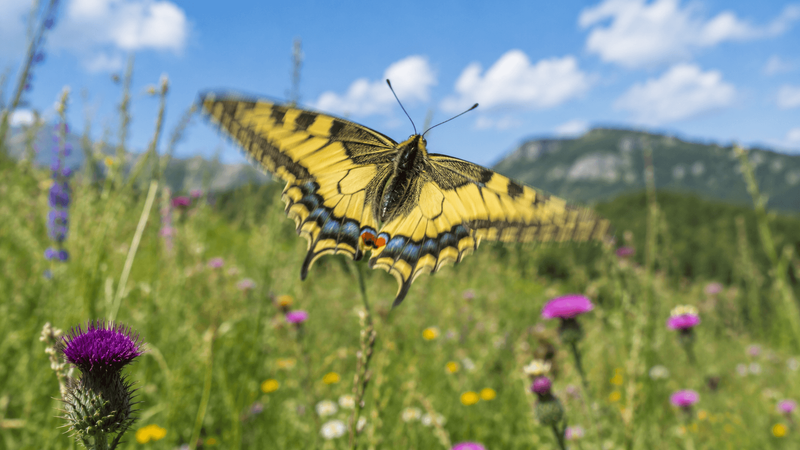
- From swallowtails — most nymphalids lack “tails” on the wings and are smaller than the largest swallowtails.
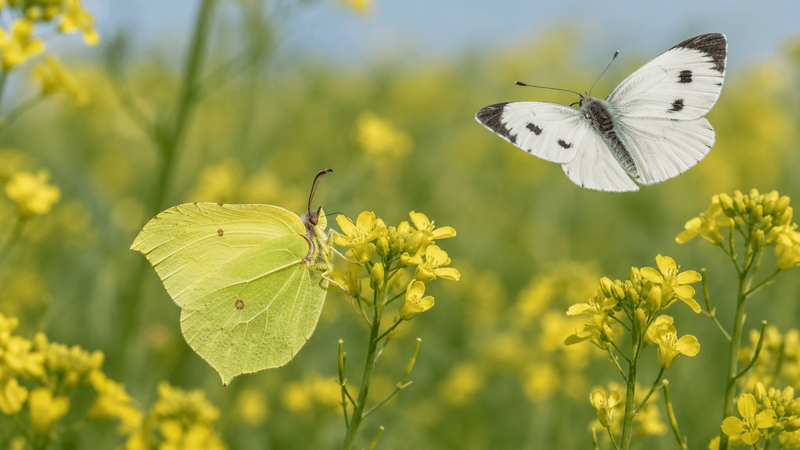
- From whites — nymphalids are usually orange, brown, or patterned, but not white or yellow.
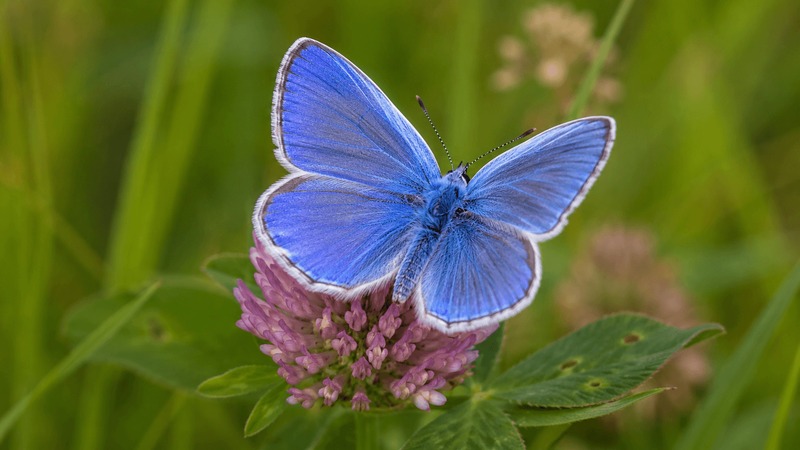
- From blues — nymphalids are considerably larger.