Common Birdwing
The Common Birdwing is one of the most widespread true birdwings, giant iridescent swallowtails found from South Asia to the western Pacific.
Key facts
- Latin name
- Troides helena
- Family
- Papilionidae
- Wingspan
- 120–190 mm
- Flight season
- Year-round
- Host plants
- Aristolochia tagala, Aristolochia indica, Other Aristolochia spp. (Aristolochiaceae)
- Conservation status
- LCLeast Concern
Appearance
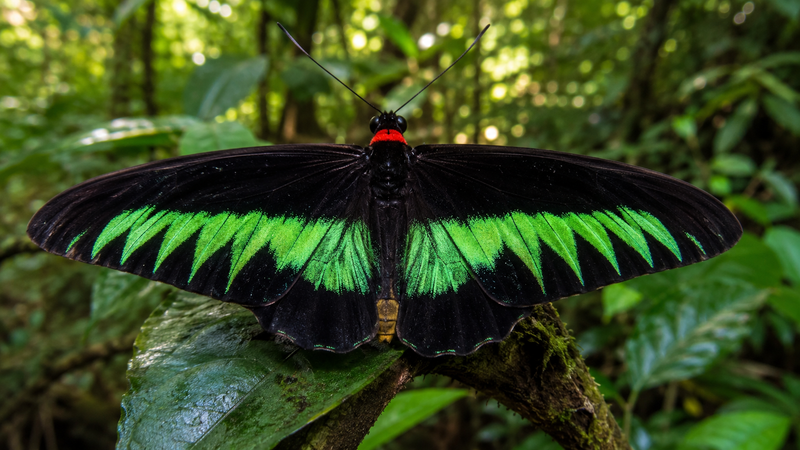
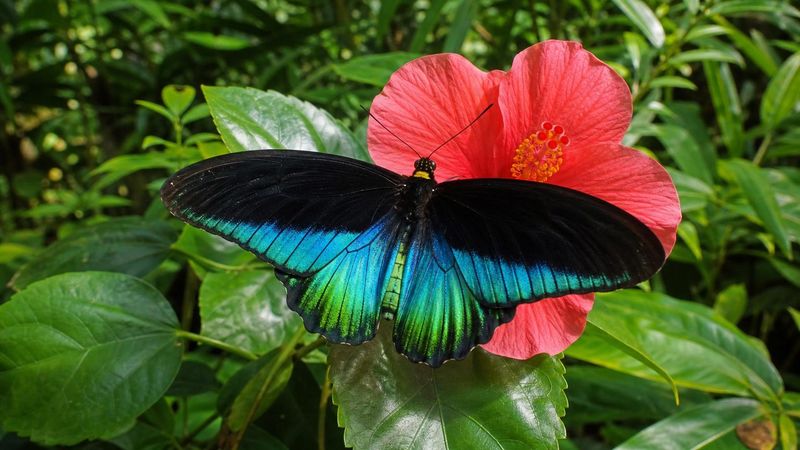
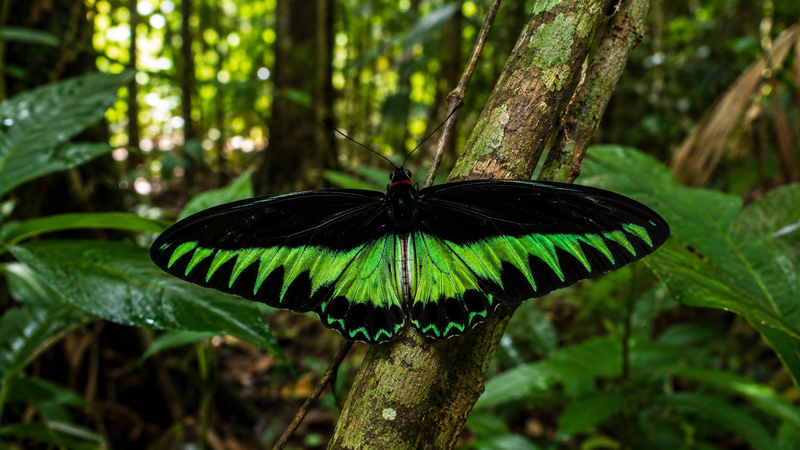
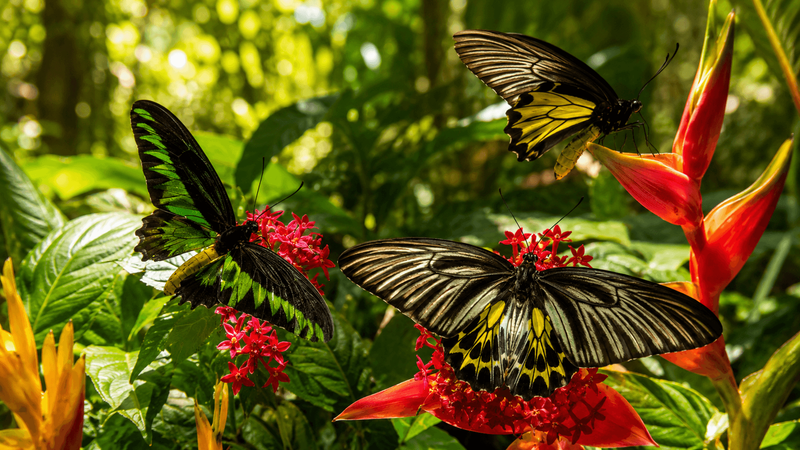
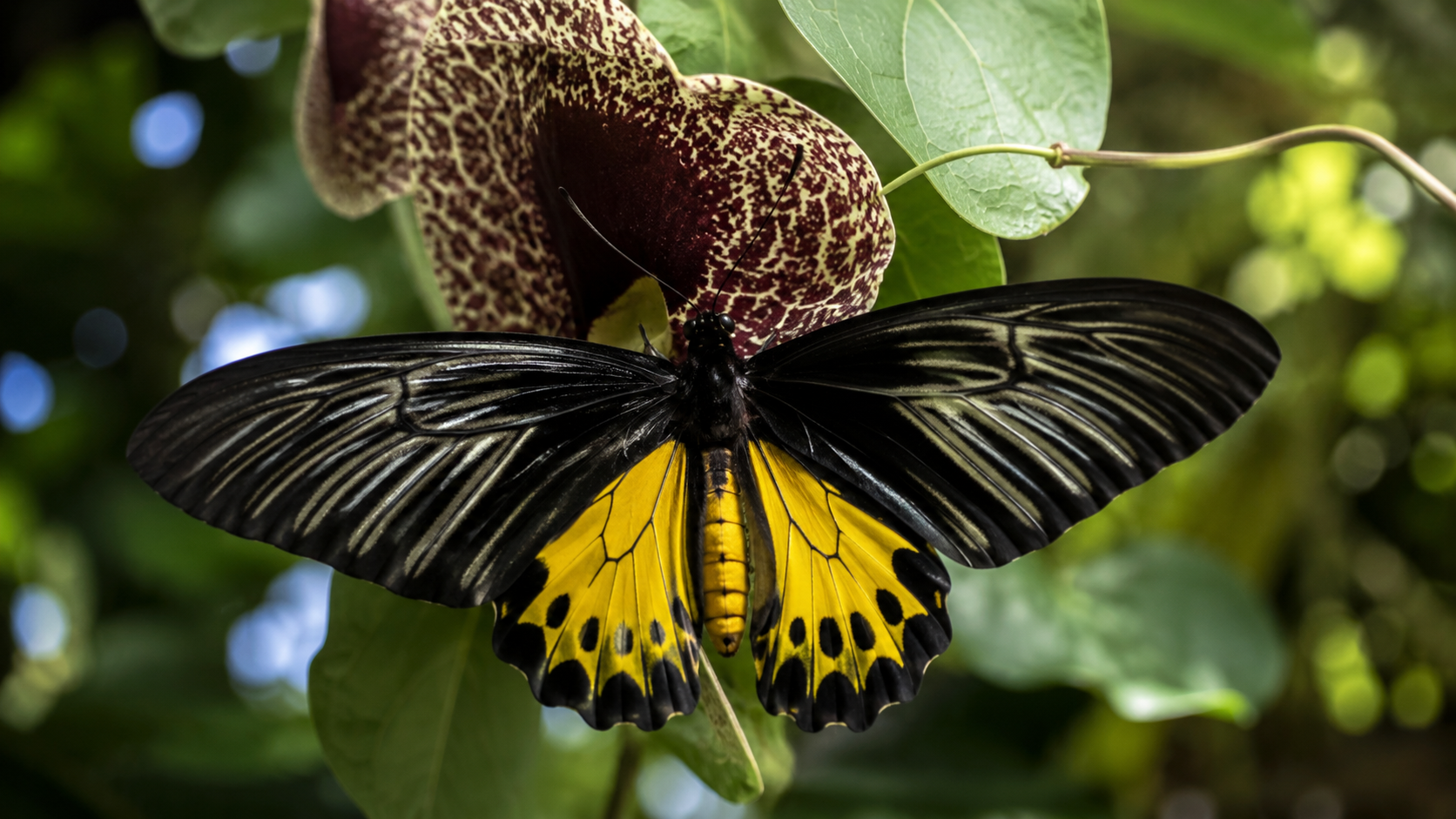
Troides helena is a large tropical swallowtail and one of the most widespread members of the true birdwing group. Males display velvety black forewings and hindwings marked with bold patches of iridescent golden-yellow, a body dusted with the same yellow, and a red-marked black thorax typical of the genus. Females are considerably larger and duller, with a more subdued pattern of pale cream-yellow patches on a greyish-black ground, lacking the males' brighter iridescence — a size and colour disparity shared across nearly all Troides species.
The hindwing's golden patches, formed from specialised light-scattering scales rather than pigment alone, give the species its common alternative name, the "common Jezebel-of-the-forest" in some older literature, though "common birdwing" is by far the standard English name today.
Range and habitat
Troides helena has an unusually broad distribution for a birdwing, spanning Sri Lanka and southern India, Bangladesh, Myanmar, Thailand, and Indochina, through peninsular Malaysia and much of Indonesia, to the Philippines and parts of southern China — a range that reflects the wide distribution of its Aristolochia host vines and the species' relative tolerance of secondary and disturbed habitat compared with more forest-restricted birdwings. It occurs from sea level to moderate hill elevations, in forest edges, mangrove margins, and even well-vegetated gardens and parks within its range, including flowering ornamental shrubs in urban and suburban settings.
Feeding and behaviour
Adults are strong, high-flying nectar feeders, visiting a wide range of flowering plants — including hibiscus, lantana, and Ixora in gardens — with a characteristic slow, gliding flight interspersed with powerful wingbeats that carries them well above ground level and along forest edges. Males patrol in search of females and are more frequently encountered than the generally more sedentary females, which spend more time in and around the vicinity of host plants.
Reproduction
Females lay eggs singly on the leaves and young shoots of Aristolochia vines. As in other birdwings, the caterpillars sequester toxic aristolochic acids from their host plant, rendering both larvae and adults distasteful and giving rise to the vivid red-and-black warning colouring of the caterpillar and the conspicuous markings of the adult. Pupation occurs attached to the host plant or nearby vegetation, with the chrysalis held upright by a silk girdle in the manner typical of swallowtails.
Conservation and threats
Troides helena is assessed as of Least Concern, remaining locally common across much of its extensive range thanks to its comparative tolerance of disturbed and semi-natural habitat, including gardens where its host vines are cultivated. Like all birdwings, it is listed on CITES Appendix II, which regulates international trade in live specimens and parts regardless of an individual species' conservation status — a reflection of the group's historical popularity with collectors and the risk that unregulated trade poses even to currently secure species. Habitat loss remains the main long-term pressure on more isolated populations, particularly where mangrove and coastal forest are cleared for development or aquaculture.
Interesting facts
- The species was formerly classified for a time in the genus Ornithoptera alongside the Australasian birdwings, before taxonomic revision placed the Asian mainland and Sundaland species in the separate genus Troides.
- Its wide range means it goes by several regional common names, including "yellow birdwing" and, in parts of South Asia, "common birdwing" — the name used consistently in this atlas.
- Because it readily uses garden-planted Aristolochia, the species is one of the more successfully attracted birdwings in dedicated butterfly-garden and conservation-planting projects across South and Southeast Asia.
- Its caterpillar's sequestered toxins make it one of several Aristolochia-feeding swallowtails studied as models for understanding how butterflies acquire chemical defences from their host plants rather than producing toxins themselves.