Comma
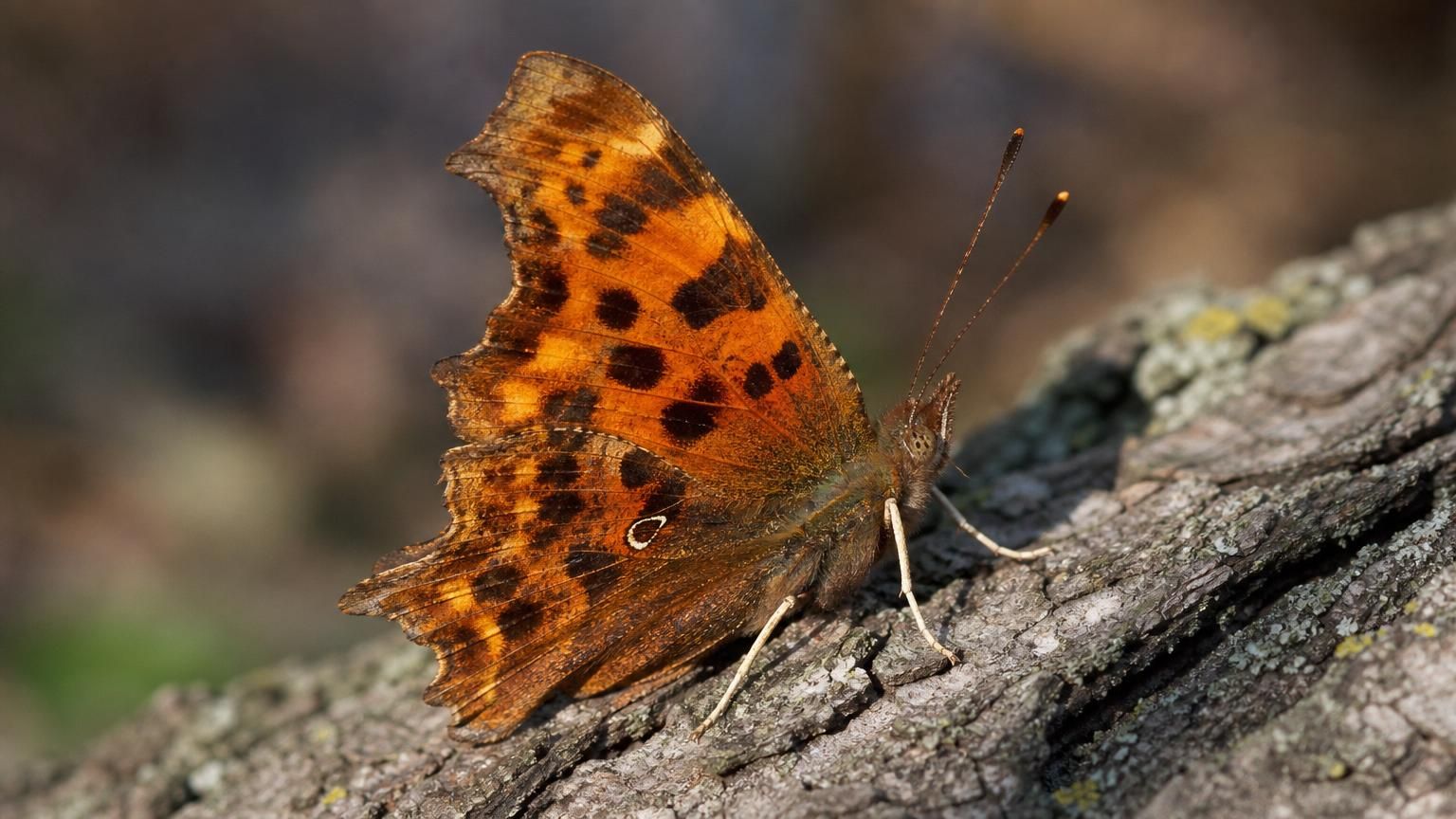
The comma is a butterfly with uneven, 'ragged' wing margins. On the underside of the hindwings is a white mark shaped like a comma — its second common name.
Key facts
- Latin name
- Polygonia c-album
- Family
- Nymphalidae
- Wingspan
- 42-52 mm
- Flight season
- March — October
- Host plants
- Stinging nettle, Hop, Currant, Elm
- Conservation status
- LCLeast Concern
Appearance
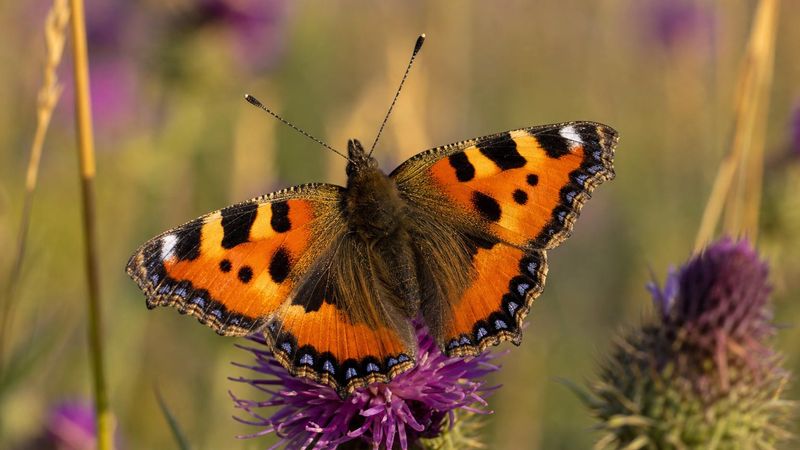
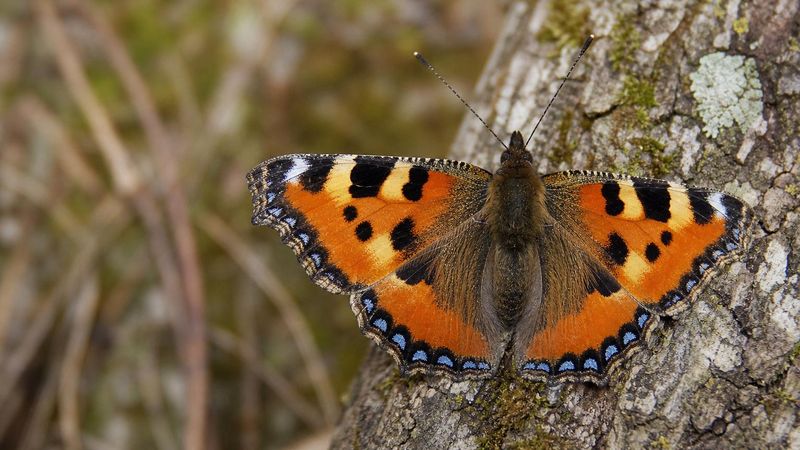
The comma (Polygonia c-album) is a medium butterfly with a wingspan of 42–52 mm. The most recognizable feature is strongly scalloped, "ragged" wing margins with angular projections. The upper side is orange-brown with dark spots.
The underside is dark brown with gray speckling — ideal camouflage on bark or a dead leaf. On the underside of the hindwings a white curved mark shaped like a comma (letter "C") is clearly visible — hence the species name c-album ("white C").
Range and habitat
Widely distributed in Europe and temperate Asia. In Russia from the western border to Siberia.
It lives on forest edges, river banks, in gardens and parks. It prefers partial shade with alternating open sunny patches.
Life cycle
In central Russia 2–3 generations per year. Imago overwinters. Overwintered adults appear in March. The summer generation (July–August) is less contrasted and looks "faded."
Eggs are laid singly on the upper side of host leaves. Young caterpillars are dark; older ones have a white dorsal patch resembling bird droppings. Pupa angular, brown with golden spots.
Interestingly, there are two seasonal morphs of the summer generation — a light form (similar to the autumn form) and a dark ("hutchinsoni") form that breeds immediately, while the light form enters overwintering.