Peacock
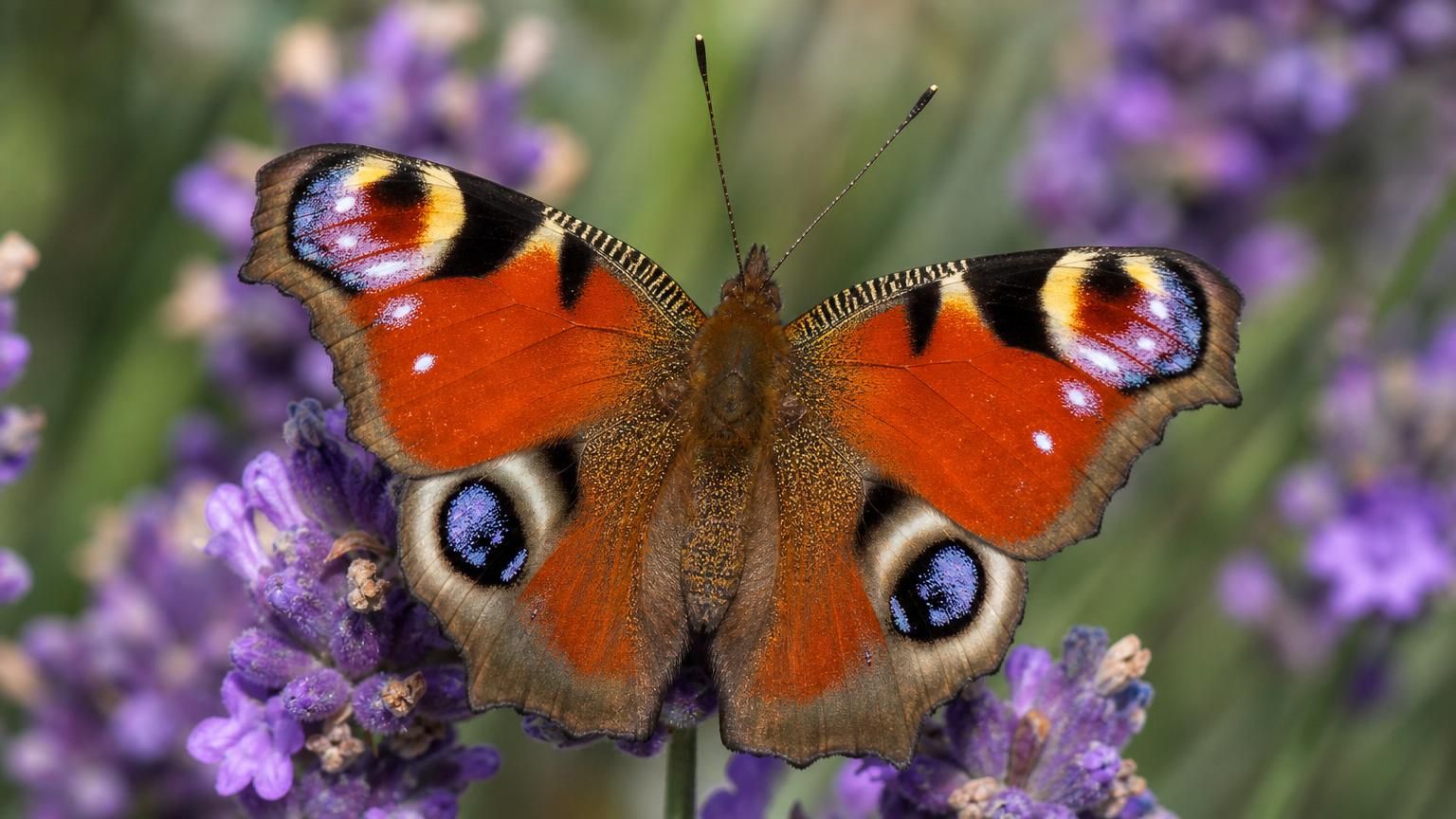
The peacock is one of the most beautiful temperate-zone butterflies. Four large wing 'eyes' mimic a predator's gaze, protecting it from birds.
Key facts
- Latin name
- Aglais io
- Family
- Nymphalidae
- Wingspan
- 50-62 mm
- Flight season
- March — October
- Host plants
- Stinging nettle, Common hop
- Conservation status
- LCLeast Concern
Appearance
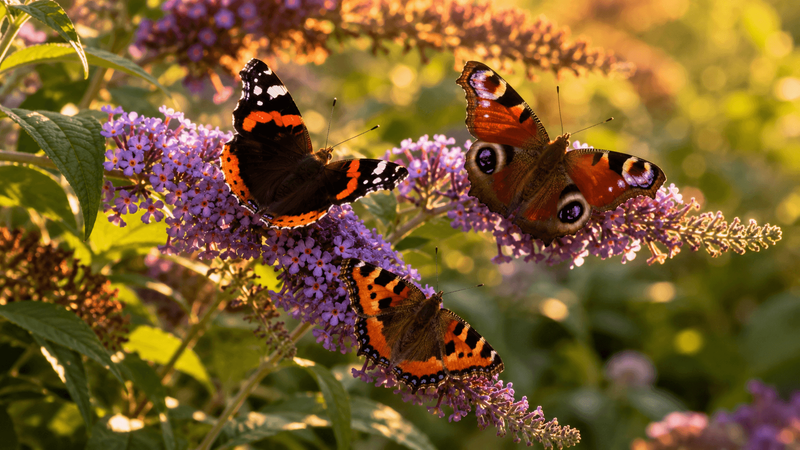
The peacock (Aglais io) is among the most beautiful butterflies of the temperate zone. Wingspan 50–62 mm. The upper side is reddish brown with a brick tint. The main field mark — four large 'eyespots': two on the forewings (with blue, yellow, and black concentric rings) and two on the hindwings.
The underside contrasts sharply with the upper side: dark brown, almost black, with a chaotic marbled pattern. With wings folded the butterfly is completely inconspicuous against bark or fallen leaves.
Range and Habitat
The peacock occurs throughout Europe and the temperate belt of Asia to the Japanese islands. In Russia it is found everywhere in the forest and forest-steppe zones, reaching up to 2,500 m in mountains.
It prefers sunny forest edges, meadows, river banks, gardens, and parks. It is common in urban squares where suitable host plants and nectar sources grow.
Life Cycle
Like the small tortoiseshell, the peacock overwinters as imago. Overwintered butterflies appear in March when snow may still lie on forest edges.
The female lays eggs on the underside of nettle leaves in dense clusters. Caterpillars are dark, almost black with white dots and spines, living in colonies. Shortly before pupation they disperse alone.
The pupa is angular, brown or greenish with golden tubercles. Adults of the new generation emerge after about two weeks. In central Russia there are two generations per year: a summer brood (July–August) and an autumn brood (August–September) that enters winter dormancy.
Defensive 'Eyes'
The 'eyespots' on the peacock's wings are an example of aposematic patterning. When suddenly threatened the butterfly spreads its wings sharply, displaying all four 'eyes' — for a fraction of a second this can paralyse a small bird predator, giving the butterfly time to escape.
Studies show that birds that have encountered this display pattern avoid attacking peacocks for a long time. More on the role of colour — in the article why butterflies have bright wings.
Behaviour
The peacock is an active diurnal species. Males occupy sunny glades and chase any competitor entering their territory. In warm weather they readily bask on the ground, stones, or fences with wings spread. When alarmed they instantly open their wings with 'eyespots' — this reflex is so fast that a bird predator often jumps aside.
They feed on nectar of burdock, buddleia, clover, fireweed, and thistle. In autumn they visit sap of overripe fruit.
Reproduction
The female lays eggs on the underside of nettle leaves in small clusters. Eggs are greenish and ribbed. Caterpillars are dark, almost black with white dots and branched spines, living in colonies. Before pupation they scatter singly. The pupa is brown or greenish with metallic tubercles; the pupal stage lasts about two weeks. In central Russia there are two generations per year: a summer brood (July) and an autumn brood (August–September) that overwinters.
Overwintering
The peacock overwinters as imago — together with the small tortoiseshell and mourning cloak. In autumn butterflies build fat reserves and seek shelter: attic, cellar, cave, or tree hollow. In dark rooms the dark underside of the wings provides ideal camouflage. Overwintering lasts from October to March; on warm winter days butterflies sometimes fly out briefly and return.
Interesting Facts
- When a bird attacks from behind, the 'eyespots' mimic the gaze of a large predator — triggering innate fear in most birds.
- In experiments, individuals with painted-over 'eyes' were eaten by birds about four times more often than untreated ones.
- The peacock can produce a quiet scraping sound by rubbing its wings — this deters bats in winter shelters.
- In Britain it is one of the three most recognisable butterflies; it is called the European Peacock Butterfly.