Red Admiral
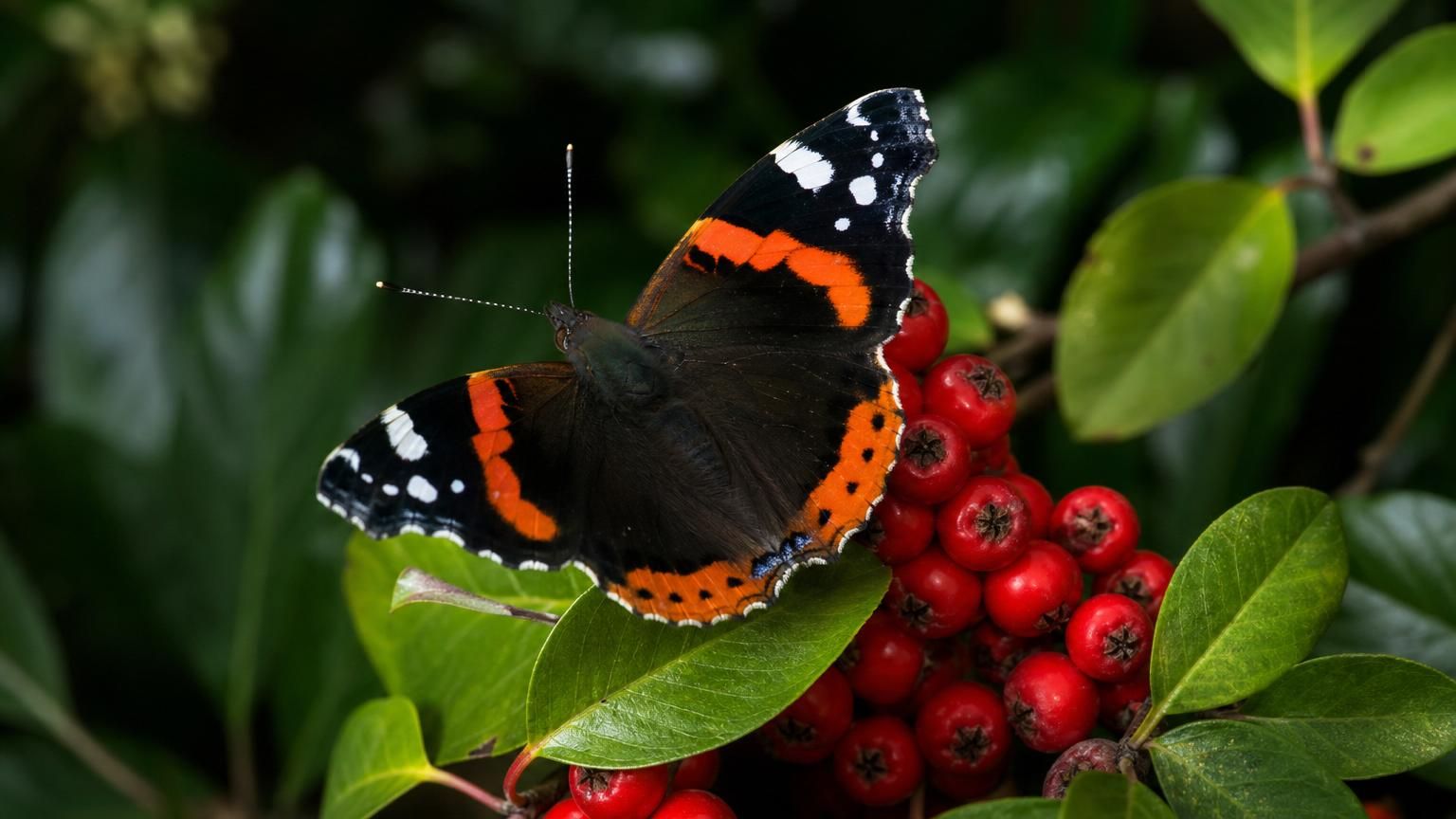
The red admiral is a migratory butterfly with dark brown wings and a scarlet band. Each summer it migrates into temperate Eurasia, reaching the northern part of its range from the Mediterranean.
Key facts
- Latin name
- Vanessa atalanta
- Family
- Nymphalidae
- Wingspan
- 56-72 mm
- Flight season
- May — October
- Host plants
- Small nettle, Raspberry, Thistle
- Conservation status
- LCLeast Concern
Appearance
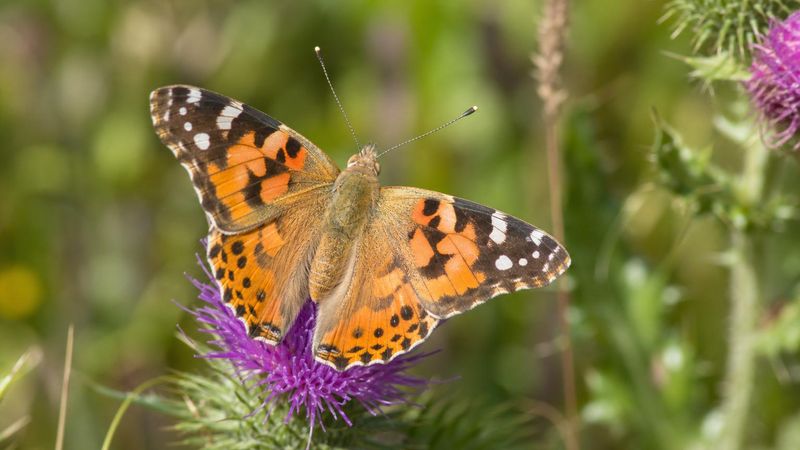
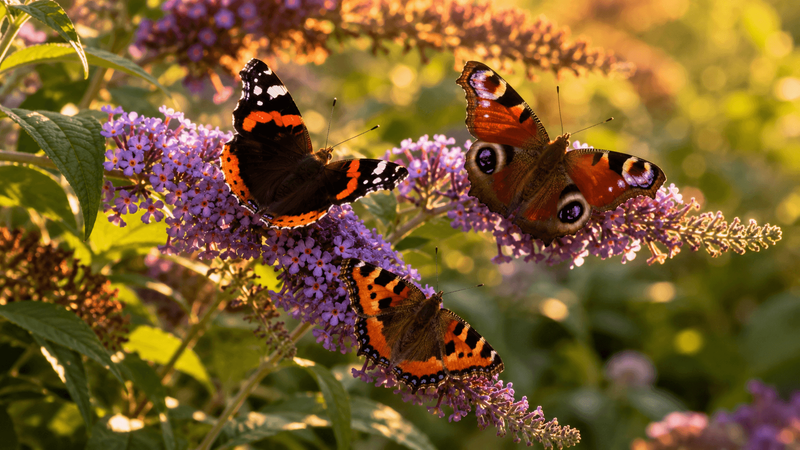
The red admiral (Vanessa atalanta) is a large butterfly with a wingspan of 56–72 mm. The upper side of the wings is blackish brown with a bright scarlet band across the forewings and a red margin on the hindwings. White spots adorn the forewing tips.
The underside of the forewings resembles the upper pattern. The hindwings below are dark marbled brown — excellent camouflage on bark and leaves.
The red admiral is one of Europe's largest nymphalids and is unmistakable thanks to its black-and-red contrast.
Range and habitat
The red admiral is widespread in Europe, Asia Minor, North Africa, and North America. In Russia it occurs over most of the country from Kaliningrad to the Far East.
Habitat is varied: forest edges, river banks, gardens, parks, mountain valleys. Recorded up to 3,000 m above sea level.
Migration and overwintering
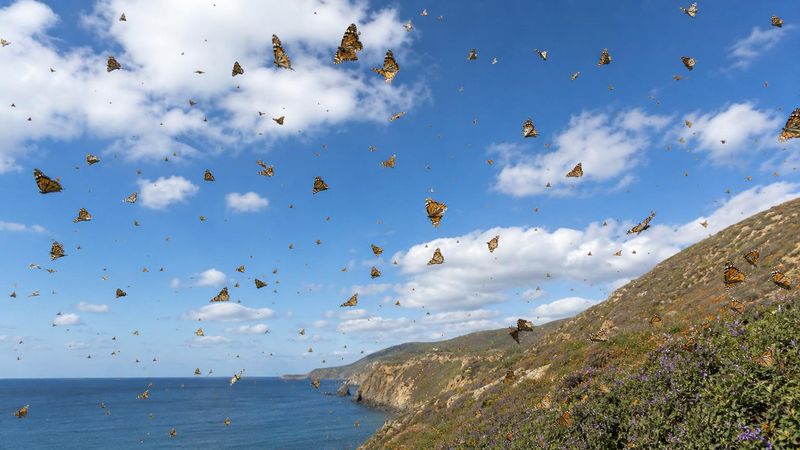
The red admiral is migratory. Wintering takes place in the Mediterranean, the Canary Islands, and North Africa. With spring warmth butterflies fly north, reaching Scandinavia and Russia's Arctic coast. Migration speed can reach 50 km per day with a tailwind.
The autumn return migration is less marked: some die with the first frosts; others attempt to overwinter in temperate latitudes. In warm winters individuals survive in southern Europe. In mountains of southern Spain and Turkey the species winters regularly.
Behavior
The red admiral is diurnal; on hot days it often rests in shade. Males hold sunny elevations and defend them against rivals. In autumn butterflies readily feed on sap of overripe fruit — fallen apples, pears, plums — and can be watched at close range.
Adults are very wary: they flush at the slightest movement but allow close approach when feeding on flowers or fruit.
Reproduction
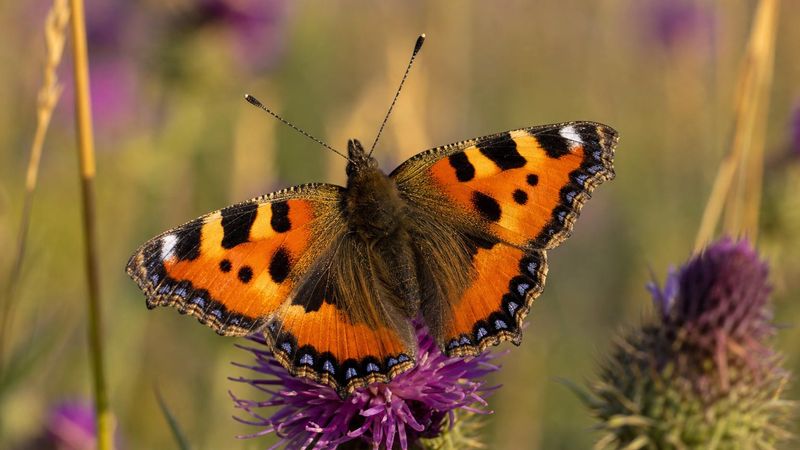
The female lays eggs singly on the upper side of young nettle leaves. The caterpillar is dark with yellowish side spots; unlike the small tortoiseshell it lives alone in a rolled nettle-leaf shelter. The pupa is angular and brownish. Full cycle from egg to imago takes about 40 days. In Russia one or two generations develop per year.
Interesting facts
- The scientific name Vanessa atalanta honors the swift huntress Atalanta from Greek myth — a hint at the butterfly's rapid flight.
- Red admirals can fly above 3,000 m, crossing the Alps and Caucasus.
- In Ireland the red admiral is one of few butterflies seen regularly: migrants from the continent visit every summer.
- Autumn individuals often ferment on fruit sap and may seem "drunk" — reluctant to fly when approached.