Migration
Butterfly migration is seasonal movement over long distances. The record holder is the monarch, at up to 4,500 km; red admirals and painted ladies also migrate.
What is migration in butterflies
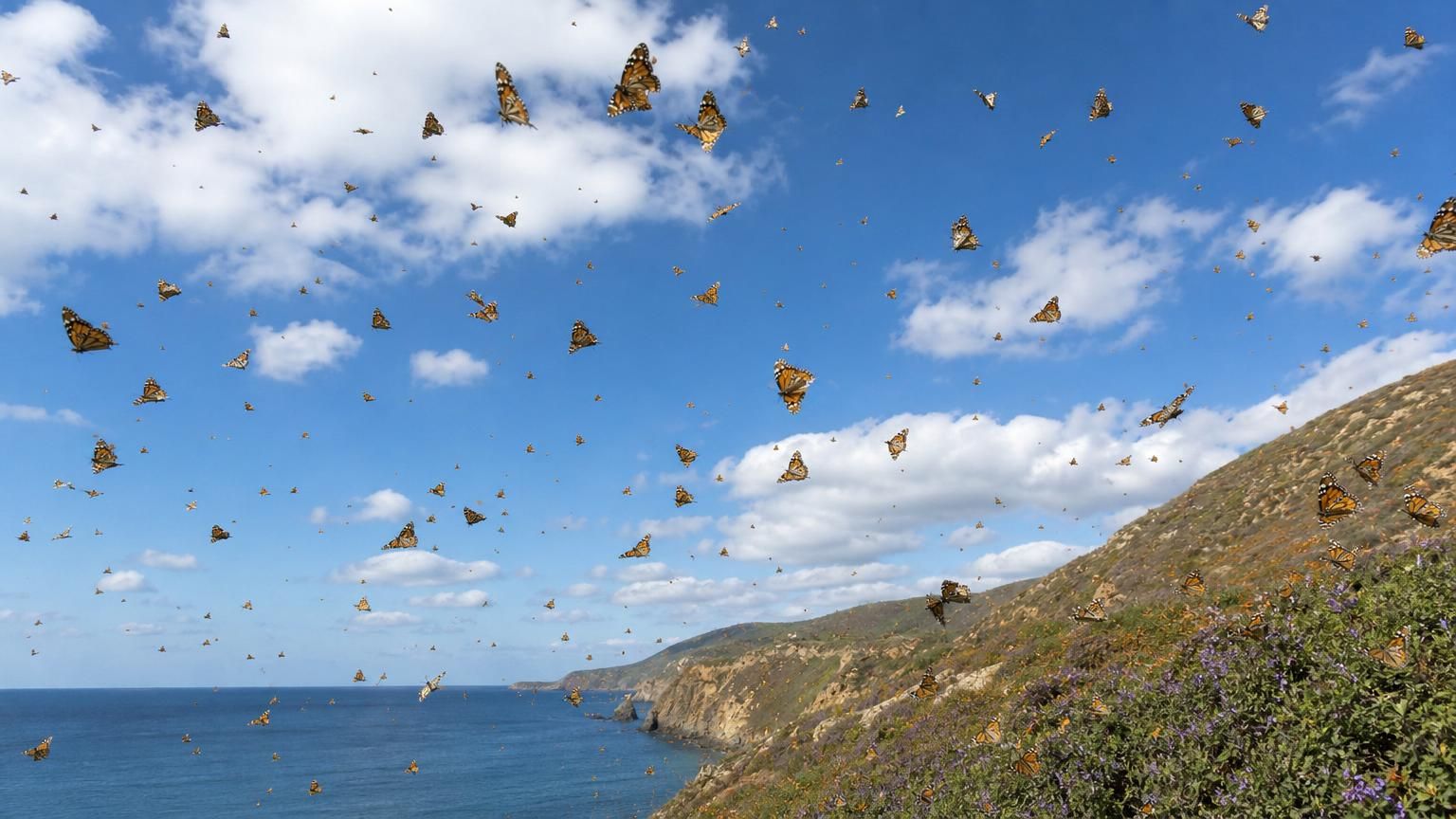
Migration in butterflies is directed seasonal movement over long distances linked to changing environmental conditions. Unlike random dispersal, migration is predictable in direction and timing.
Butterflies migrate much less than birds, but some species make remarkable journeys.
Monarch — the main migrant
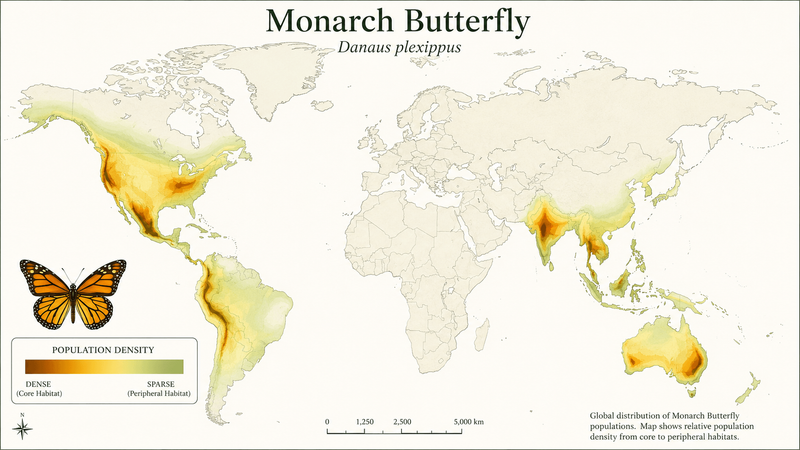
The monarch (Danaus plexippus) makes the best-known insect migration. Each year:
- In autumn butterflies fly from Canada and the northern USA southwest to the mountains of Michoacán, Mexico (up to 4,500 km)
- There they overwinter in millions on oyamel fir trees
- In spring several generations gradually return north
Navigation uses a “solar compass” — butterflies determine direction by the sun's position, correcting course with internal biological clocks.
Painted lady — intercontinental record
The painted lady (Vanessa cardui) is a cosmopolitan with one of the longest migration routes. Genetic studies show butterflies cross the Sahara from south to north — total route over several generations is about 12,000 km.
In Russia the painted lady appears in waves: in good years its numbers surge sharply in the second half of summer.
Red admiral in Russia
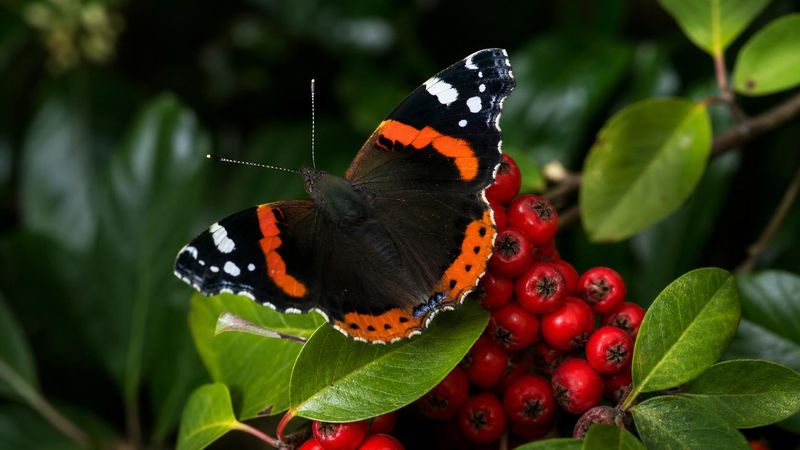
The red admiral (Vanessa atalanta) migrates partly: in autumn individuals from northern populations fly south; some overwinter in the Mediterranean. A small number overwinter in Russia, sheltered in forest litter.
More on butterfly life — in the section life of butterflies.