Range
Range is the geographic area within which a given butterfly species lives. Ranges may be continuous, fragmented, expanding, or shrinking.
Definition
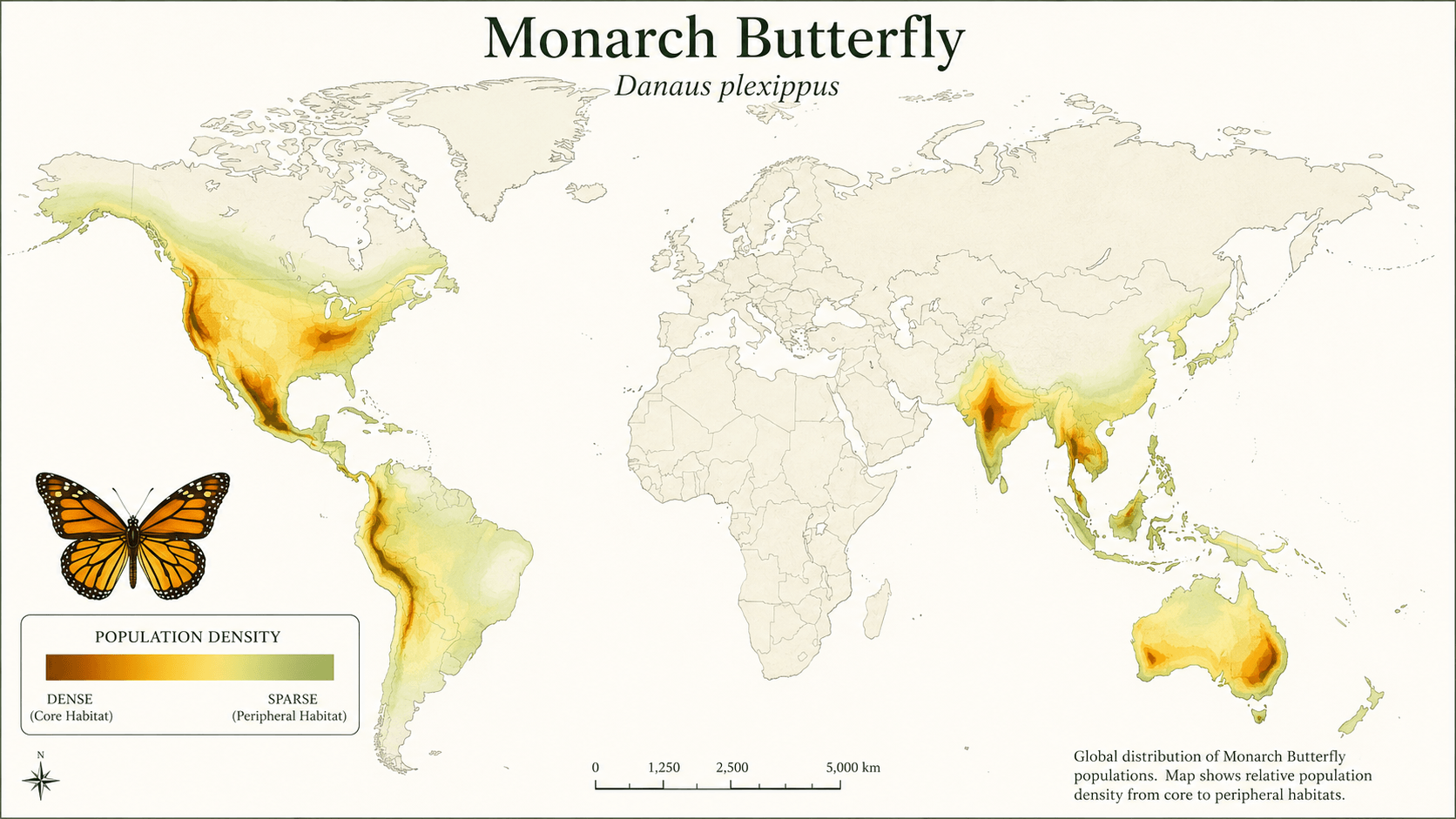
Range (from Latin area — area, space) is the geographic region within which a given species permanently lives under natural conditions. A range shows where you can find the species, although within it the species is not distributed evenly.
What determines range limits
- Climate — minimum and maximum temperature, humidity, length of the season
- Host plants — caterpillars can live only where their host plant grows
- Relief — mountain ranges as barriers or corridors for dispersal
- Competition — other species occupying the same niche
- Historical factors — glacial periods, continental drift
Types of ranges
Continuous — the species occurs across the whole territory without major gaps. Example: small tortoiseshell (Aglais urticae) — from Western Europe to the Russian Far East.
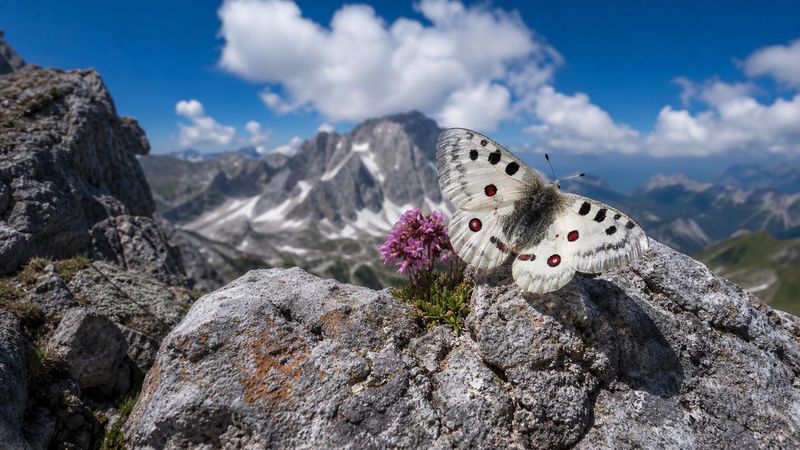
Disjunct — separate isolated patches. Example: Apollo (Parnassius apollo) — mountain isolates in Europe and Asia separated by lowlands.
Relict — the range has shrunk greatly compared with the historical past. Typical of species displaced by climate change or human activity.
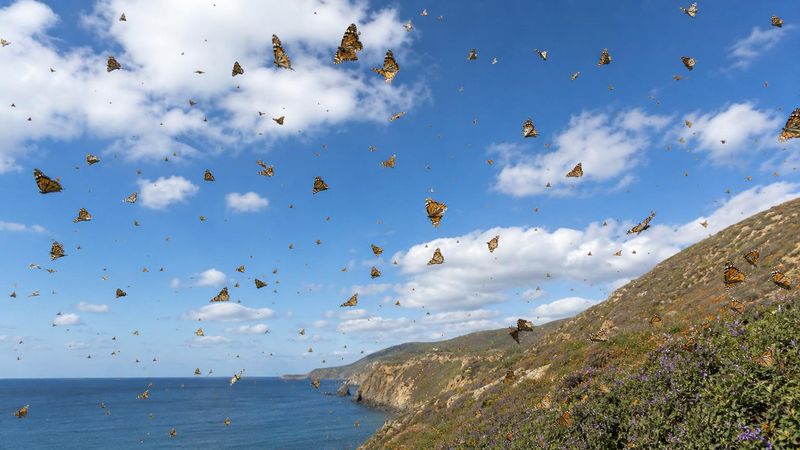
Expanding — the species is actively colonizing new territories. Example: painted lady (Vanessa cardui) — annual population surges with mass northward dispersal.
Range and species conservation
Range size and stability are key indicators of a species' status. Species with small or shrinking ranges are listed in Red Data Books. For butterflies in Russia, species whose range is limited to a few local populations are included in the national Red Book.
Range maps are in the distribution maps section.