Reintroduction
Reintroduction is the deliberate release of captive-bred or translocated individuals into a habitat where a species has gone locally extinct, aiming to re-establish a self-sustaining wild population.
Definition
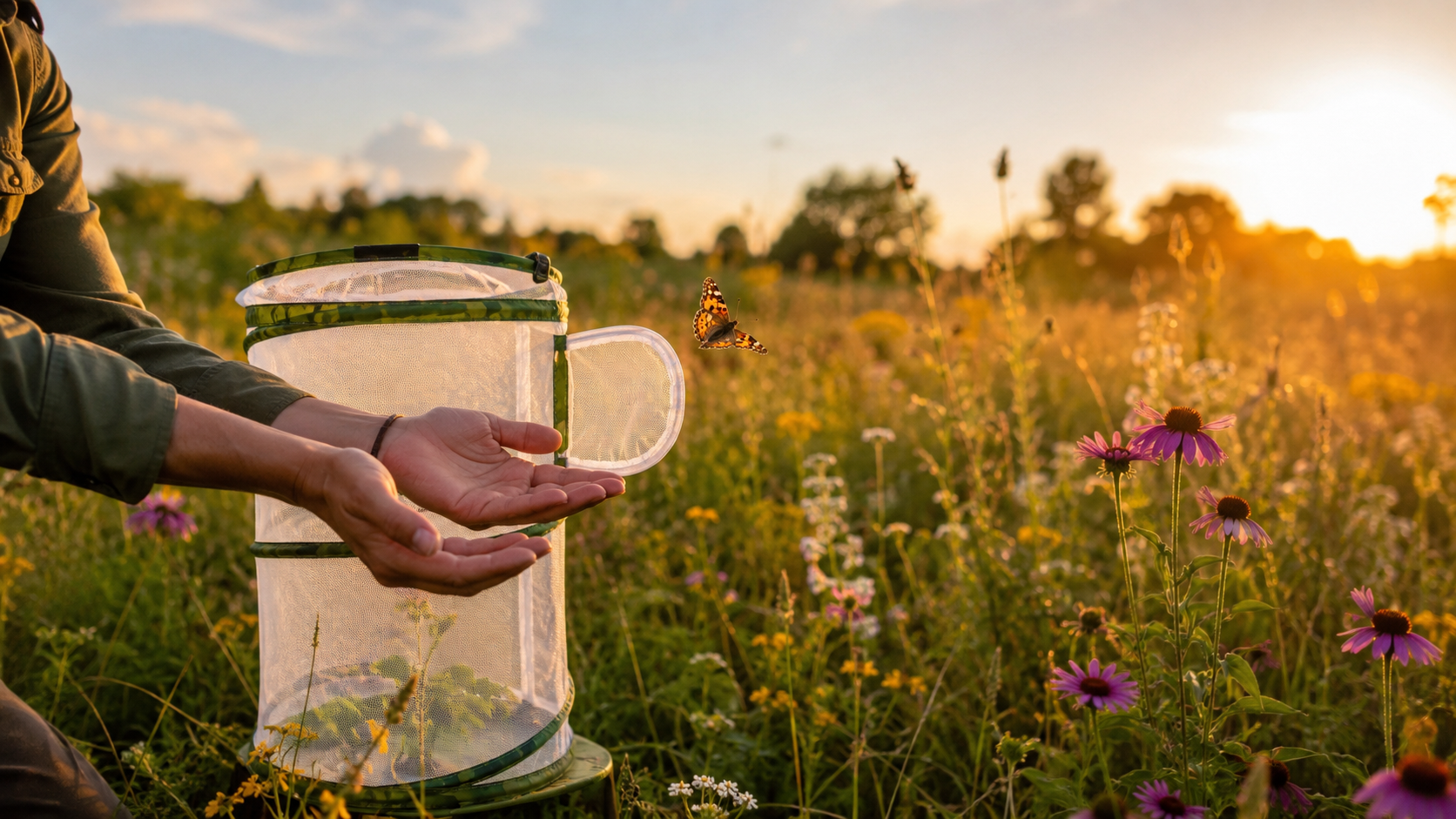
Reintroduction is the deliberate release of individuals of a species — bred in captivity, raised from translocated eggs or larvae, or moved directly from a healthy donor population — into a site within the species' historical range where it has gone locally extinct. The goal is not a one-off release but the establishment of a self-sustaining wild population that persists without further human intervention.
Reintroduction is distinct from simple translocation, which moves individuals between existing populations (for example, to boost genetic diversity), and from introduction, which places a species somewhere it never previously occurred.
Why reintroduction is hard
A butterfly reintroduction can only succeed if the cause of the original extinction has actually been identified and fixed. Releasing butterflies into a site that still lacks the right host plant, the right microclimate, or — in species with complex life cycles — the right symbiotic partner simply produces a doomed colony that fades out within a few generations, sometimes masking the failure for a year or two before it becomes obvious.
Because of this, modern reintroduction programs invest heavily in habitat restoration and monitoring before any butterflies are released, and continue monitoring for years afterward to confirm the population is truly self-sustaining rather than propped up by repeated re-releases.
The Large Blue: a landmark case
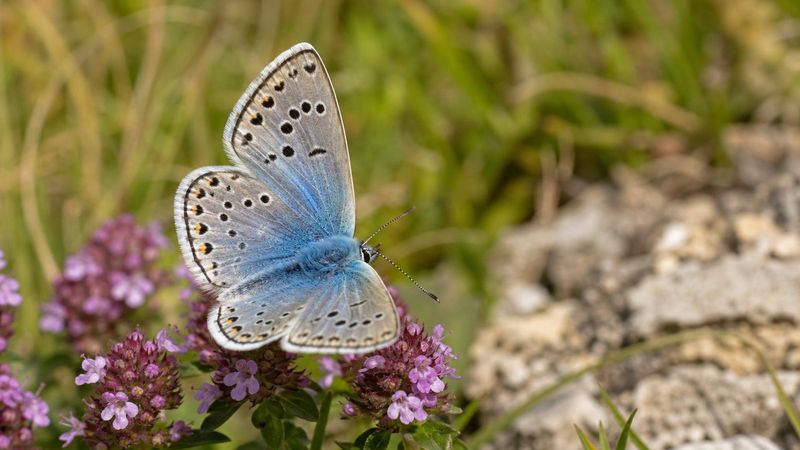
The best-documented butterfly reintroduction is the Large Blue (Maculinea arion) in the United Kingdom. The species was declared extinct in Britain in 1979, at the end of a long decline that puzzled conservationists for decades — habitat protection alone kept failing to save it.
The breakthrough came from research showing that Large Blue caterpillars are obligate parasites of a single red ant species, Myrmica sabuleti, which itself depends on short, warm, closely-grazed turf. As traditional grazing declined across Britain's chalk grasslands in the mid-20th century, the ant's habitat cooled and thickened, the right ant species was replaced by a less suitable relative, and the butterfly's host disappeared — taking the Large Blue with it, even from sites that still looked superficially fine for butterflies.
Once this mechanism was understood, a reintroduction program starting in 1983 used stock from Sweden, paired with grazing regimes restored specifically to favor M. sabuleti. The result is one of conservation biology's clearest success stories: the Large Blue now flies at dozens of restored sites across southern England, decades after being declared nationally extinct.
Reintroduction and the Red List
Reintroduction is one of the key recovery tools referenced by international frameworks such as the IUCN Red List: a species downgraded from Extinct in the Wild, or recovering from Critically Endangered status, often owes that improvement specifically to a documented reintroduction program rather than to natural recolonization. Conservation plans built around Red List assessments frequently name reintroduction as the concrete next step once the underlying threat has been addressed.
See also: range, Large Blue, International Red List of Butterflies.