Relict Species
A relict species is a survivor of a once-widespread group whose range has contracted to isolated pockets — often mountaintops or glacial refuges — left over after past climate change.
Definition
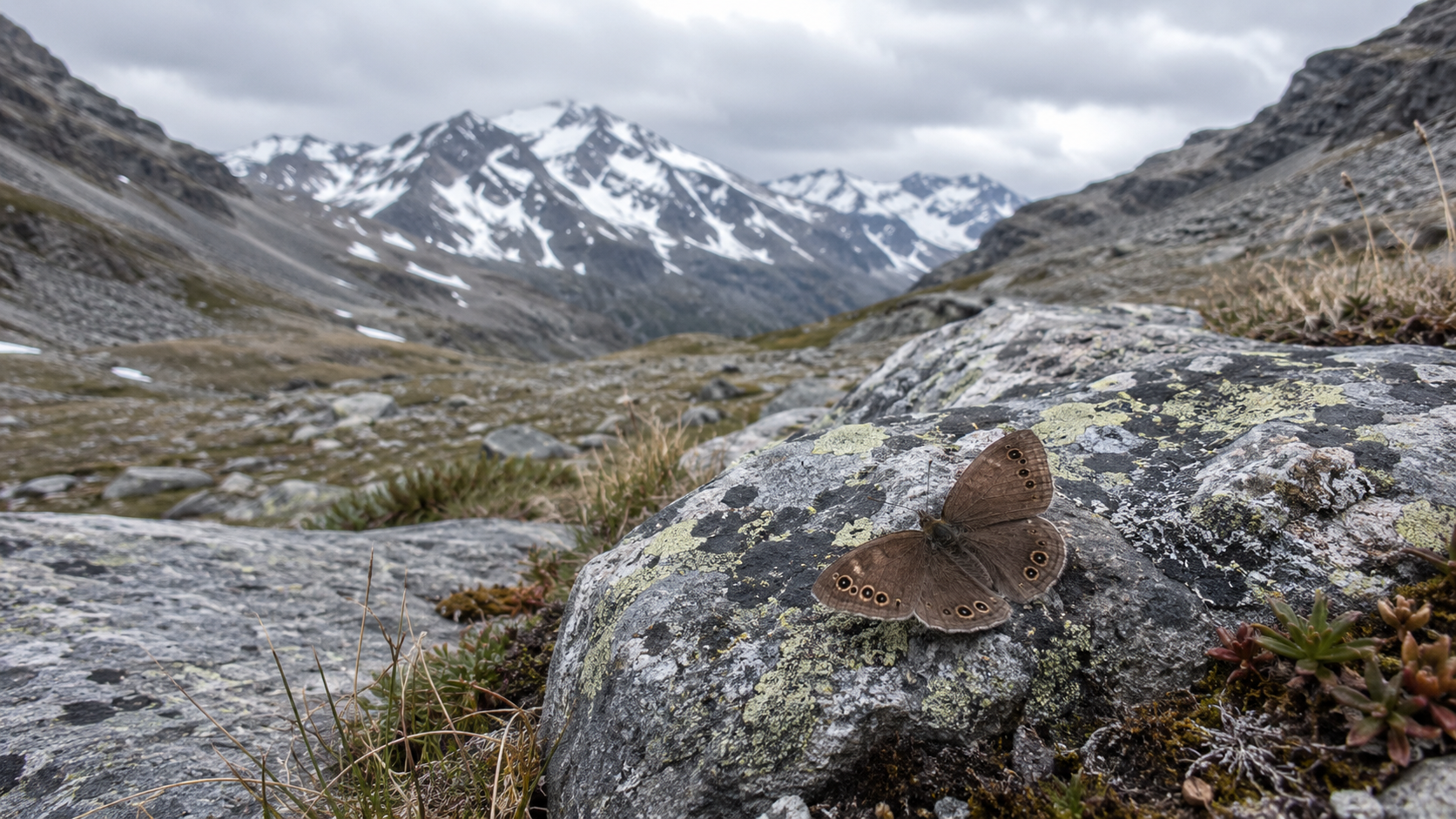
A relict species is one whose current distribution represents only a small, isolated remnant of a formerly much larger range. Relict populations typically persist in refuges — mountain summits, cave systems, isolated wetlands, or other buffered environments — that retained suitable conditions after a broader climatic or geological change eliminated the species from the surrounding, now-unsuitable landscape.
The key distinction from a simple rare species is historical: a relict's rarity and fragmentation is a direct, traceable consequence of a past environmental shift, not merely a species that has always been naturally scarce or narrowly distributed.
Ice-age relicts in European mountains
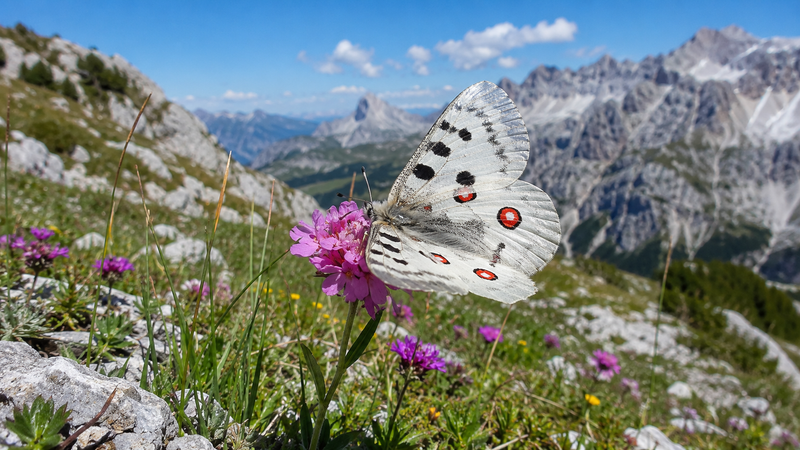
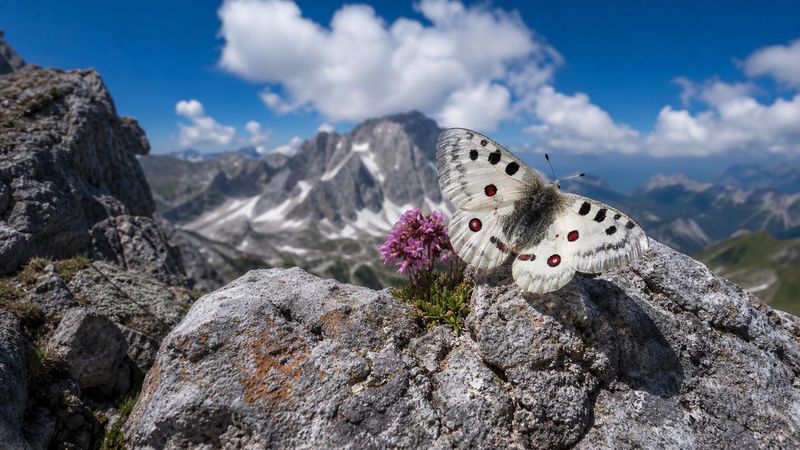
The most common source of relict butterfly distributions in the Northern Hemisphere is the retreat of cold-adapted species after the last glacial period. During the ice ages, many species now confined to mountains had wide, continuous lowland ranges across a colder Europe and Asia. As the climate warmed starting roughly 12,000 years ago, warm-adapted lowland habitat expanded and cold-adapted butterflies retreated to the only places that still matched their climatic requirements — mountain ranges, where altitude recreates cold-climate conditions.
This retreat left populations stranded on separate mountain ranges — the Alps, the Carpathians, the Pyrenees, the Caucasus — with warm, unsuitable lowlands in between acting as a barrier no less effective than open ocean would be for an island species. Over thousands of generations of isolation, some of these populations have diverged into distinct subspecies or even separate species.
Erebia: a genus full of relicts
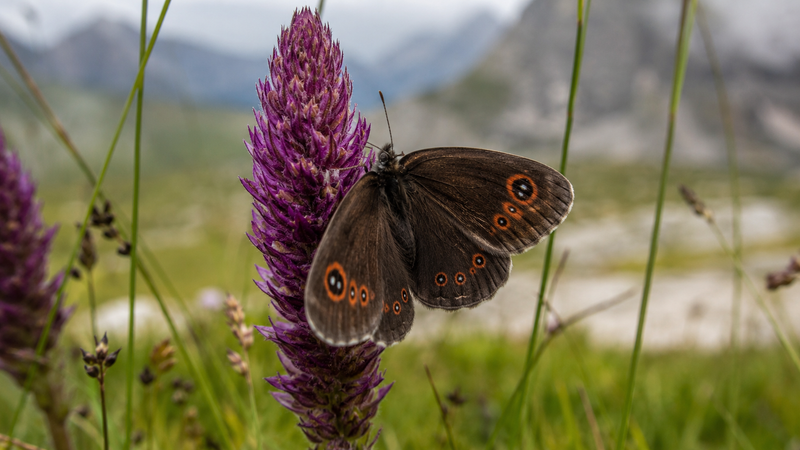
The ringlets of genus Erebia are one of the clearest illustrations of this pattern in European butterflies. Many Erebia species, including the woodland ringlet (Erebia medusa), show exactly the fragmented, mountain-restricted distribution expected of ice-age relicts, with genetically distinguishable populations on different mountain systems that have had no contact with each other since roughly the end of the last glaciation. The genus as a whole is often used by researchers as a model system for studying how ice-age climate change reshaped the distribution of cold-adapted species.
Relicts and conservation
Relict populations carry conservation significance disproportionate to their small size: because they are often genetically distinct from populations elsewhere and adapted to specific local conditions, their loss represents an irreplaceable piece of evolutionary history, not simply a local population decline that could in principle be recolonized from elsewhere. This is one reason isolated mountain butterfly populations frequently receive targeted protection even when the species as a whole is not considered globally threatened.
See also: endemic, Butterflies of Mountain Ecosystems.