Woodland Ringlet
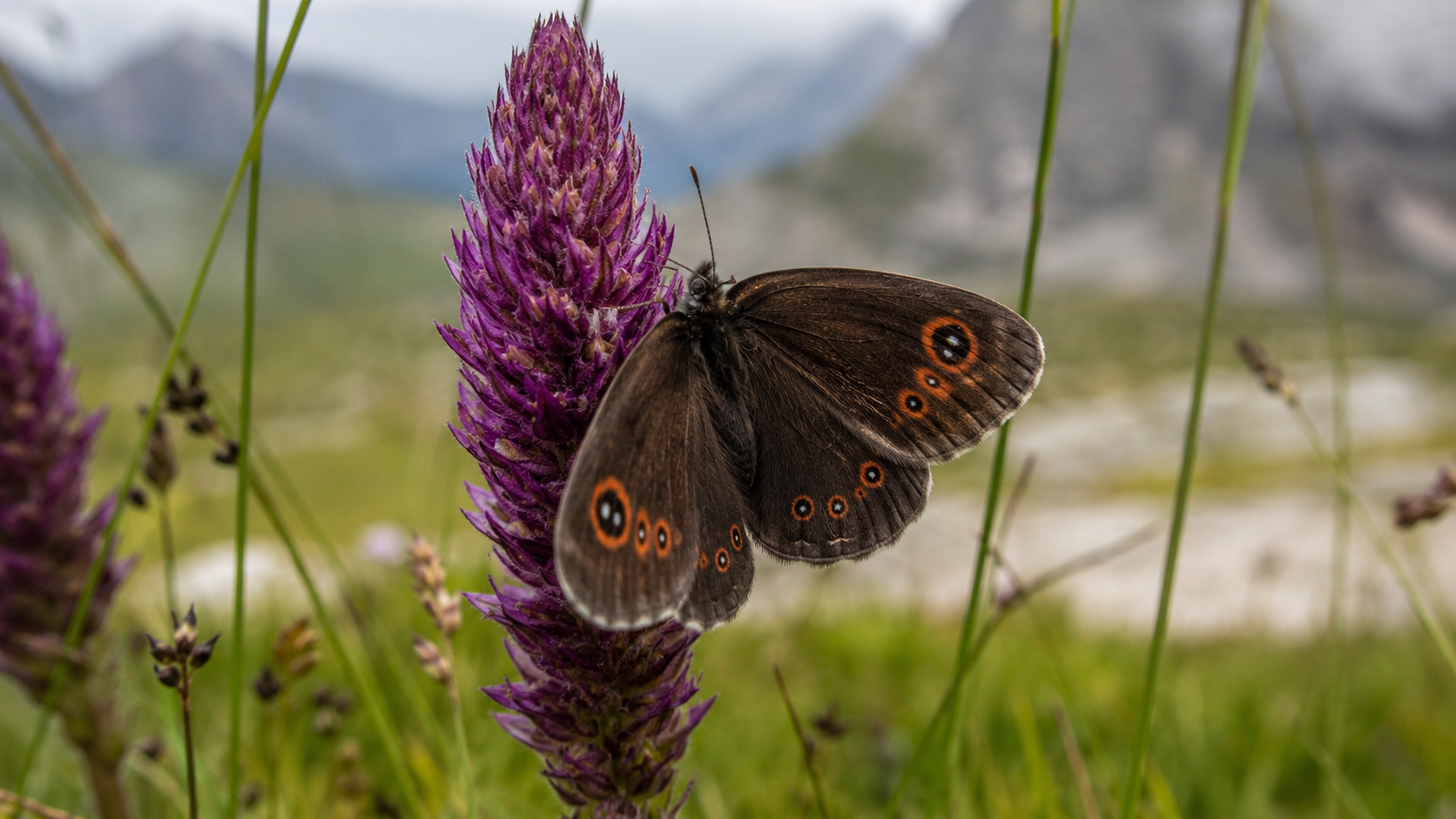
The woodland ringlet (Erebia medusa) is a satyr butterfly of damp meadows across central Europe, with chocolate-brown wings and orange-ringed eyespots.
Key facts
- Latin name
- Erebia medusa
- Family
- Nymphalidae
- Wingspan
- 34–45 mm
- Flight season
- May — June
- Host plants
- Purple moor-grass (Molinia caerulea), Meadow-grass (Poa pratensis), Red fescue (Festuca rubra), Wood small-reed (Calamagrostis epigeios)
- Conservation status
- LCLeast Concern
Appearance
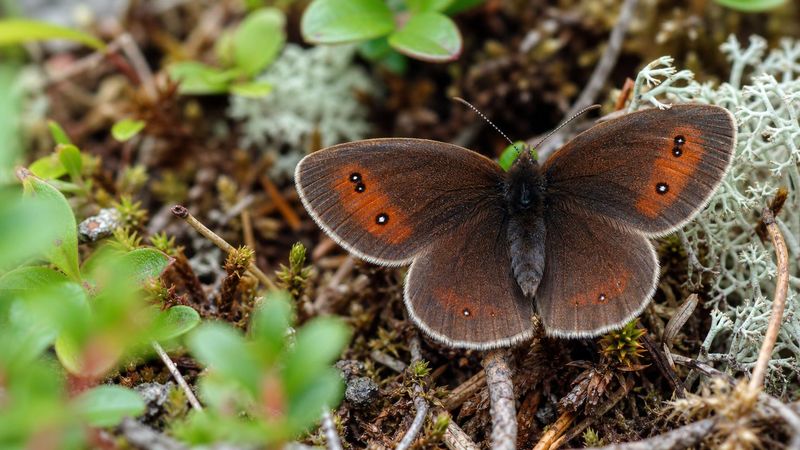
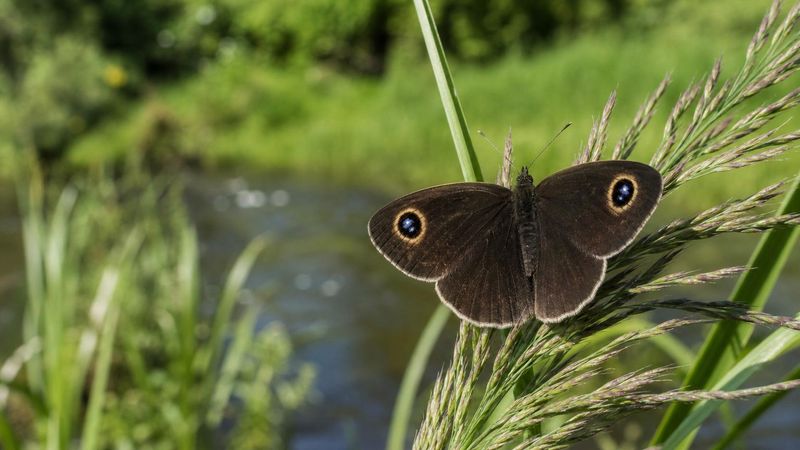
The woodland ringlet is a medium-sized butterfly with a wingspan of 34–45 mm. Both surfaces of the wings are dark chocolate-brown; the upperwing bears a band of conspicuous orange-ringed, white-pupilled black eyespots that run from the forewing apex to the outer hindwing margin — usually four to six spots on the forewing and four to five on the hindwing.
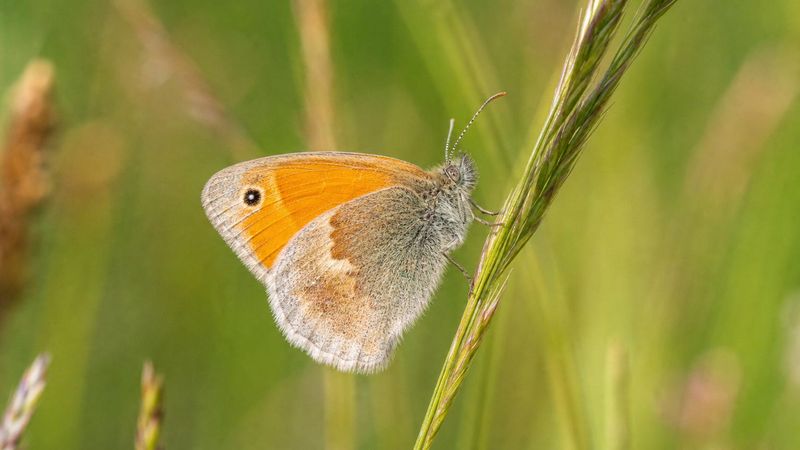
The underside repeats the eyespot pattern on a slightly paler, greyish-brown ground, providing camouflage when the butterfly rests with wings closed on dead grass. Males are marginally darker than females; worn individuals lose both the orange rings and the white pupils, making late-season identification tricky.
Range and habitat
The woodland ringlet ranges from the Alps and Carpathians east through Central Europe, Poland, and the Baltic states to southern Scandinavia, and continues across the Urals and West Siberia to the Altai and Sayan mountains. Isolated populations exist in the Harz and Thuringian Forest in Germany.
Preferred habitats are damp, tall-grass meadows, forest clearings, and the margins of wet woodland rides. Unlike some Erebia species that are strictly montane, E. medusa occurs from near sea level in Poland and Russia to about 1,800 m in the Alps, wherever stands of purple moor-grass (Molinia caerulea) and other tall grasses thrive in moist, moderately shaded conditions.
Life cycle
The woodland ringlet is single-brooded, with adults flying from mid-May to the end of June depending on altitude and latitude. In Alpine populations the flight period begins in late June and ends in July.
Females lay eggs singly on grass blades. The young caterpillar hatches in summer but grows slowly through autumn; it overwinters as a small larva, often among the basal leaf sheaths of the host plant, and completes its development the following spring. The pupa is formed at the base of a grass stem or in the soil litter. The larval stage lasts around ten months in total — far longer than most temperate butterflies.
Behaviour
Adults are most active during sunny spells; they close their wings and become almost invisible in dull weather. Males perch on grass stems or patrol short circuits over meadow vegetation, waiting for females. Both sexes feed on low-growing flowers — knapweed, clover, and ragged-robin are favourites.
The species is relatively sedentary: most individuals remain within a few hundred metres of their emergence site. This makes locally isolated populations very vulnerable to habitat loss.
Conservation
The woodland ringlet is listed Least Concern (LC) globally, but regional trends are negative in parts of Western and Central Europe. Traditional hay-meadow management, with late summer mowing, benefits populations by maintaining the open, grassy structure and preventing scrub encroachment. Where drainage schemes have lowered water tables or where meadows have been converted to arable fields, the species disappears rapidly and rarely recolonises once lost.