Small Heath
The small heath is a small reddish-brown butterfly of open meadows. It is one of the most abundant browns and occurs almost everywhere.
Key facts
- Latin name
- Coenonympha pamphilus
- Family
- Nymphalidae
- Wingspan
- 26-36 mm
- Flight season
- April — October
- Host plants
- Meadow grass, Red fescue, Tufted hair-grass, Crested hair-grass
- Conservation status
- LCLeast Concern
Appearance
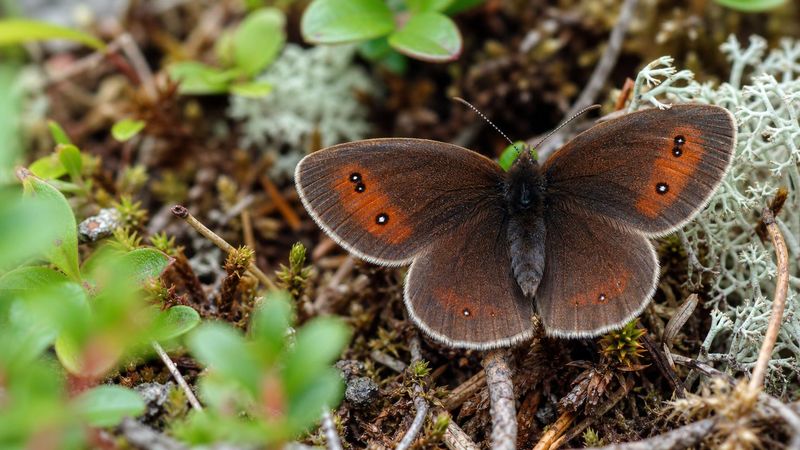
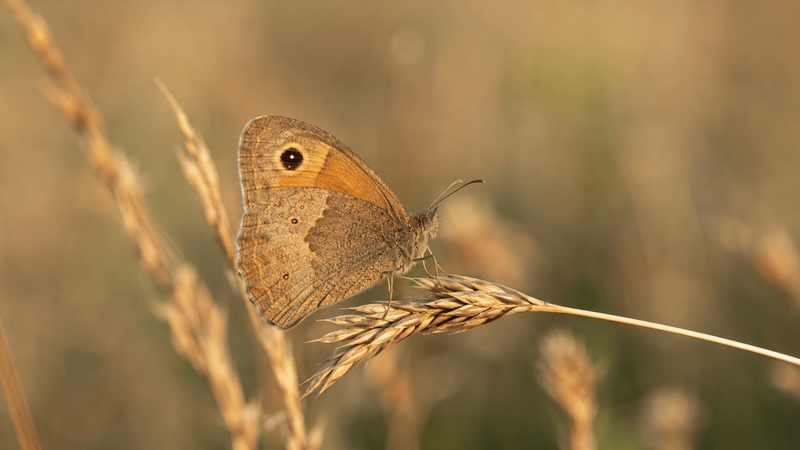
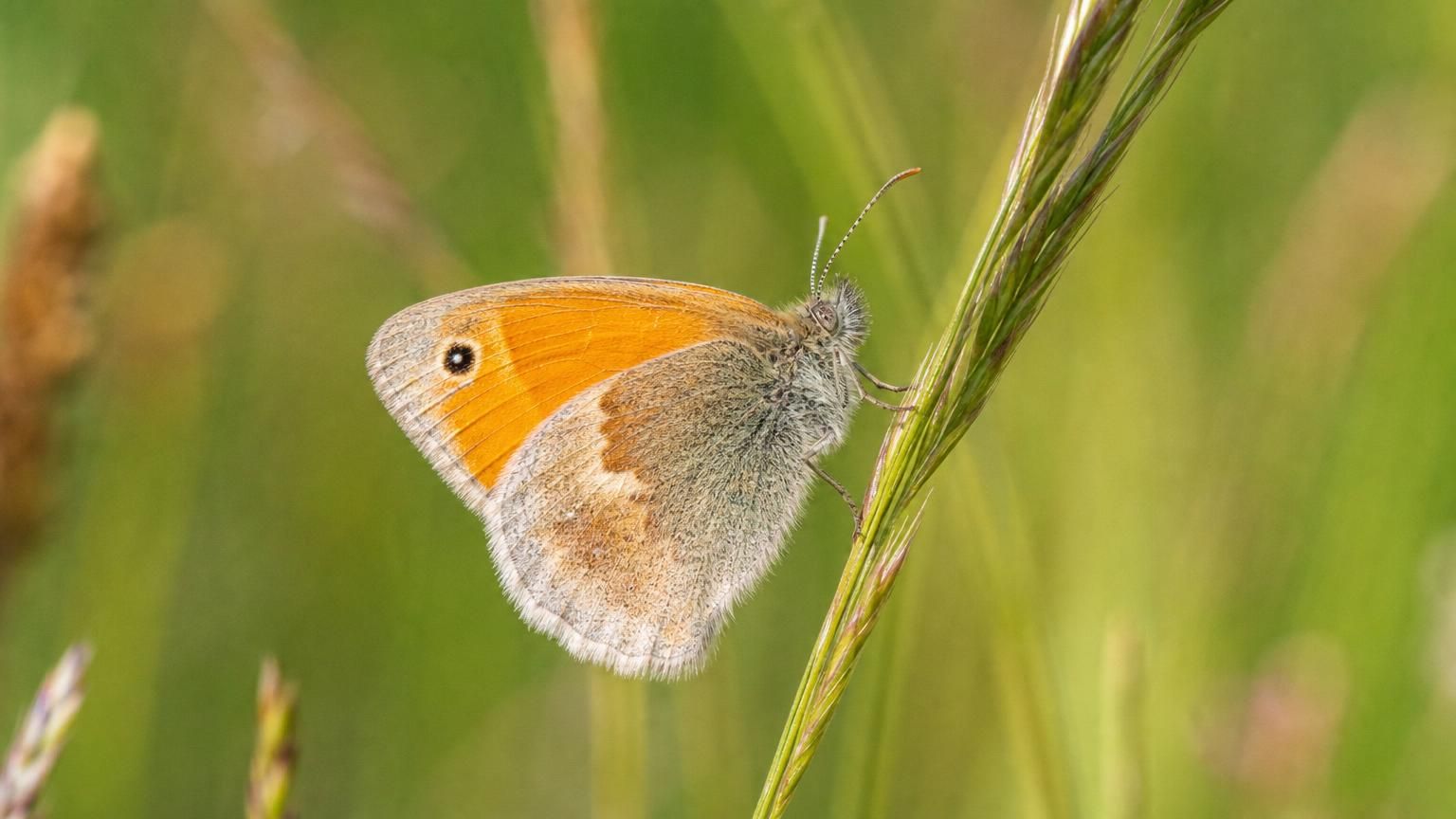
The small heath (Coenonympha pamphilus) is a small brown with a wingspan of 26–36 mm. The upper side is reddish orange with grey-brown margins; near the tip of the forewing — a small eyespot. Females are slightly paler than males.
The underside of the hindwings is grey-brown with a faint light pattern and sometimes a weak row of eyespots. At rest the butterfly holds the wings vertically, hiding the upper side.
Range and Habitat
One of the most widely distributed browns. It occurs from Western Europe to the Far East. In Russia it is common everywhere.
It lives on various open meadows, pastures, road verges, and lawns. It is not demanding about vegetation — the main requirement is the presence of grasses.
Life Cycle
Two to three generations per year. The first adults appear in April–May. The last fly in September–October.
Eggs are laid singly on grass leaves. The caterpillar is green. It overwinters at an early instar. Development is generally faster than in larger species.
The Common Meadow Butterfly
The small heath is an indicator of meadow ecosystem condition: its abundance reflects species richness and quality of grass communities. Despite being widespread, intensive mowing and herbicides reduce its numbers on farmland.