Dryad
The dryad is a large dark butterfly of the browns with bluish eyespots, living in floodplain forests and reed beds across Eurasia.
Key facts
- Latin name
- Minois dryas
- Family
- Nymphalidae
- Wingspan
- 50-62 mm
- Flight season
- July — September
- Host plants
- Southern reed, Reed canary grass, Meadow grass, Quaking grass
- Conservation status
- LCLeast Concern
Appearance
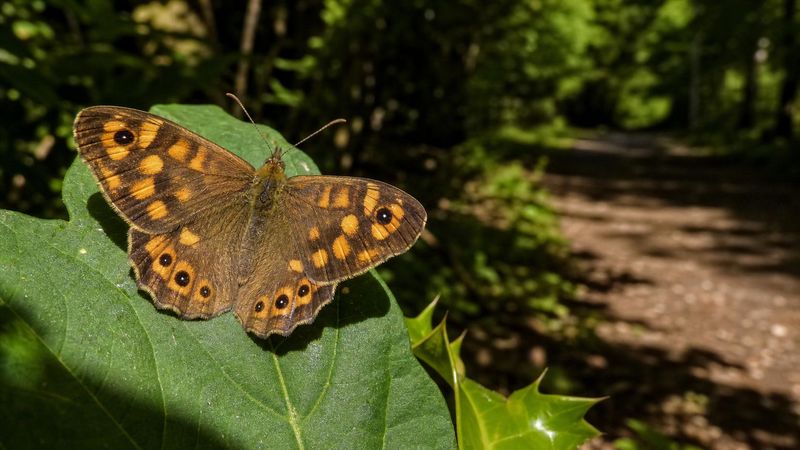
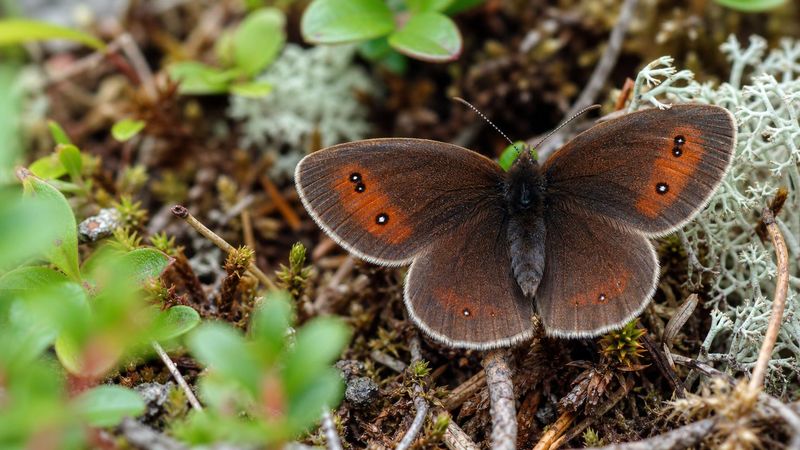
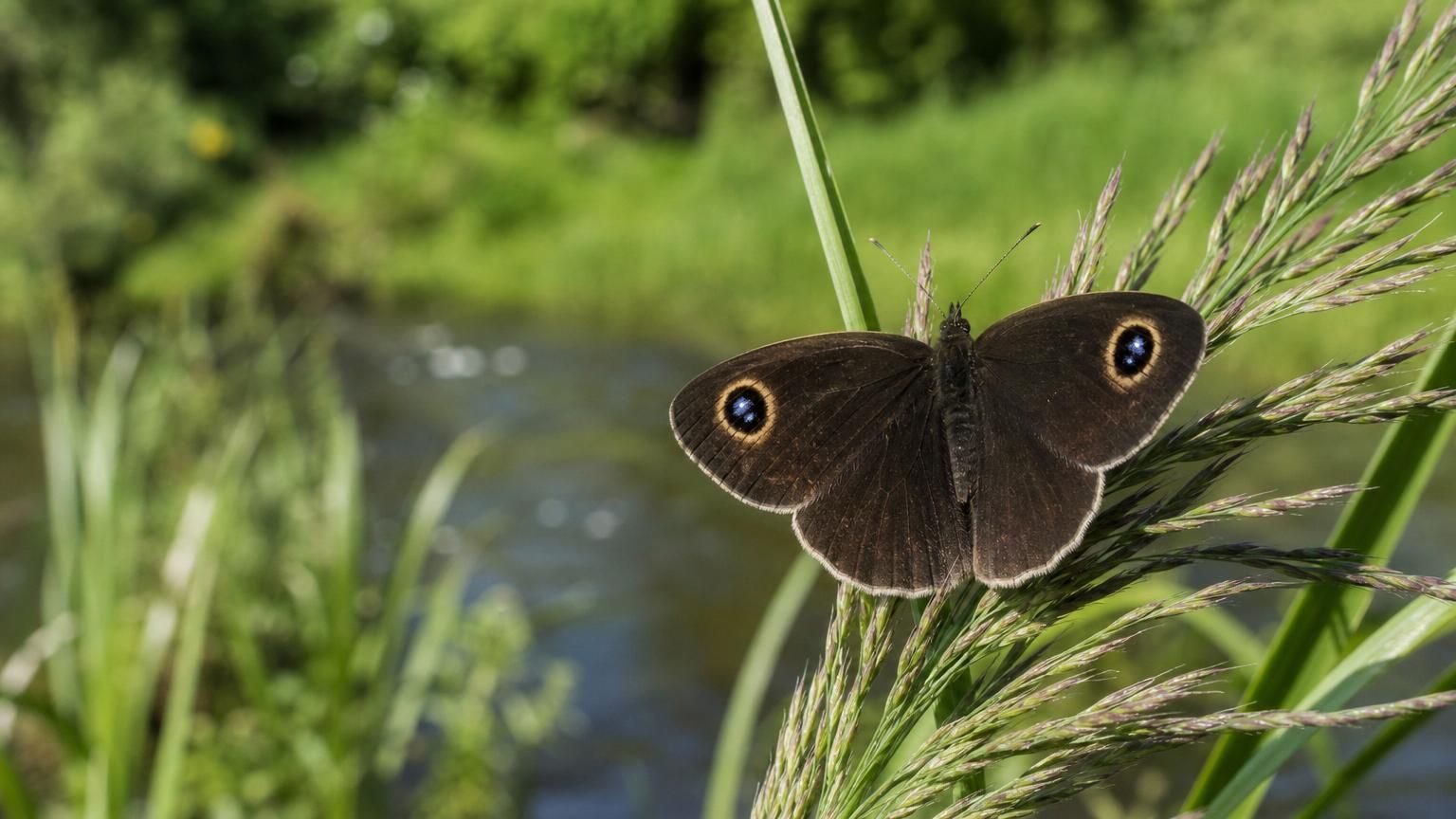
The dryad (Minois dryas) is a large brown with a wingspan of 50–62 mm. The upper side of the wings is dark brown, almost black. On the forewing — two large eyespots with a bright blue 'pupil' and a black ring. On the hindwing — one smaller spot.
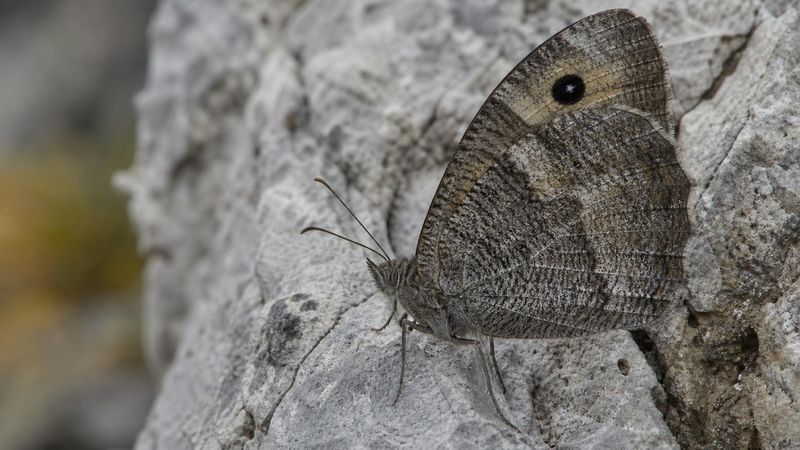
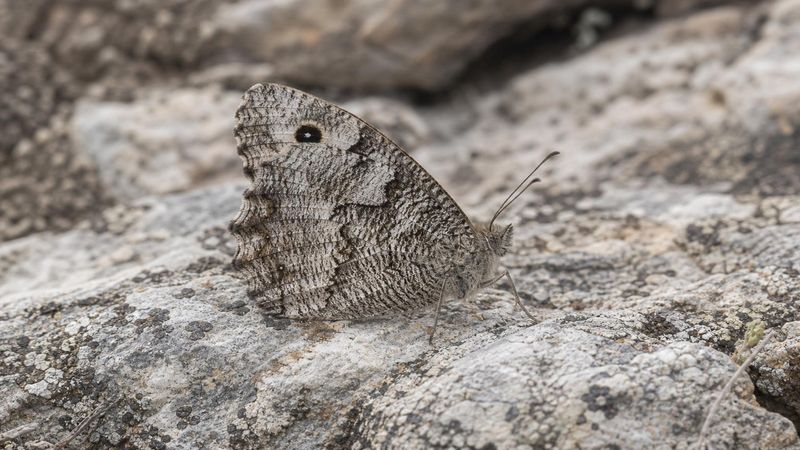
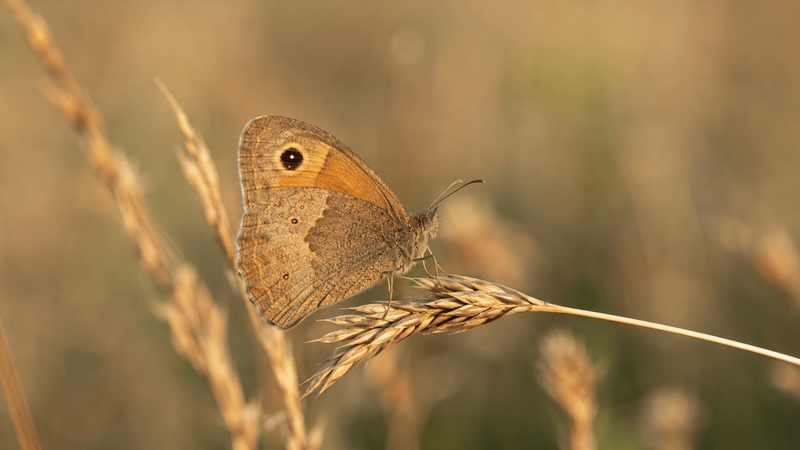
The underside of the hindwings is grey with a marbled pattern — camouflage resembling bark.
Range and Habitat
It is distributed from Central Europe to Japan. In Russia it occurs in the European part, Siberia, and the Far East.
It lives in river floodplains with reed and tall herbs, along forest edges by streams. Unlike most browns it is not found in dry open habitats.
Life Cycle
One generation per year. Flight from July through September.
Eggs are scattered in flight over places where grasses grow. The caterpillar overwinters in leaf litter and feeds on grasses at night. The pupa is on the ground.
Crepuscular Activity
The dryad shows unusual behaviour for day-flying butterflies: females are active at dusk and even at night. Males patrol territory in the evening. This is probably linked to hot summer conditions — the butterflies avoid daytime heat.
The name refers to the dryads — tree nymphs in Greek mythology.