False Heath Fritillary
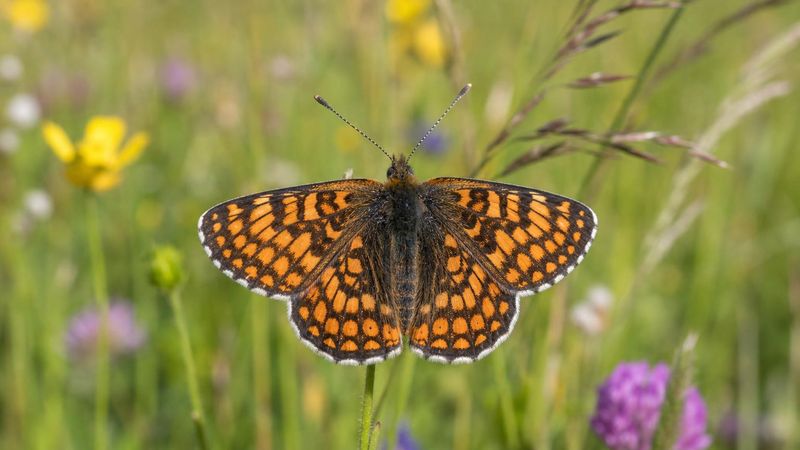
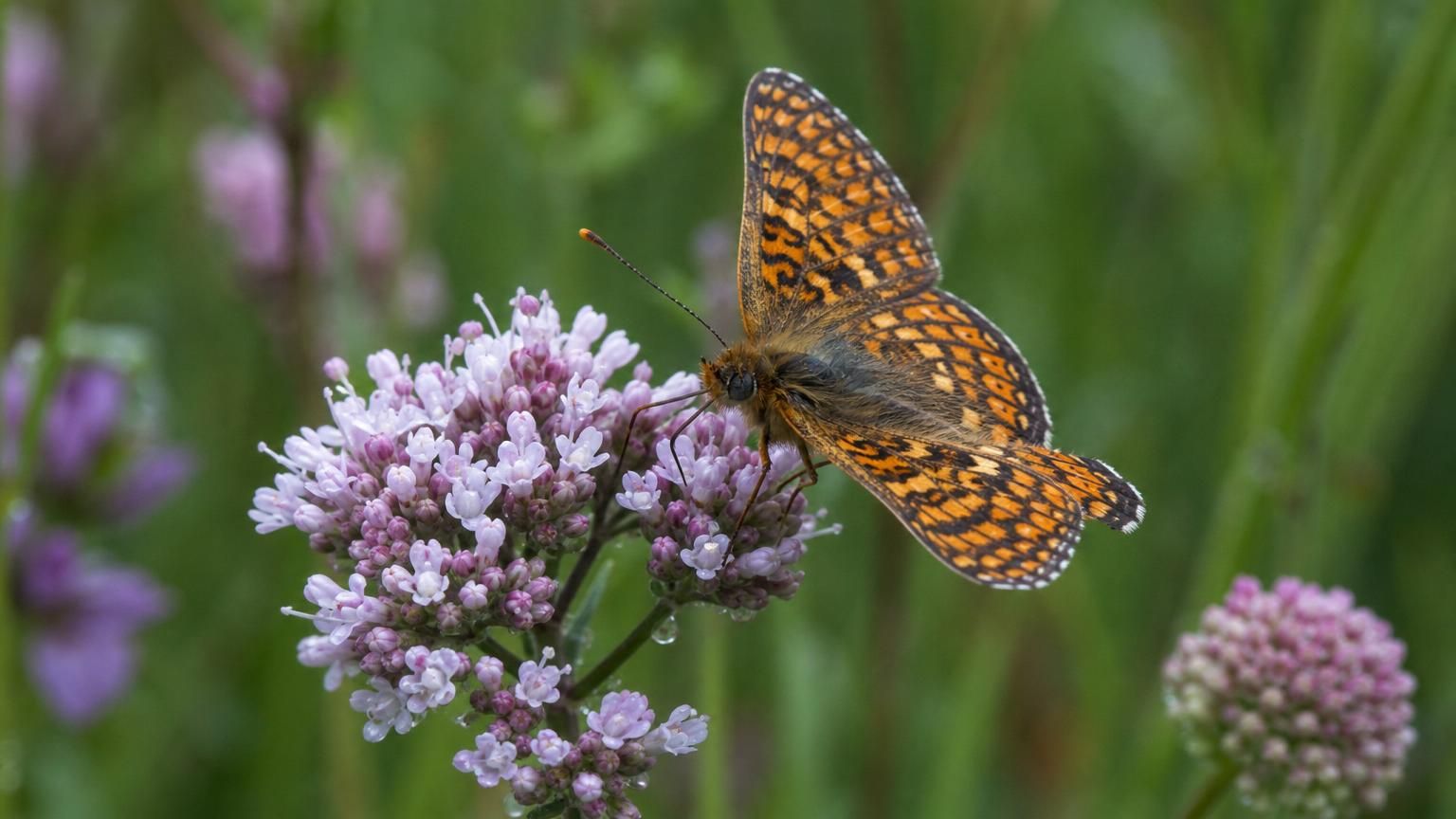
The false heath fritillary is a small meadow butterfly with a checkered pattern. It inhabits damp meadows with valerian — the main caterpillar host plant.
Key facts
- Latin name
- Melitaea diamina
- Family
- Nymphalidae
- Wingspan
- 28-38 mm
- Flight season
- June — August
- Host plants
- Common valerian, Plantain, Rattle
- Conservation status
- LCLeast Concern
Appearance
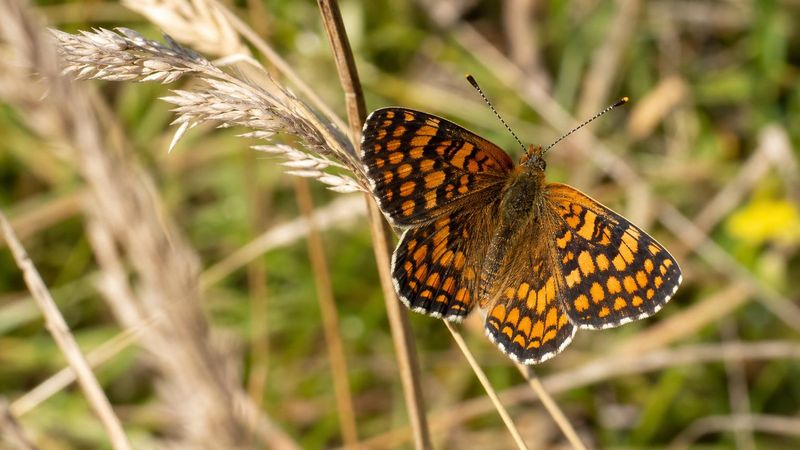
The false heath fritillary (Melitaea diamina) is a small butterfly with a wingspan of 28–38 mm. The upper side is reddish orange with a dark (almost black) checkered pattern occupying more area than in Cinxia.
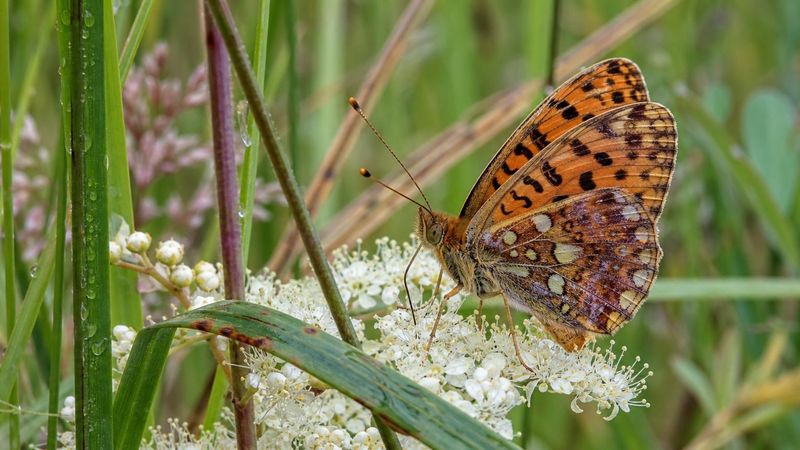
The underside of the hindwings is light yellow with reddish bands and paler spots without black dots inside — this distinguishes it from Cinxia.
Range and Habitat
It is distributed across the temperate zone of Europe and Asia. In Russia it occurs in forest and forest-steppe zones.
It is linked to damp and wet meadows, river floodplains, and marshy forest edges — places where valerian grows. It is less demanding of open landscapes than Cinxia.
Life Cycle
One generation per year. Flight from June through August.
Eggs are laid in clusters on the underside of valerian leaves. Caterpillars overwinter in a group. In spring they feed singly. The pupa is in plant litter on the ground.
Habitat
Diktinna characterises wet meadow communities. Its presence indicates intact floodplain meadows without drainage. Draining bogs and floodplains leads to loss of populations.