Glanville Fritillary
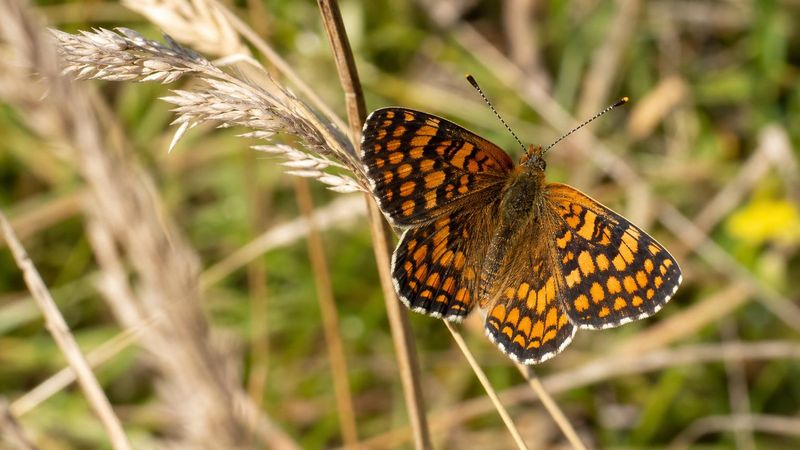
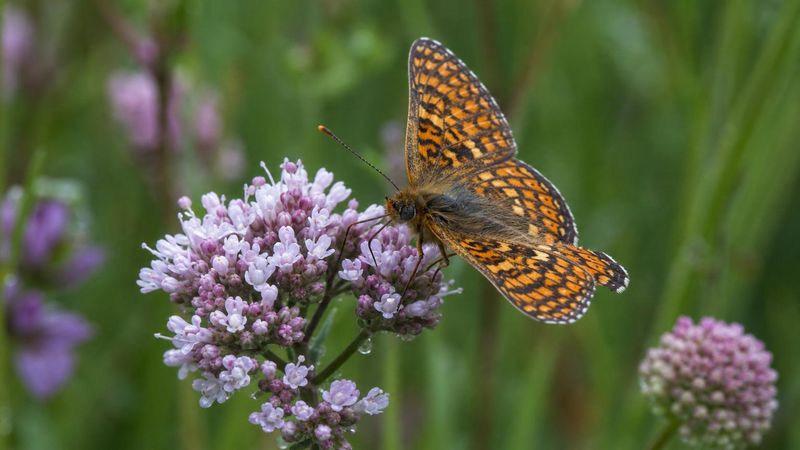
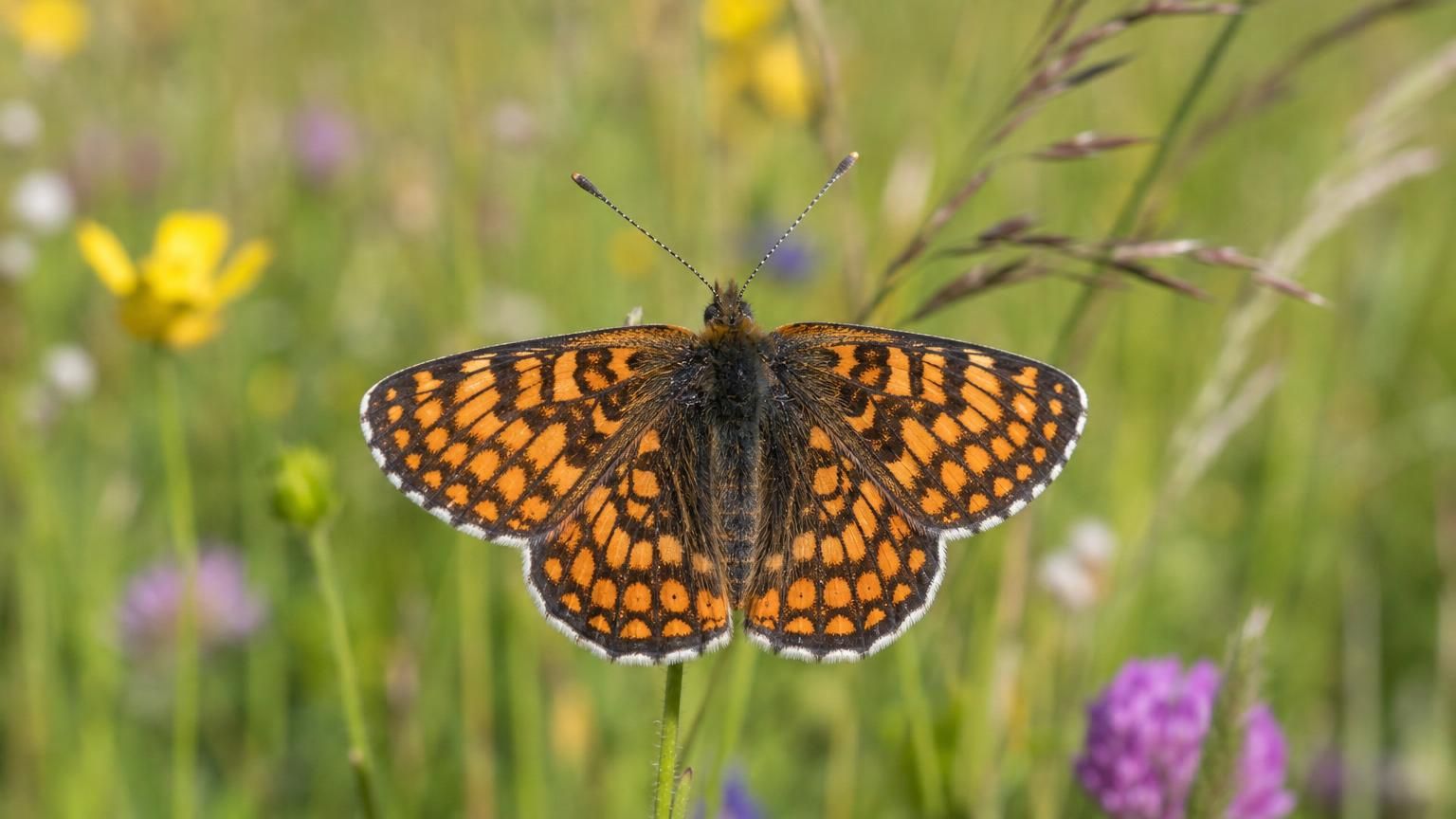
The Glanville fritillary is a small butterfly with a checkered pattern of reddish and black patches — a classic subject of population ecology research.
Key facts
- Latin name
- Melitaea cinxia
- Family
- Nymphalidae
- Wingspan
- 28-40 mm
- Flight season
- May — August
- Host plants
- Ribwort plantain, Greater plantain, Speedwell
- Conservation status
- NENot Evaluated
Appearance
The Glanville fritillary (Melitaea cinxia) is a small butterfly with a wingspan of 28–40 mm. The upper side of the wings bears a clear checkered pattern of reddish and black rectangular patches — hence the Russian name 'shashechnitsa' (checkerboard butterfly).
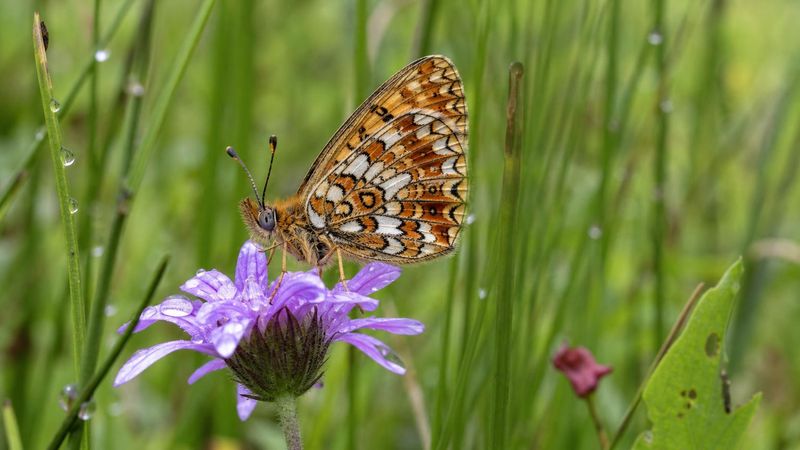
The underside of the hindwings is pale cream or yellowish with reddish bands. In the centre of the hindwings below — a row of orange spots with black dots inside.
Range and Habitat
It is distributed in Europe (including Britain), Asia Minor, and Central Asia. In Russia it occurs in the European part and in southern Siberia.
It lives on dry and semi-dry meadows, wasteland, and forest edges. It requires open sites with plantain. It is sensitive to intensive grazing and ploughing of meadows.
Life Cycle
One generation per year. Flight from May through August (depending on elevation).
Eggs are laid in clusters on the underside of plantain leaves. Caterpillars live in a colony under a silk canopy. They overwinter in a group in leaf shelter. In spring they disperse singly. The pupa is on the ground in plant litter.
Model Organism in Ecology
The Glanville fritillary is one of the best-studied butterflies in the world. On the Åland Islands (Finland) more than 4,000 subpopulations have been monitored continuously since the 1990s. These data underpinned metapopulation theory.