Grayling
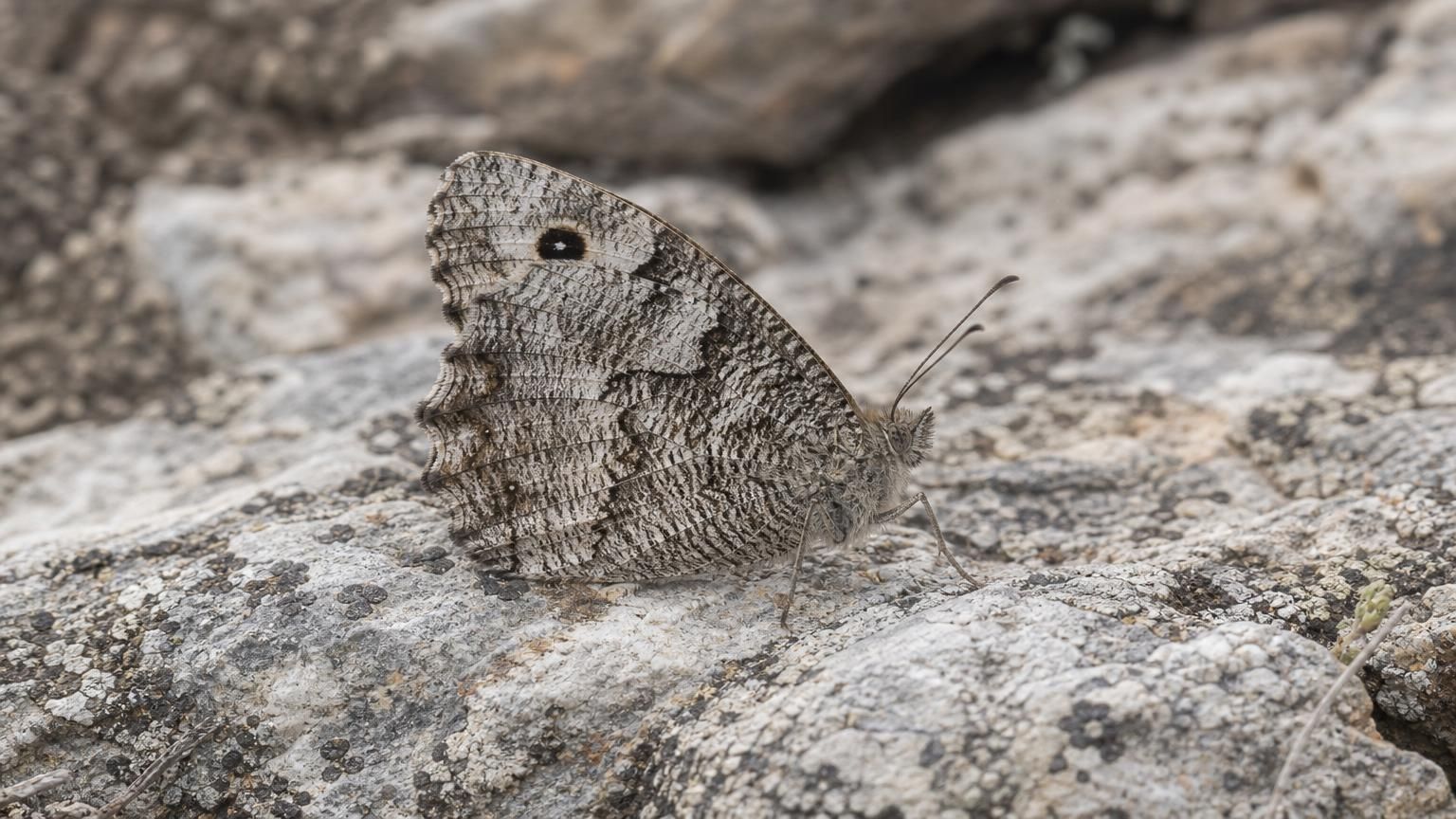
The grayling is a large brown of rocky and sandy places. A master of camouflage: on stone or bark it is almost invisible.
Key facts
- Latin name
- Hipparchia semele
- Family
- Nymphalidae
- Wingspan
- 44-56 mm
- Flight season
- July — September
- Host plants
- Sheep's fescue, Crested hair-grass, Reed canary grass, Bluegrass
- Conservation status
- LCLeast Concern
Appearance
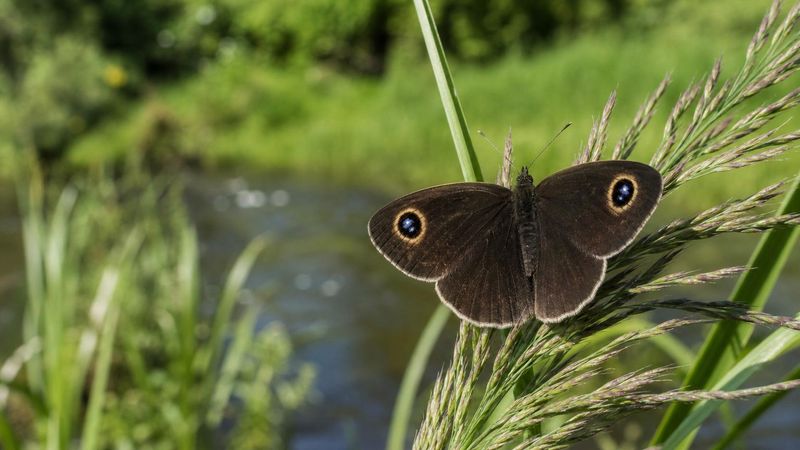
The grayling (Hipparchia semele) is a large brown with a wingspan of 44–56 mm. The upper side is dark brown with a broad ochre band and two eyespots on the forewing. However the upper side is rarely seen: the butterfly almost always sits with closed wings.
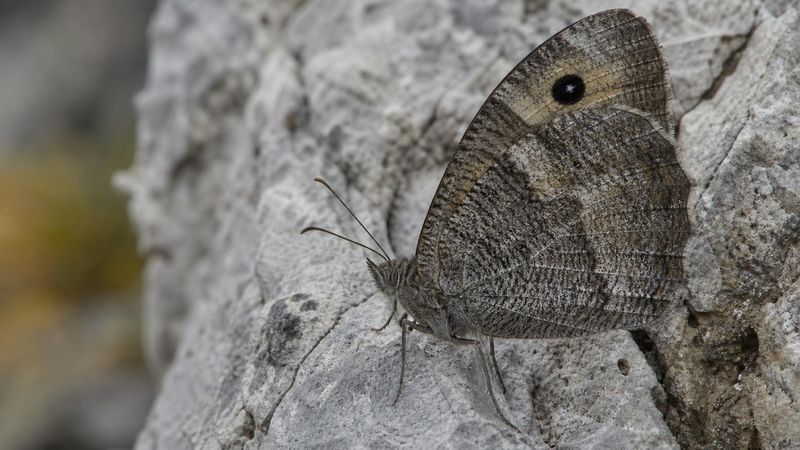
The underside of the hindwings is a camouflage masterpiece: a marbled grey-brown pattern mimicking stone or tree bark.
Range and Habitat
It is widely distributed in Europe. In Russia it occurs in the European part.
It lives on dry stony and sandy sites: rocky slopes, dunes, limestone outcrops, dry wasteland. It avoids rich vegetation.
Life Cycle
One generation per year. Flight from July through September.
Eggs on grasses. The caterpillar hatches in autumn, overwinters small, and resumes feeding in spring. The pupa is in loose soil.
Camouflage Behaviour
The grayling is the best-studied example of active camouflage in insects. After landing it:
- chooses a background matching the underside pattern;
- tilts toward the sun, removing shadow;
- hides the forewing behind the hindwing, concealing the eyespots.
These three actions run in sequence within a second of landing. Study of grayling behaviour has contributed to understanding cognitive abilities in insects.