The Global IUCN Red List and Butterfly Conservation Status
How the IUCN Red List assesses butterfly extinction risk worldwide, and why so few of the roughly 18,000 known species have been formally evaluated.
A global yardstick for extinction risk
The IUCN Red List of Threatened Species, maintained by the International Union for Conservation of Nature, is the standard reference for a species' global conservation status, spanning every taxonomic group from mammals to insects. For butterflies, it provides the only consistent, internationally comparable framework for asking how threatened a given species actually is — a question national red lists, useful as they are, can only answer at the scale of a single country.
How an assessment is made
Each Red List assessment is built around a small set of quantitative criteria: the size and observed or projected trend of a species' total population, the extent and fragmentation of its geographic range, and the severity of any ongoing or foreseeable decline in either. A specialist assessor compiles the available distribution records, habitat data, and — where they exist — long-term population monitoring series, and weighs them against fixed numerical thresholds to arrive at one of the Red List's standard categories: Least Concern (LC), Near Threatened (NT), Vulnerable (VU), Endangered (EN), Critically Endangered (CR), through to Extinct in the Wild (EW) and Extinct (EX). A further category, Data Deficient (DD), is applied when the available information simply is not adequate to place a species reliably in any of the risk categories — a surprisingly common outcome for poorly studied tropical butterflies.
The coverage gap
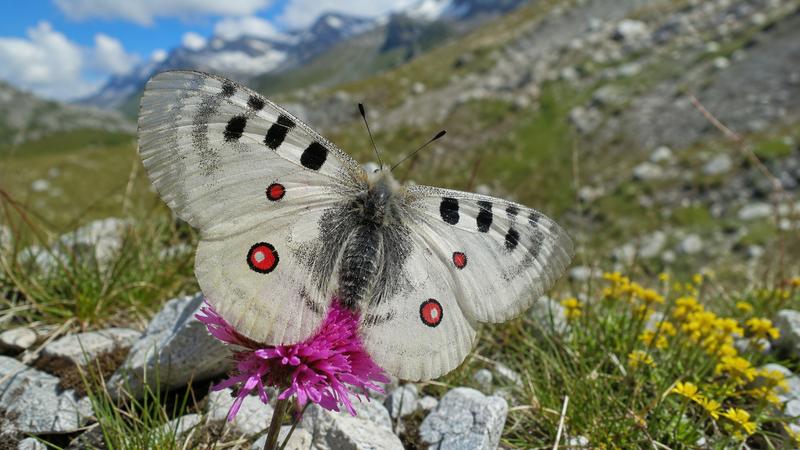
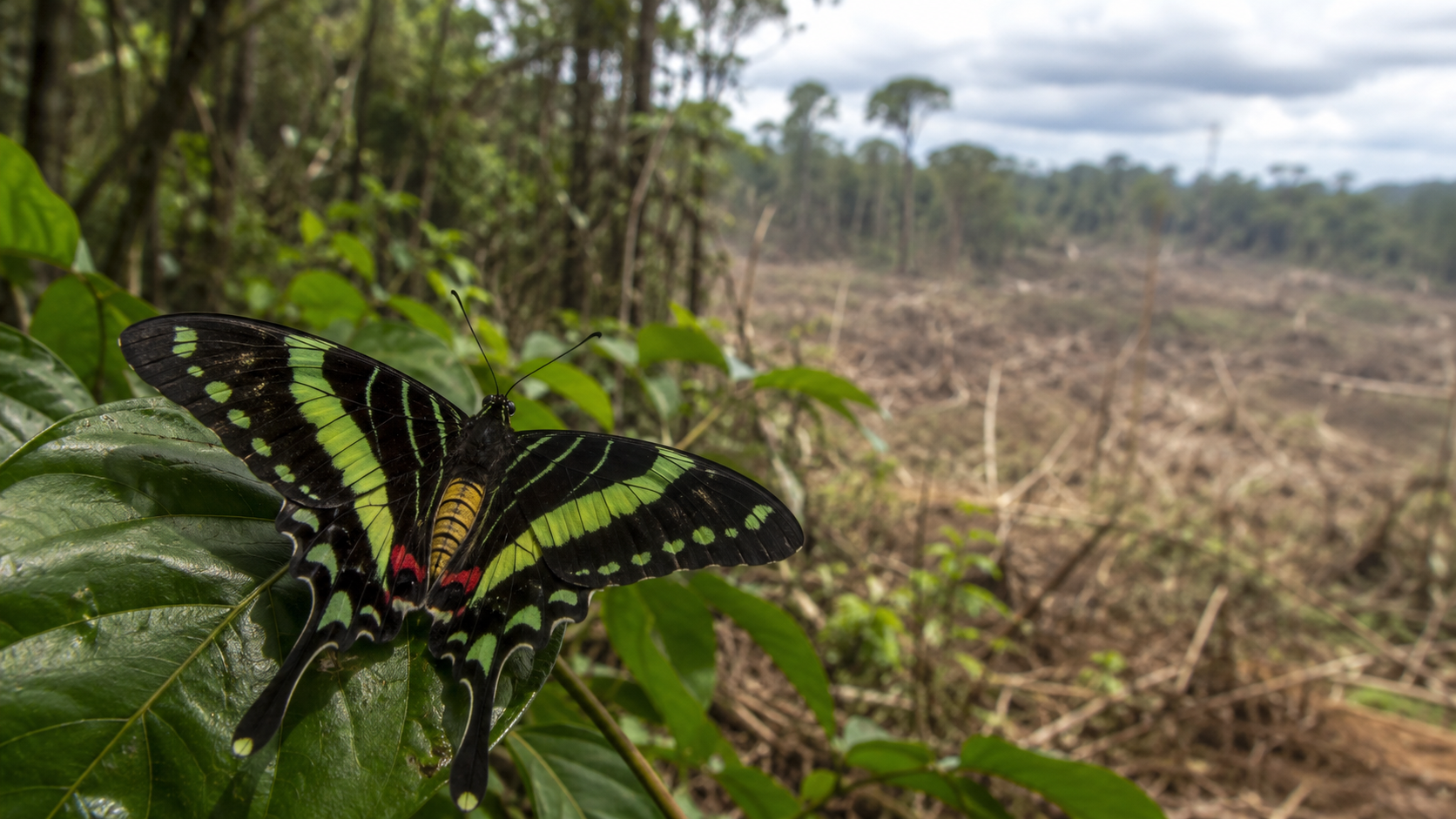
Of the roughly 18,000 to 20,000 butterfly species described worldwide, the IUCN Red List has formally assessed only a modest fraction. Coverage is deeply uneven across families: the swallowtails (Papilionidae) are essentially fully assessed, a legacy of their large size, striking appearance, and long history of attention from collectors and CITES trade regulation, which made them an early conservation priority. By contrast, the far larger and more diverse families of skippers (Hesperiidae) and blues (Lycaenidae), together accounting for a large share of all known species, remain assessed only patchily, particularly across the most species-rich tropical regions of Southeast Asia, the Andes, and Central Africa, where basic distribution data for many species barely exist.
This uneven coverage means the official Red List count of threatened butterfly species — several hundred species currently listed as Vulnerable or worse — almost certainly understates the true global total. Many specialists consider it likely that a comparable or larger number of unassessed, narrow-range tropical species would qualify as threatened if sufficient data existed to evaluate them.
Global assessment versus national red lists
A Red List category always describes a species' status across its entire global range, which can diverge sharply from how threatened it appears within any single country. A butterfly rated Least Concern worldwide because it remains common across most of a broad range may nonetheless be genuinely rare and declining at the isolated northern or southern edge of that range, where local populations face pressures — habitat fragmentation, climate-driven range contraction, isolation from the core population — that a global assessment does not capture. National red lists, such as Russia's, exist precisely to register this local risk, and it is entirely normal, not contradictory, for a species to appear on a national list while carrying a Least Concern global rating.
Why the assessment matters in practice
A Red List category is far more than a label. It directly shapes conservation funding priorities, feeds into environmental impact assessments for development projects, and provides the evidentiary basis for legal protections in many countries. For internationally traded species — most conspicuously the birdwings and other large swallowtails prized by collectors — Red List status also interacts closely with CITES trade regulation, since a worsening assessment often triggers renewed calls for stricter trade controls. Improving assessment coverage for the world's most poorly known tropical butterfly faunas remains one of the clearest practical priorities for global Lepidoptera conservation, since a species cannot be effectively protected under a status nobody has yet determined.