Pupa
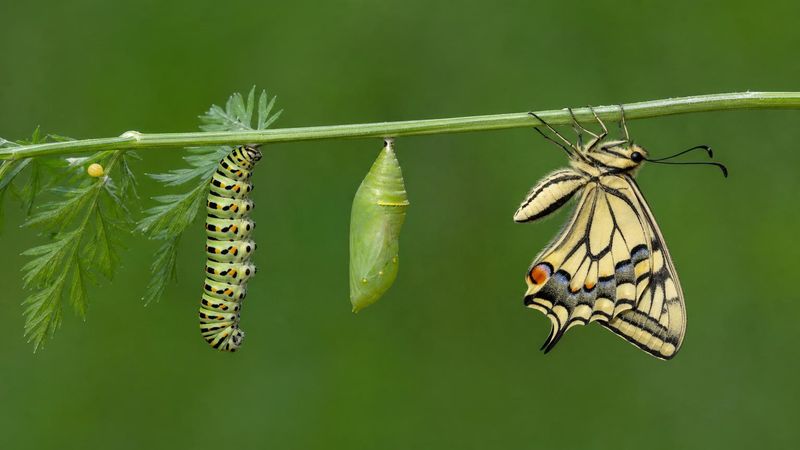
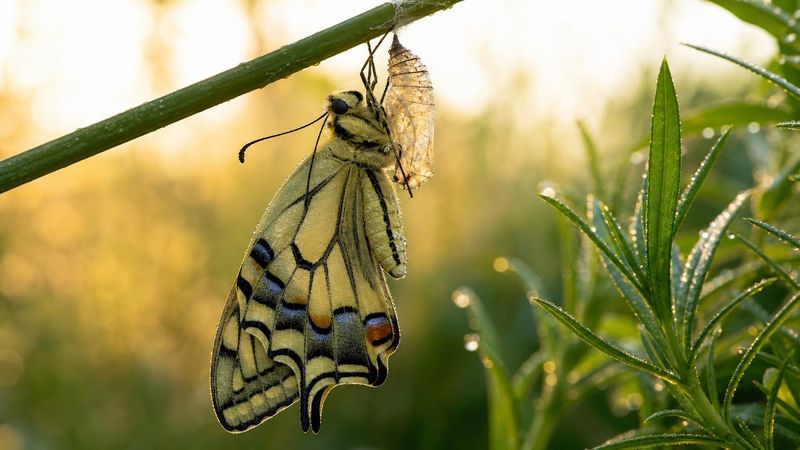
The pupa is the third stage of complete metamorphosis, when the caterpillar transforms into a butterfly — outwardly still, but rebuilding within.
Definition
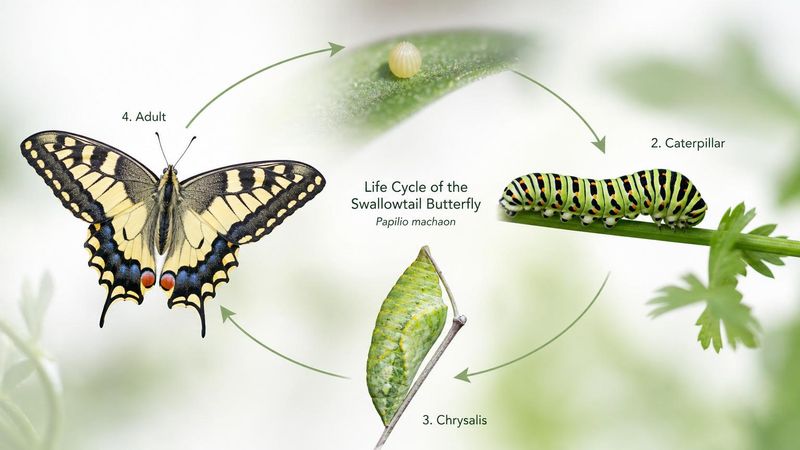
The pupa is the third stage of complete metamorphosis: egg → caterpillar → pupa → imago. It is the transitional phase in which the larva (caterpillar) becomes an adult insect.
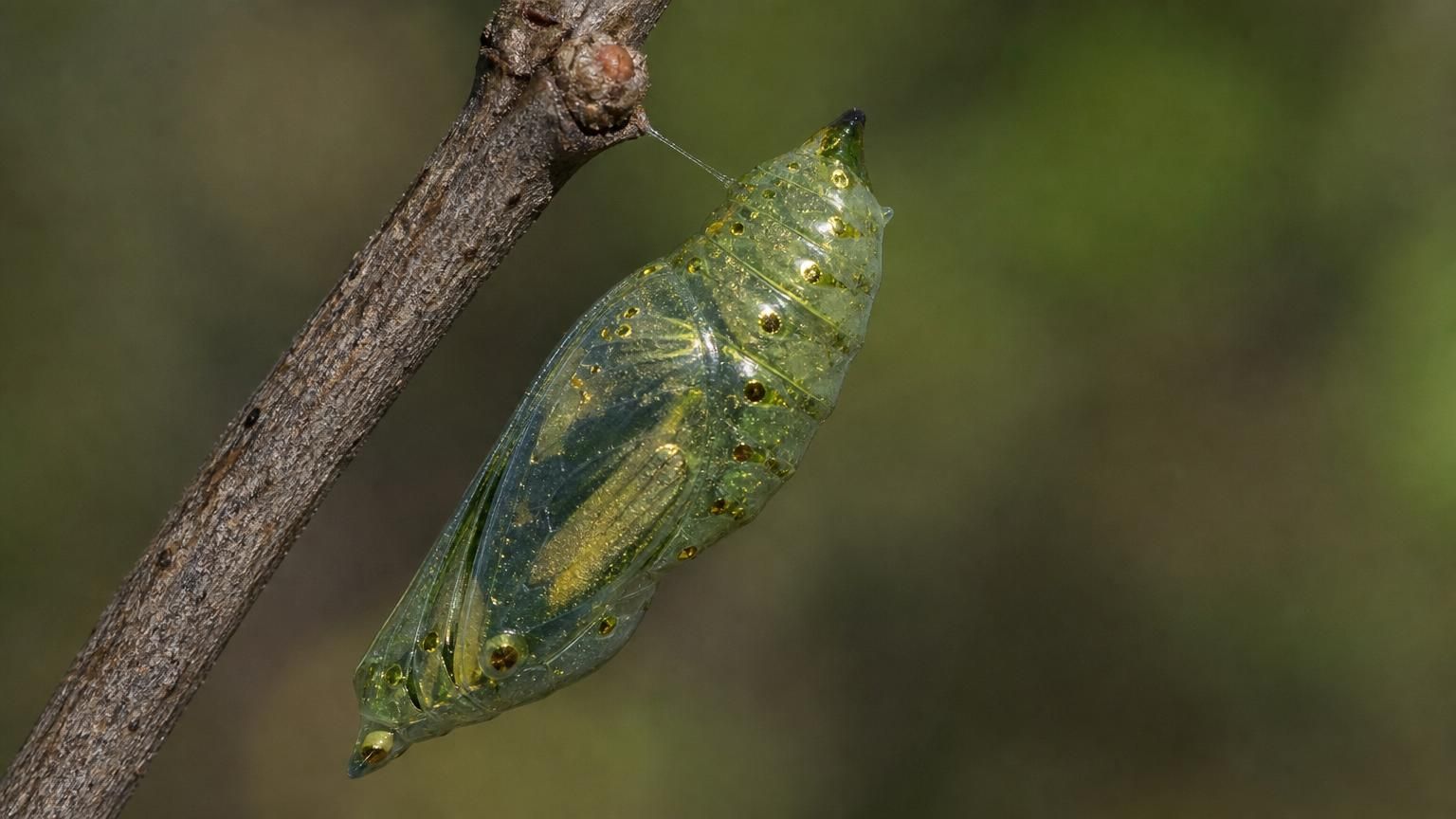
The word “pupa” is related to “puppet”: the immobile, wrapped form reminded people of a cloth doll swaddled in fabric. In scientific literature, butterfly pupae are also called chrysalises (from Greek chrysos — gold) — for the golden spots on pupae of some species.
What happens inside the pupa
Outwardly the pupa seems inert. Inside, one of the most complex biological processes occurs — histolysis and histogenesis.
Histolysis — dissolution of caterpillar tissues. Most larval organs are literally broken down by special enzymes into a nutrient “broth.”
Histogenesis — building imago tissues from so-called imaginal discs: small groups of cells that lay dormant in the caterpillar body from the start. From these discs form wings, legs, eyes, antennae, and other organs of the adult butterfly.
The result: one living system is rebuilt into another — without a scaffold, without intermediate forms, from scratch.
How a caterpillar pupates
Before pupation the caterpillar finds a suitable place, stops eating, and empties the gut. Then it attaches to the chosen surface.
Most day-flying butterflies use two attachment methods:
Girdled pupae (girdle + cremaster). The caterpillar spins a silk girdle across the body and attaches the tail end to the surface with a hook (cremaster). The pupa hangs vertically or at an angle. This is how large white, swallowtails, and many nymphalids attach.
Suspended pupae (cremaster only). The caterpillar attaches by the tail head-down and hangs without a girdle. Typical of most nymphalids — small tortoiseshell, peacock, red admiral.
After attachment the caterpillar makes its last molt: the larval skin cracks and slips off, exposing the soft pupa. It hardens over several hours.
What a pupa looks like
Shape and color of pupae vary greatly among species. The general trend is cryptic coloration matching the pupation site.
- Large white pupa — green or gray-brown; color depends on surface (green on a green leaf, brown on brown wood).
- Swallowtail pupa — same ability: green on green background, brown on brown.
- Pupae of some nymphalids — with golden or silvery spots; their function is unclear, possibly attracting parasitoid wasps that remove infected individuals.
- Blue pupae — rounded, resembling bird droppings.
How long the pupal stage lasts
Duration depends on species and conditions:
| Conditions | Duration |
|---|---|
| Summer generation (warm weather) | 10–21 days |
| Autumn generation, overwintering as pupa | 5–8 months |
| Mountain species in cold climate | Up to 10–11 months |
Most species in Russia's temperate zone overwinter as pupae: swallowtail, large white, scarce swallowtail. Pupae survive frost to about -20°C thanks to cryoprotectants — glycerol and trehalose.
Pupa and cocoon: what is the difference
Butterfly pupa and moth cocoon are often confused. They are different:
Pupa (chrysalis) is the insect itself in the transformation stage. The pupal shell is the modified skin of the caterpillar, not a separate structure.
Cocoon is a protective covering spun by the caterpillar from silk before pupation. The pupa is inside the cocoon. Cocoons are typical of nocturnal species (silkworms, hawk moths) and many other insect groups. Day-flying butterflies do not spin cocoons — their pupa is exposed.
The only exception among day-flying species — blues: some spin loose silk “shirts,” though not a full cocoon.
Where to find pupae
To watch a butterfly emerge, look for pupae:
- On nettle stems — small tortoiseshell and peacock (August–September)
- On fences and building walls — large white
- On umbellifers and low shrubs — swallowtail
- Under tree leaves — fritillaries
Collecting pupae for observation is acceptable (except protected species), but remember: pupae need a cool, humid place and must not be damaged.
The full cycle — in the article metamorphosis. The next stage — in the article imago.