Holometabolism
~1 min
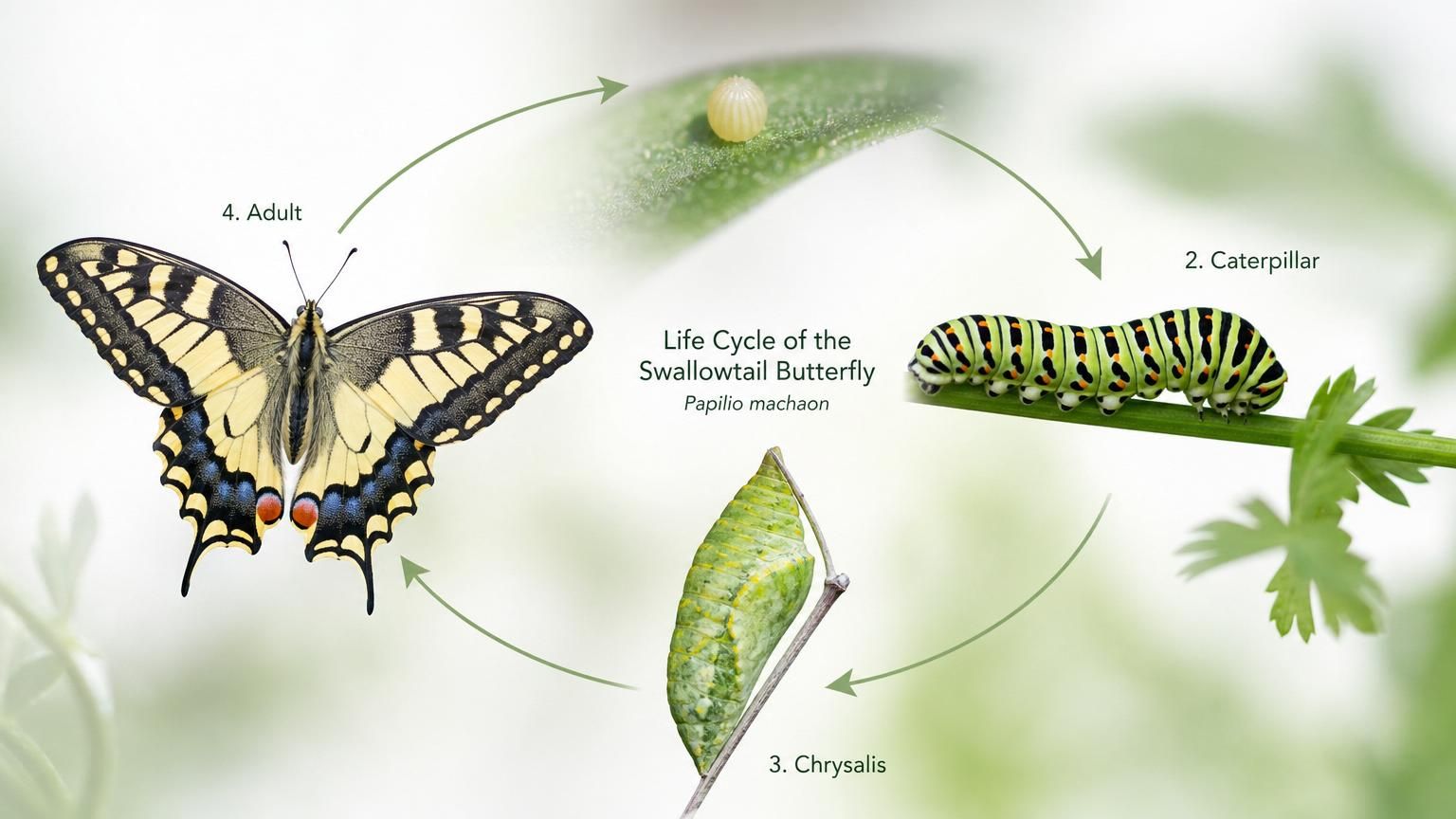
Holometabolism is a type of insect development with complete metamorphosis: egg → larva → pupa → imago. All butterflies develop by this type.
Definition
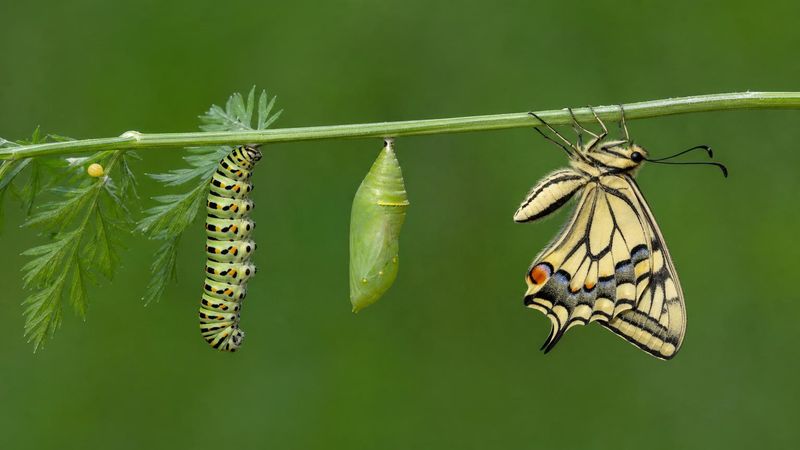
Holometabolism (from Greek holos — whole, metabole — change) is a type of postembryonic development with full metamorphosis, including four stages:
- Egg — embryonic development
- Larva (in butterflies — caterpillar) — growth and nutrient storage
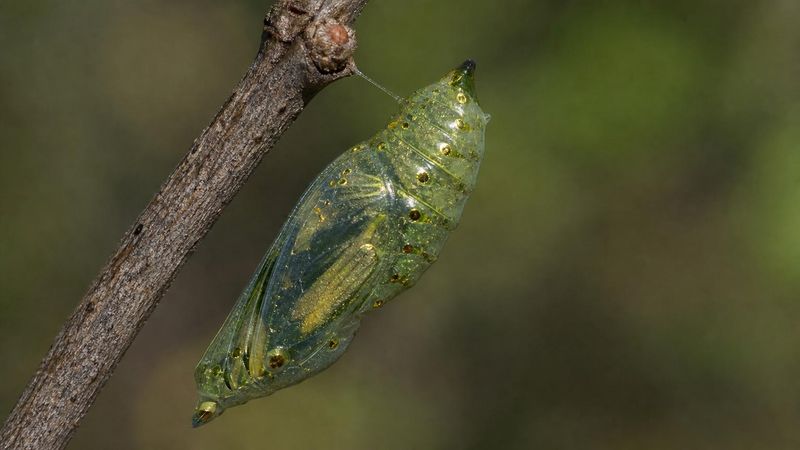
- Pupa — body reorganization
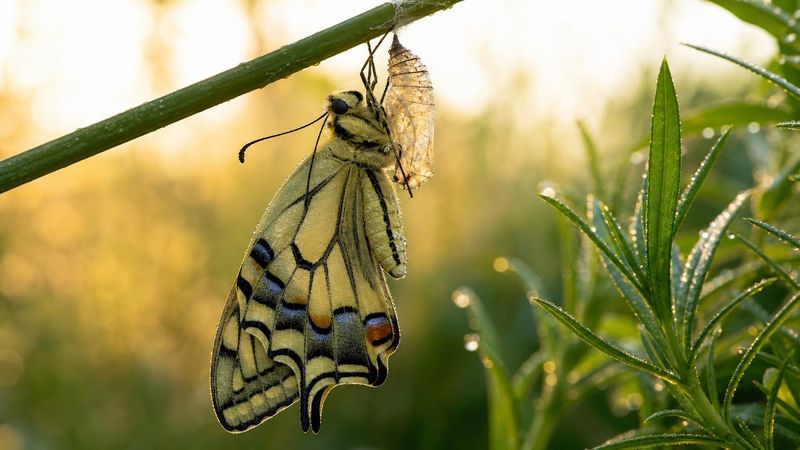
- Imago — sexually mature adult
All butterflies (order Lepidoptera) are holometabolous insects.
What happens in the pupa
During the pupal stage most caterpillar tissues dissolve — this is called histolysis. From the “building material” entirely new structures of the adult insect are formed: wings, legs, eyes, proboscis — histogenesis. The pupa is immobile on the outside; inside, the organism is completely rebuilt.
Advantages of holometabolism
- Caterpillar and butterfly do not compete for food — they have different food bases and ecological niches
- Specialization of each stage: caterpillar — growth, imago — reproduction and dispersal
- Possibility of diapause at any stage, helping survive an unfavorable season
Holometabolism and hemimetabolism
| Trait | Holometabolism (butterflies, beetles, flies) | Hemimetabolism (grasshoppers, bugs) |
|---|---|---|
| Number of stages | 4 (egg, larva, pupa, imago) | 3 (egg, nymph, imago) |
| Pupal stage | Present | Absent |
| Larva–imago similarity | Minimal | Substantial |
More detail — in the articles metamorphosis and life cycle.
Frequently asked questions
Holometabolism is a type of postembryonic development in insects in which the larva (caterpillar) differs greatly from the adult, and the transition between them goes through a pupal stage. Synonyms: complete metamorphosis, full metamorphosis.
In hemimetabolism (incomplete metamorphosis — in grasshoppers, bugs) the larva resembles the adult, and there is no pupal stage. In holometabolism the larva (caterpillar) and imago are completely different and occupy different ecological niches.