Imago
Imago is the adult, sexually mature stage of an insect with fully formed wings. The final phase of complete metamorphosis.
Definition
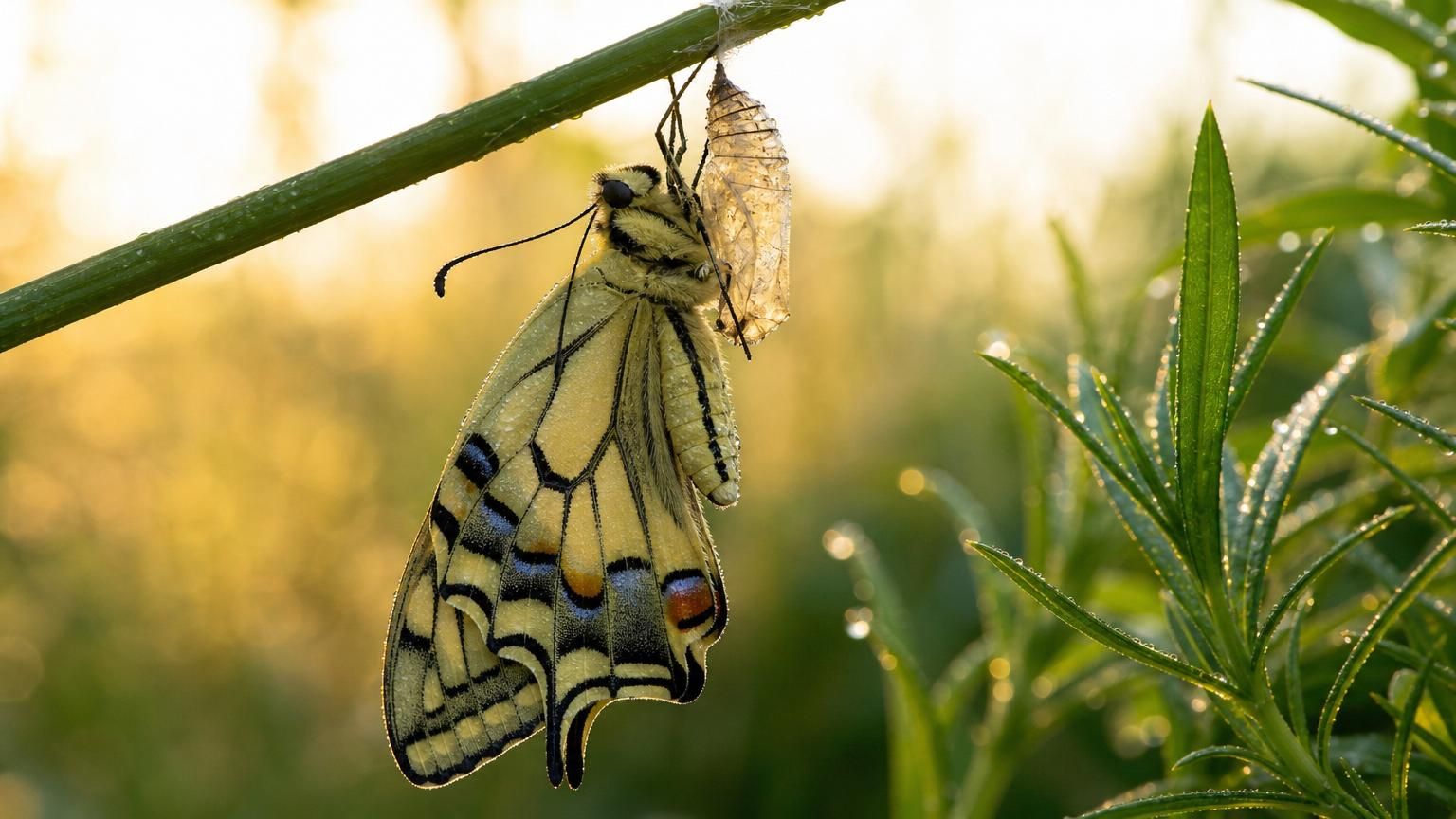
Imago (Latin imago — image, likeness, reflection) is the adult, sexually mature insect that has completed the full developmental cycle. For butterflies: the familiar flying butterfly with spread wings.
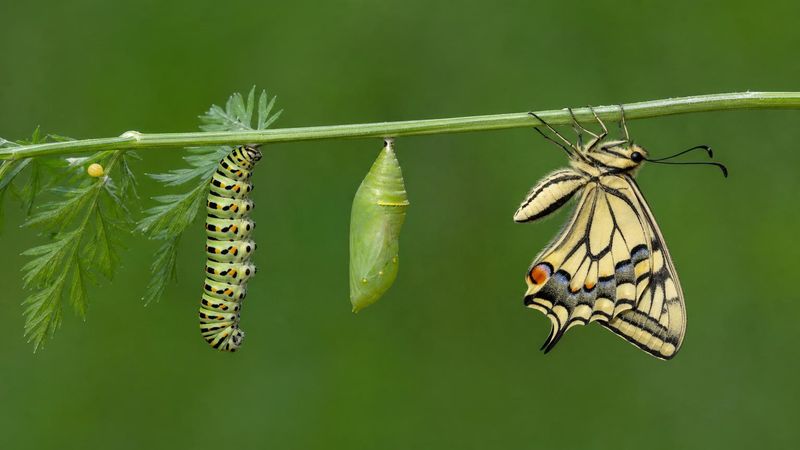
Imago is the last of four stages of complete metamorphosis: egg → caterpillar → pupa → imago.
Traits of imago in butterflies
Spread wings capable of flight. Wings are covered with scales — hence the order name Lepidoptera, “scale-winged.” The pattern of scales is unique to each species and is used for identification.
Compound eyes. Imago eyes consist of thousands of facets, providing a wide field of view and detection of polarized light.
Proboscis. In most species — a spirally coiled sucking mouthpart for feeding on nectar and other liquids. In some species the proboscis is rudimentary or absent.
Reproductive organs. Imago is the only stage capable of reproduction. The adult butterfly's biological task: find a mate, mate, and (in the female) lay eggs.
Three pairs of legs. As in most insects. Exception — nymphalids: the front pair is reduced and not used for walking, so they may appear to have four legs.
How imago emerges from the pupa
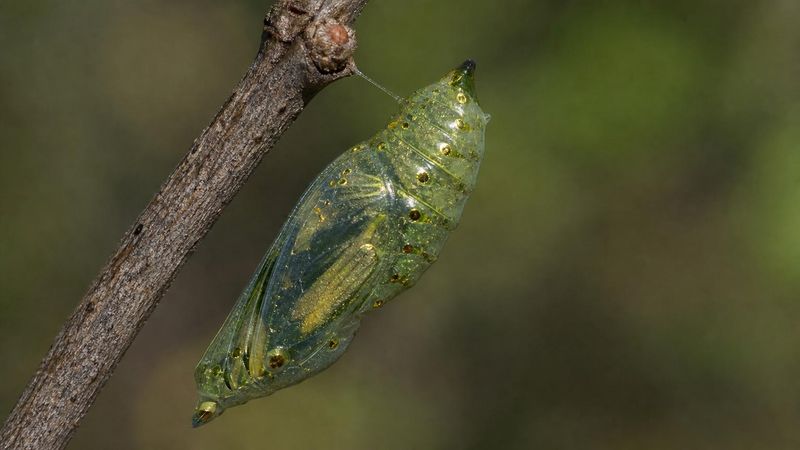
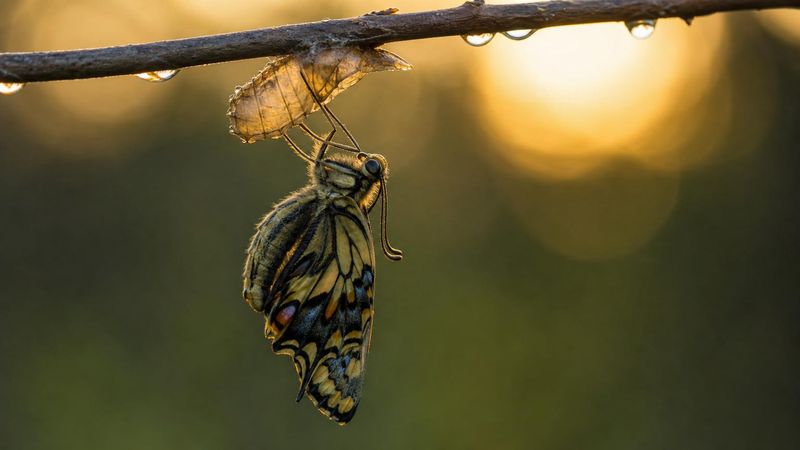
Emergence of the adult from the pupa is called eclosion. It is one of the most vulnerable moments in a butterfly's life.
- Rupture of the shell. The insect begins to move inside the pupa. Hemolymph pressure (the insect “blood” analog) rises, and the shell splits along special weakened lines — usually on the head or along the back.
- Emergence. The butterfly pulls out its body and legs and grips the pupal shell or a nearby surface.
- Wing expansion. The newly emerged butterfly's wings are crumpled and soft. It actively pumps hemolymph through the wing veins — they unfold and increase in size. This takes from 20 minutes to several hours.
- Hardening. When the wings reach full size, they begin to harden — sclerotization. The chitinous covering becomes stiff. After this the butterfly is ready for its first flight.
Important: do not touch the butterfly at this stage — if the wings do not expand and harden in time, they remain deformed permanently.
Duration of the imago stage
Imago lives much less than the caterpillar or pupa stage in most species. The range is huge:
- 2–5 days — some small nocturnal species without a functional mouthpart
- 2–4 weeks — most summer species (large white, many fritillaries, blues)
- 6–8 months — monarch (migratory generation)
- up to 12 months — brimstone, overwintering as adult
More detail — in the article how long butterflies live.
Imago and caterpillar: different tasks
The larva (caterpillar) and imago occupy different ecological niches:
| Stage | Task | Food | Mobility |
|---|---|---|---|
| Caterpillar | Growth, storage | Leaves of host plant | Low mobility |
| Imago | Reproduction, dispersal | Nectar, fruit sap, mineral water | Active flight |
Thanks to this division, caterpillar and adult do not compete for food and can use completely different environmental resources.
Imago in different insect groups
The term “imago” applies to all insects with complete metamorphosis: beetles, flies, bees, wasps. In insects with incomplete metamorphosis (grasshoppers, bugs, dragonflies) the last stage is not a pupa but a nymph, and the adult is also imago, but the transition is gradual.
The full glossary is in the glossary section.