Eclosion
Eclosion is the emergence of an adult butterfly from the pupa. One of the most vulnerable and striking moments in the life cycle of lepidopterans.
Definition
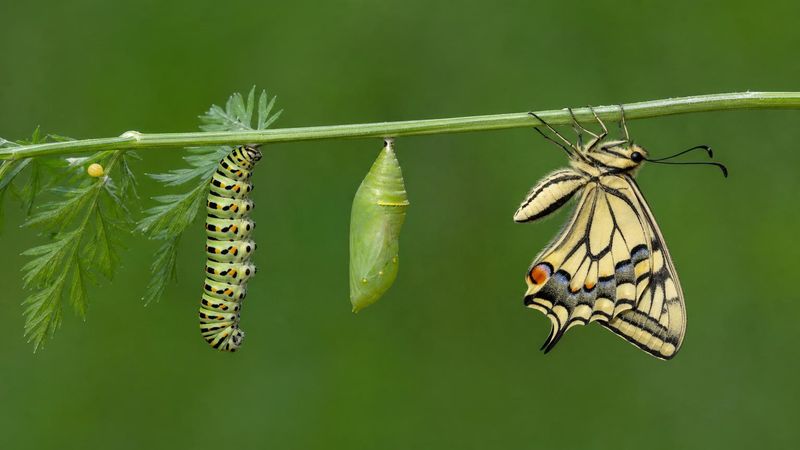
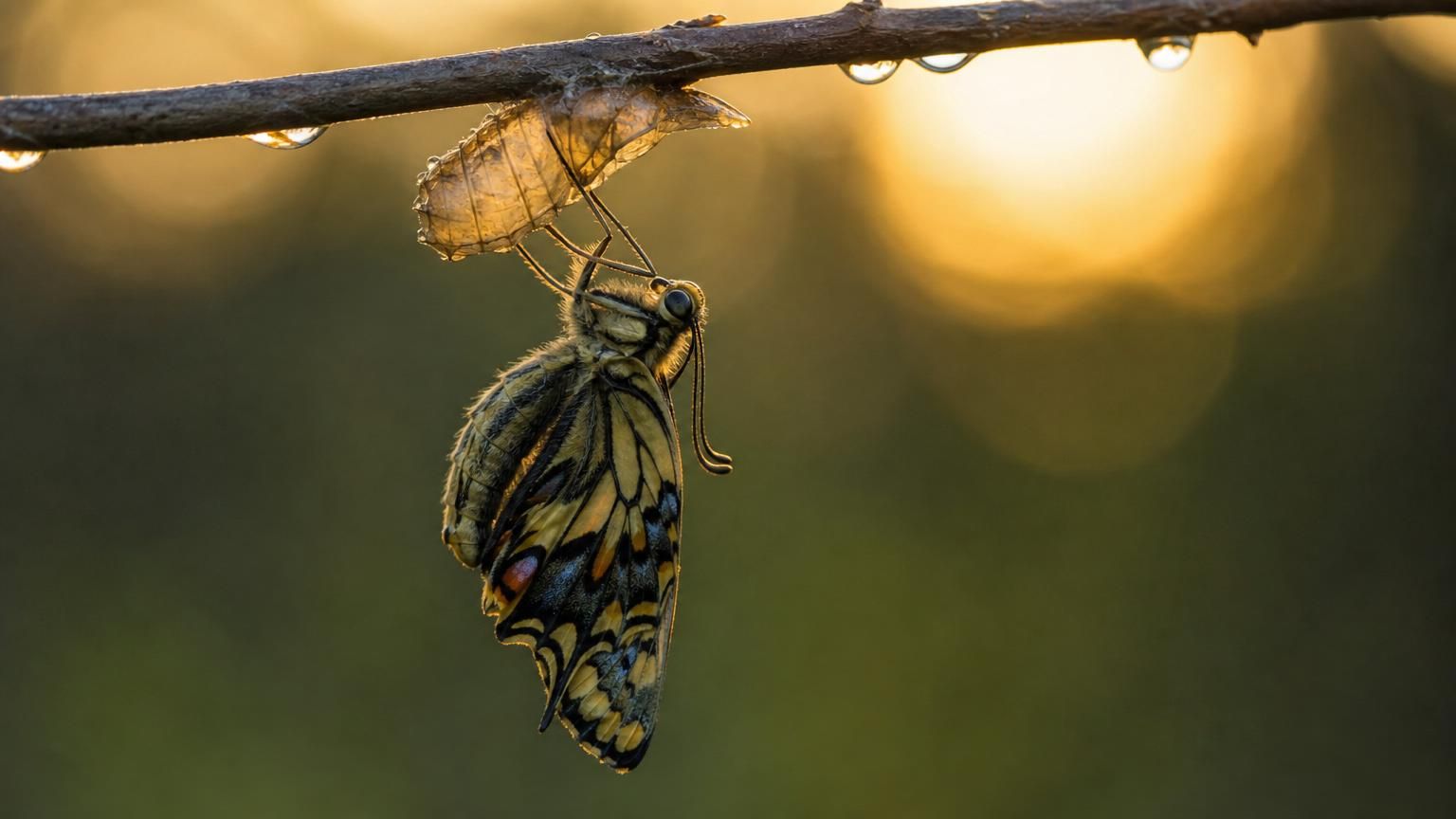
Eclosion (from French éclosion — hatching) is the emergence of an adult insect from the pupa. For butterflies, it is the moment when metamorphosis is completed: a winged imago appears from an immobile pupa.
How eclosion happens
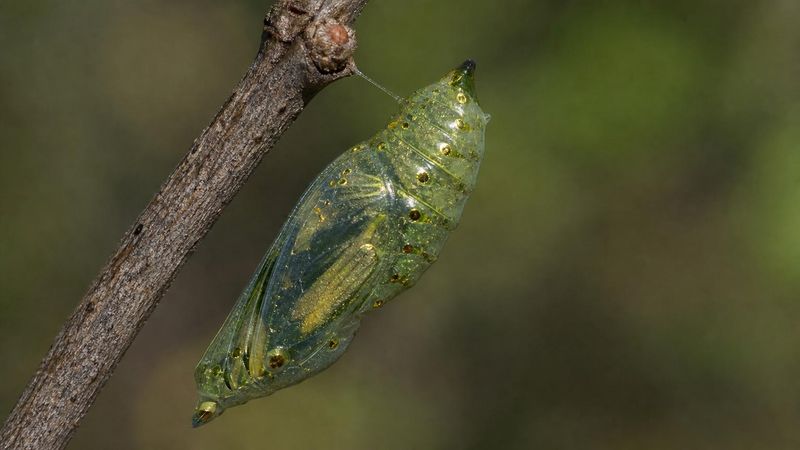
1. Preparation. A few hours before eclosion, the pupal shell becomes transparent — the folded wings of the future butterfly show through. This is a reliable sign that emergence is near.
2. Rupture of the shell. Pressure of hemolymph in the insect's body rises sharply. The pupal shell splits along special lines of weakness — most often at the head and thorax.
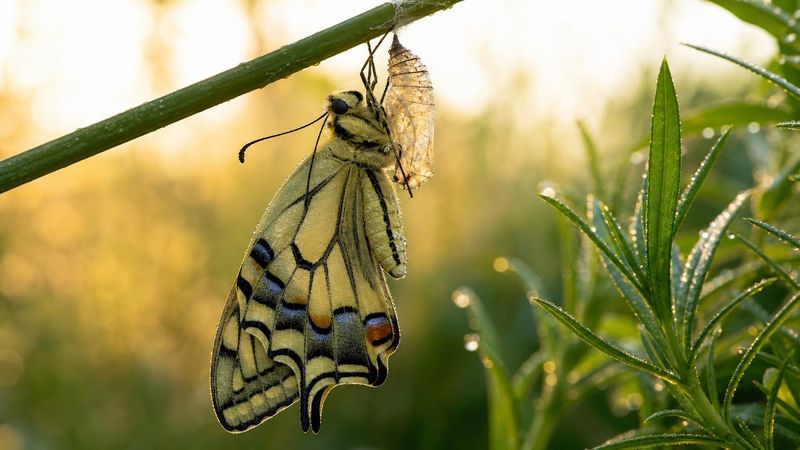
3. Emergence. The butterfly extends its legs, grips a support, and pulls out its abdomen. The wings are heavily crumpled and soft — not yet fit for flight.
4. Wing expansion. The butterfly actively pumps hemolymph through the wing veins. The wings unfold and grow to normal size. The process takes from 20 minutes to 3 hours depending on species and temperature.
5. Sclerotization. The chitinous covering hardens. The butterfly is ready for its first flight.
What not to do during eclosion
The main rule: do not touch the butterfly until the wings have expanded and hardened. If you pick it up too early or it falls, the wings will set in a deformed position — and that cannot be corrected.
Artificially speeding eclosion (heat, moisture) is also risky: the butterfly may emerge too early and die.
Timing of eclosion
Most species emerge from the pupa in the morning hours — this improves the chance of wing expansion at optimal temperature and relative humidity. Experiments show that the moment of eclosion is controlled by internal biological clocks.
More on developmental stages — in the article life cycle.