Metamorphosis
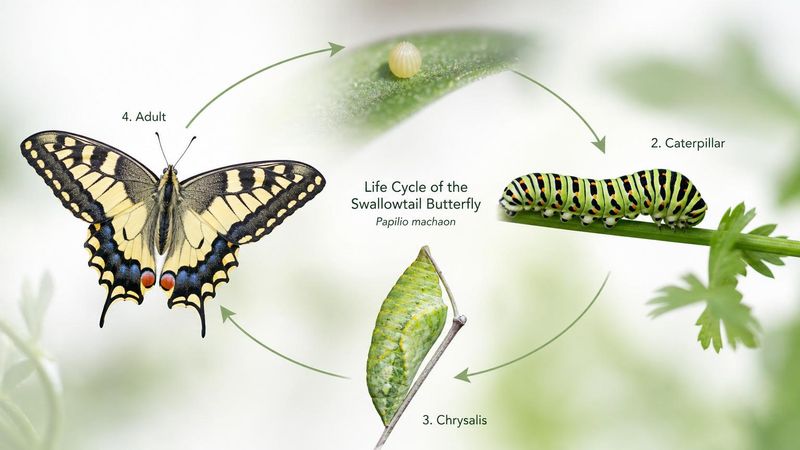
Metamorphosis is complete transformation of an insect passing through four developmental stages: egg, larva (caterpillar), pupa, and adult (imago).
What is metamorphosis
Metamorphosis (from Greek metamorphōsis — transformation) is the process of radical change in body structure during development. Butterflies have complete metamorphosis (holometabolism): the larva (caterpillar) is so unlike the adult that transformation involves almost complete rebuilding of the body.
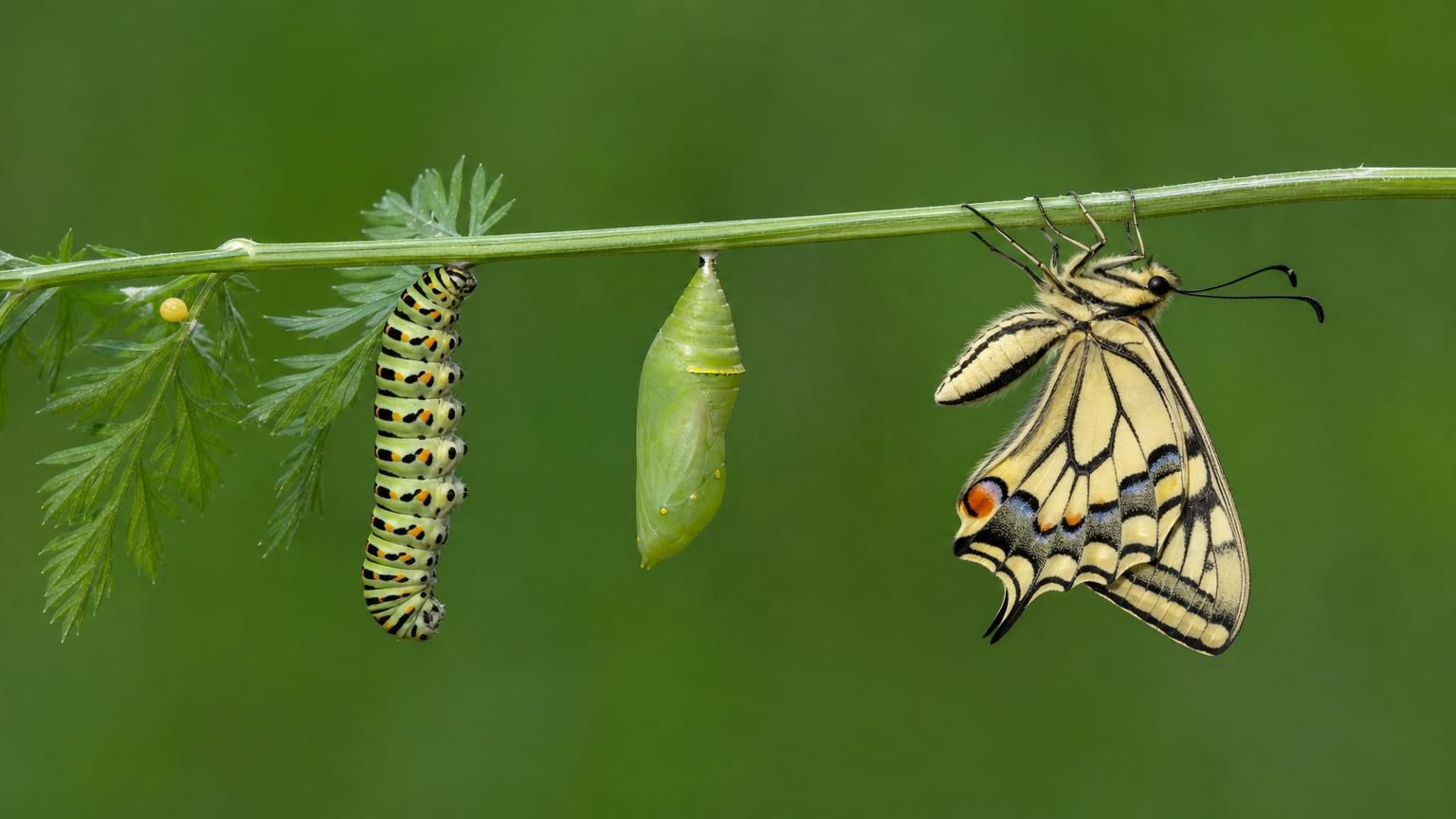
Complete metamorphosis includes four sequential stages: egg → caterpillar → pupa → imago.
Stage 1: Egg
The female lays eggs on the caterpillar's host plant — the one the larva will feed on after hatching. Eggs vary greatly in shape: spherical, flat, ribbed, smooth. Diameter — from fractions of a millimeter to 2–3 mm.
Inside the egg, embryonic development begins within days. Stage duration depends on temperature and species: in warm weather 5–10 days; in some species that lay eggs in autumn the egg overwinters and hatches only in spring.
Example: The swallowtail lays single round yellow eggs on umbellifer leaves — carrot, dill, parsley. After 7–10 days a tiny dark caterpillar hatches.
Stage 2: Caterpillar (larva)
The caterpillar is the active growth stage. Its only task is to eat as much as possible and store nutrients for the pupa. The caterpillar molts 4–6 times, growing larger with each molt.
Depending on species, caterpillars feed on leaves, flowers, fruit, conifer needles, or even plant roots. Many are narrowly specialized and eat only one or a few plant species.
Stage duration: from 2–3 weeks (summer generations) to several months (species overwintering as caterpillars).
Example: Swallowtail caterpillars in early instars resemble bird droppings (camouflage); in later instars they become bright green with black stripes and orange spots. When alarmed they evert the osmeterium — a bright orange horn with an unpleasant smell.
Stage 3: Pupa (chrysalis)
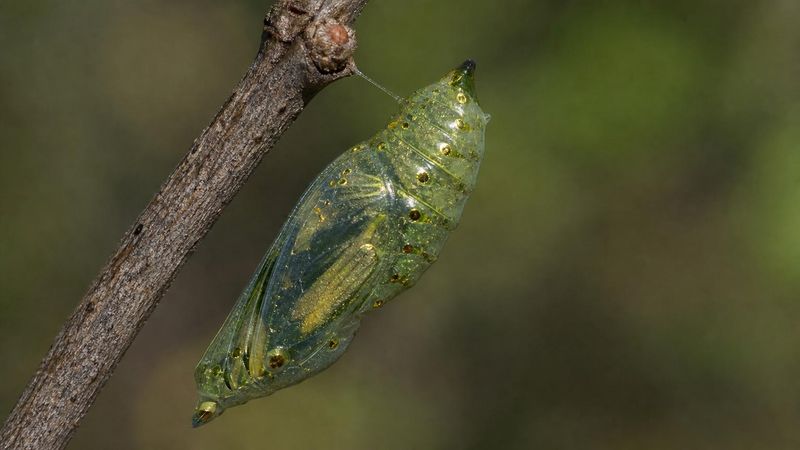
The pupa is the resting and transformation stage. The caterpillar attaches to a branch, leaf, or soil and molts for the last time into an immobile pupa. Outwardly the pupa seems inert, but inside intense rebuilding occurs: caterpillar tissues are largely dissolved and reassembled into a completely different structure — the adult insect.
Duration: from 1–2 weeks (summer generations) to several months (overwintering pupae).
Day-flying butterfly pupae do not spin cocoons (unlike silkworms); they attach openly. Pupal coloration is often cryptic — green, brown, mimicking bark or a leaf.
Example: Large white pupae are green or gray-brown depending on the background. This is adaptation: the caterpillar “chooses” a pupation site matching color.
Stage 4: Imago (adult butterfly)
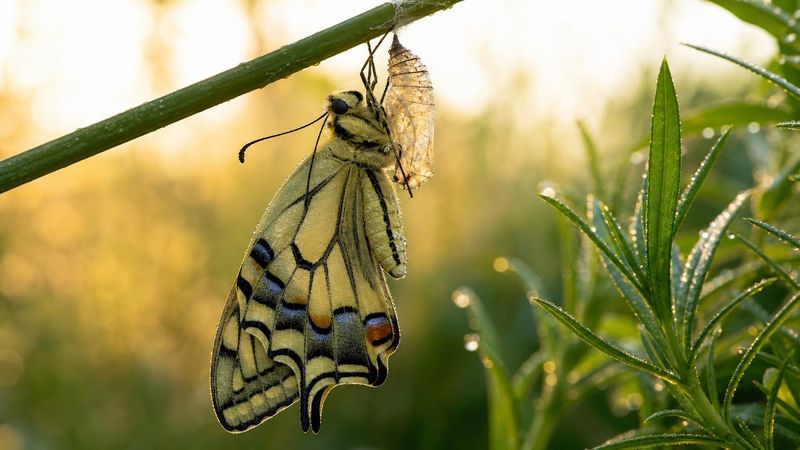
An adult butterfly — imago — emerges from the pupa. At first the wings are crumpled and soft: the butterfly pumps them with hemolymph for several hours, expands them, and waits until they harden. Then it is ready to fly.
The task of imago is reproduction. The adult feeds on nectar (or not at all), finds a mate, mates, and lays eggs, closing the cycle.
Imago duration varies greatly: from a few days to nearly a year in overwintering species. More detail — in the article how long butterflies live.
Complete and incomplete metamorphosis
Complete metamorphosis (as in butterflies) differs from incomplete. In incomplete metamorphosis (grasshoppers, bugs, dragonflies) there is no pupal stage: a nymph hatches — a miniature adult that gradually “grows into” the adult form.
In complete metamorphosis (butterflies, beetles, flies, bees) the larva differs fundamentally from the adult and must pass through a pupal stage.
Why metamorphosis exists
The biological meaning of metamorphosis is separation of ecological niches of larva and adult. Caterpillar and butterfly do not compete for the same food: the caterpillar eats leaves, the butterfly drinks nectar. This reduces intraspecific competition and lets the species use more environmental resources.
Metamorphosis also allows the body form to be “restarted” for different tasks: caterpillar optimized for growth, pupa for transformation, imago for reproduction and dispersal.
More terms — in the glossary section.