Diapause
Diapause is a state of physiological rest in insects that allows survival of an unfavorable season. In butterflies, it can occur at any developmental stage.
What is diapause
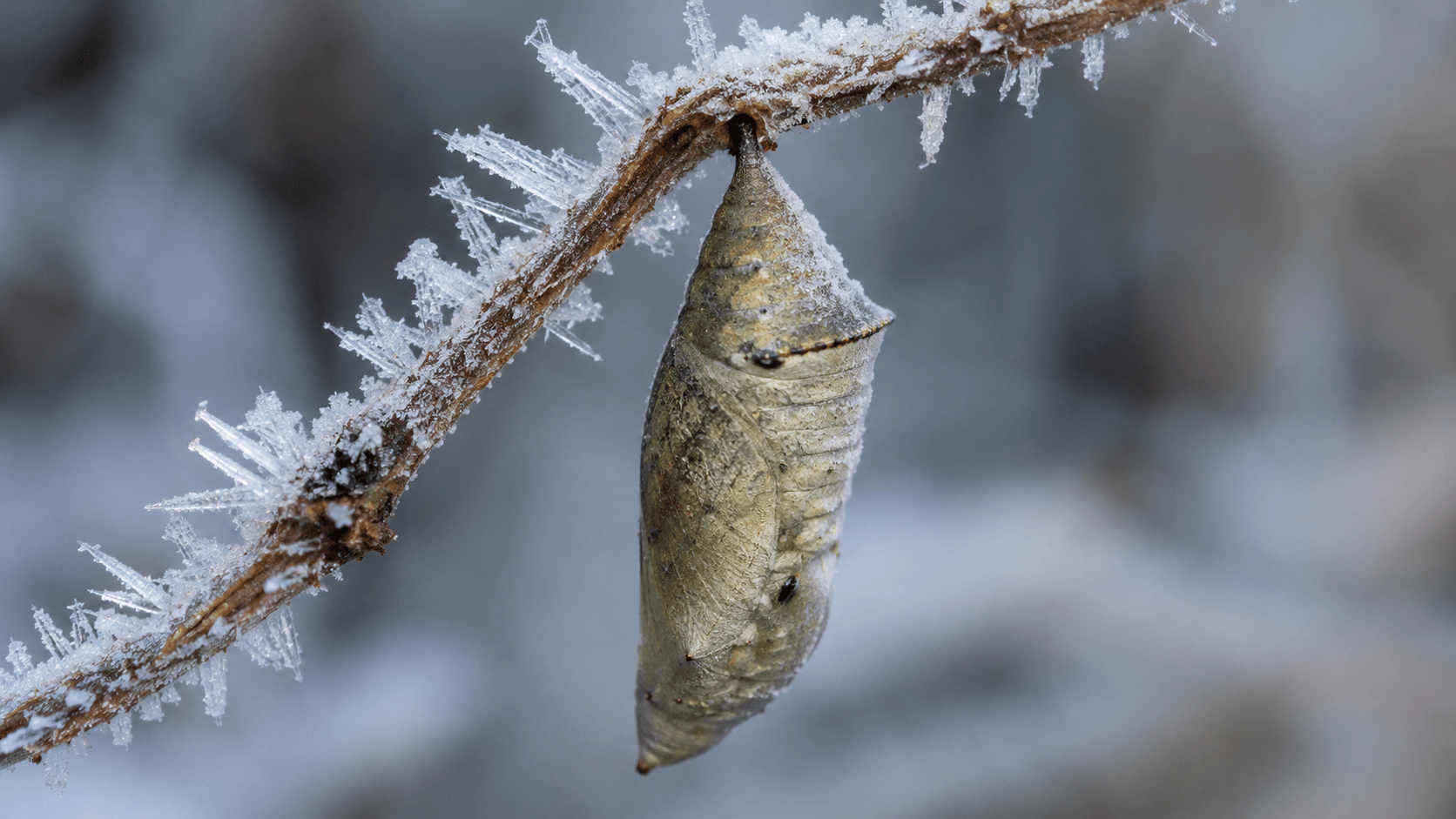
Diapause (from Greek diapausis — pause) is a state of deep physiological rest in insects in which growth, development, and reproduction are suspended. Diapause is triggered in advance in response to environmental signals — usually shortening day length in autumn.
Unlike simple cooling, diapause is an active, genetically programmed process. The insect prepares for it: accumulates fats, synthesizes cryoprotectants (analogous to antifreeze), and reshapes its hormonal balance.
Stages of diapause in butterflies
Each species enters diapause at a specific developmental stage — a species trait that does not change from generation to generation.
| Stage | Example species |
|---|---|
| Egg | Lackey moth (Malacosoma neustria) |
| Caterpillar | Black-veined white (Aporia crataegi), many fritillaries |
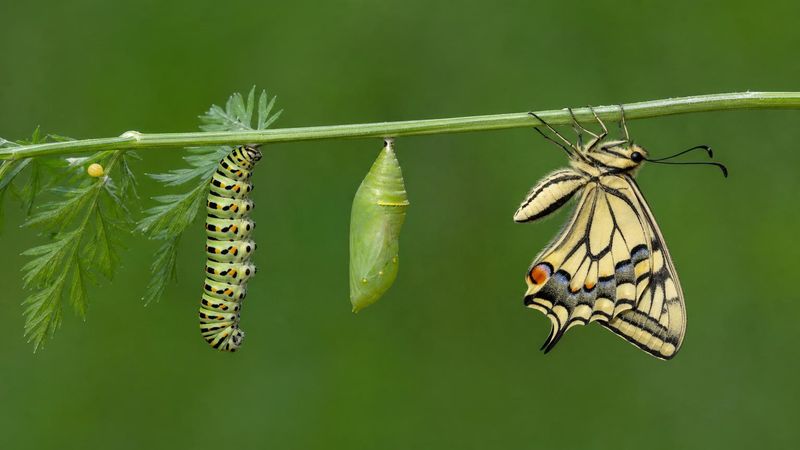
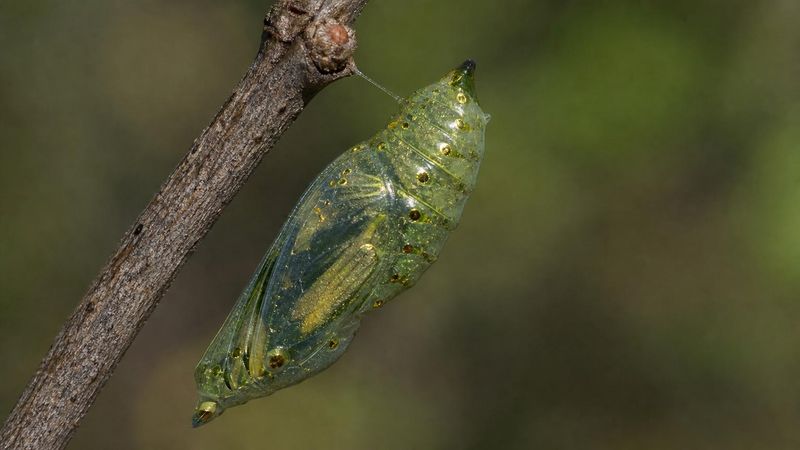
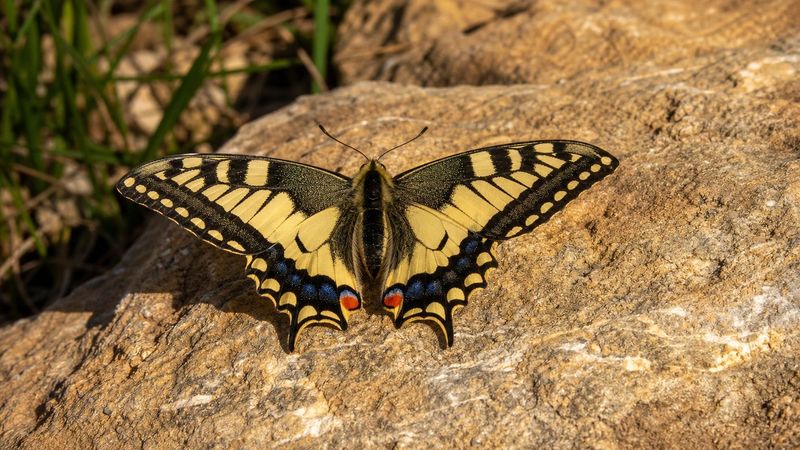
| Pupa | Swallowtail (Papilio machaon), large white (Pieris brassicae) |
| Adult | Small tortoiseshell, brimstone, mourning cloak, comma |
Overwintering as adults
Species that overwinter as imago seek dark shelters with steady low temperature: tree hollows, space under bark, attics, caves, cellars.
The small tortoiseshell overwinters in sheds and under bark — if it warms too early, it may wake before spring and die. Therefore rooms where butterflies overwinter should not be overheated.
The brimstone overwinters among evergreen plants (ivy, mistletoe) — the male's yellow coloration mimics a leaf.
Obligate and facultative diapause
- Obligate — the species always undergoes diapause regardless of conditions (for example, most temperate-climate species)
- Facultative — diapause starts only under certain conditions (short day, low temperature); under favorable conditions the species develops without a break
More on overwintering — in the article how butterflies overwinter.