Chrysalis
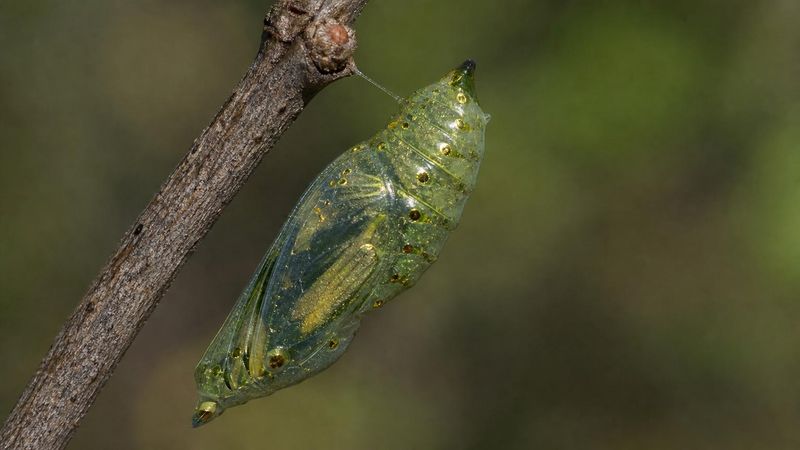
A chrysalis is a butterfly pupa with a hard chitinous case, often with a golden or silvery sheen. Inside, the organism is completely rebuilt.
Chrysalis and pupa: what is the difference
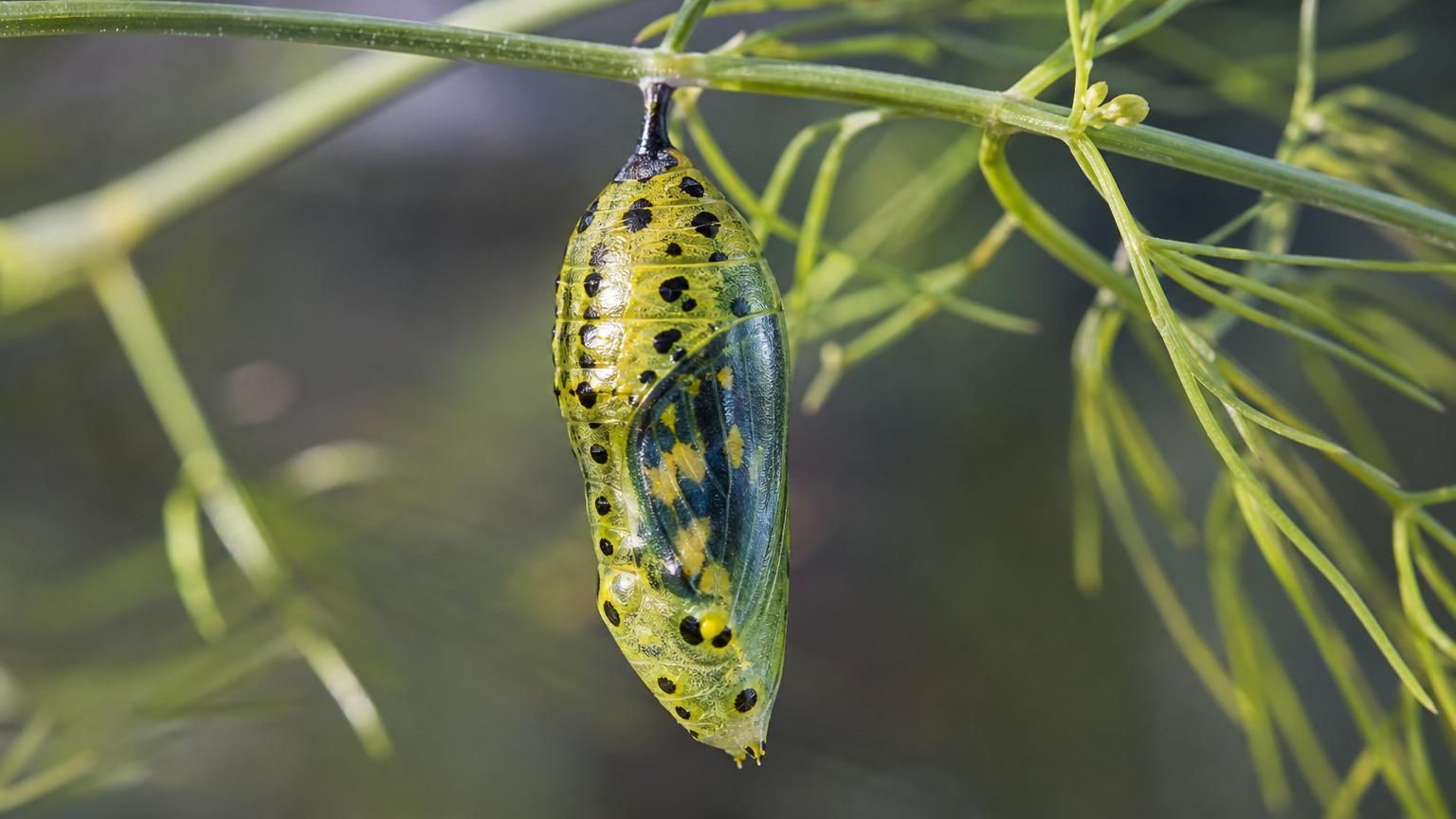
Chrysalis (from Greek χρυσός — gold) is the pupa of a day-flying butterfly (lepidopterans of superfamily Papilionoidea). The term applies specifically to day-flying butterflies; moths usually form cocoons — pupae wrapped in silk.
The name reflects appearance: in many species the chrysalis surface has golden or silvery spots and shiny bands — an optical effect from special chitin structure.
Structure of the chrysalis
A chrysalis is the pupa of a day-flying butterfly, covered by a hard chitinous case. Outlines of the future butterfly's wings, legs, antennae, and eyes are visible — as if “cast” under the chitinous shell.
How the chrysalis is attached is characteristic of each family:
- Swallowtails (Papilionidae) and whites (Pieridae) — hang head up, held by a silk girdle around the body and a cremaster (hooks at the base)
- Nymphalids (Nymphalidae) — hang head down, attached only by the cremaster to a silk pad
What happens inside
The chrysalis looks calm on the outside. Inside histolysis occurs — literally “dissolution”: caterpillar tissues break down into a uniform nutrient mass. This mass contains groups of stem cells — imaginal discs that have stored “blueprints” of adult organs since the larval stage.
From imaginal discs are built anew:
This process — histogenesis — takes from several days to several months depending on species and conditions.
Duration of the stage
Chrysalis duration varies greatly:
- 7–14 days — most summer species (small tortoiseshell, brimstone, whites)
- 1–3 months — species with one generation per year (Apollo, some fritillaries)
- overwintering in the chrysalis — some species diapause as pupae (large white, small white, black-veined white)
Color and camouflage
Chrysalis coloration is often cryptic — matching bark, dry leaf, or stem. Some species can change chrysalis color depending on background: this is phenotypic plasticity.
Golden and silvery spots (which gave the name “chrysalis”) are most pronounced in nymphalids — peacock, mourning cloak, fritillaries. They may serve as extra camouflage, mimicking water glints or dewdrops.
Eclosion: the butterfly emerges
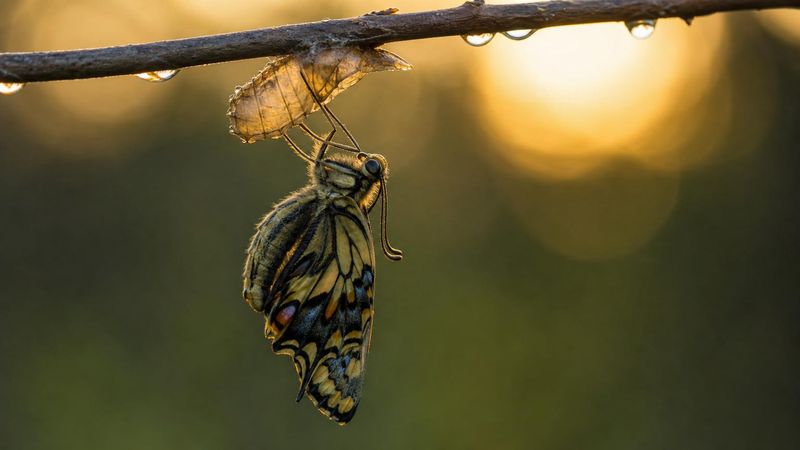
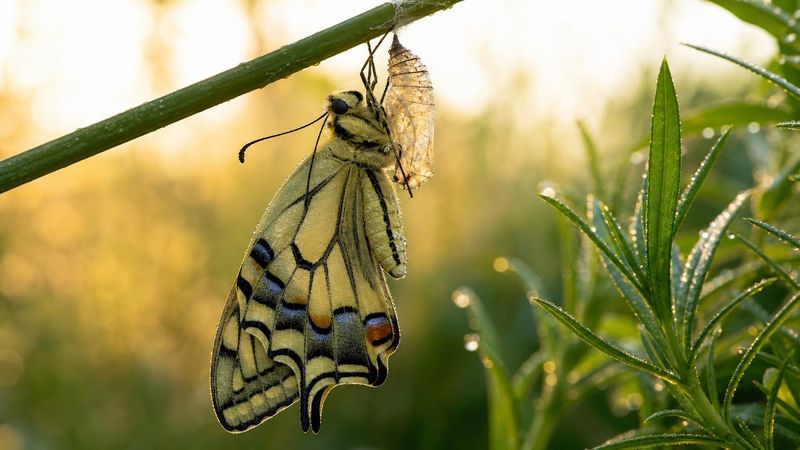
When development is complete, imago breaks the chrysalis shell from inside — this moment is eclosion. The butterfly pulls itself through a slit at the head end, grips the empty chrysalis with its legs, and begins to expand its wings.
The full glossary is in the glossary section.