Caterpillar
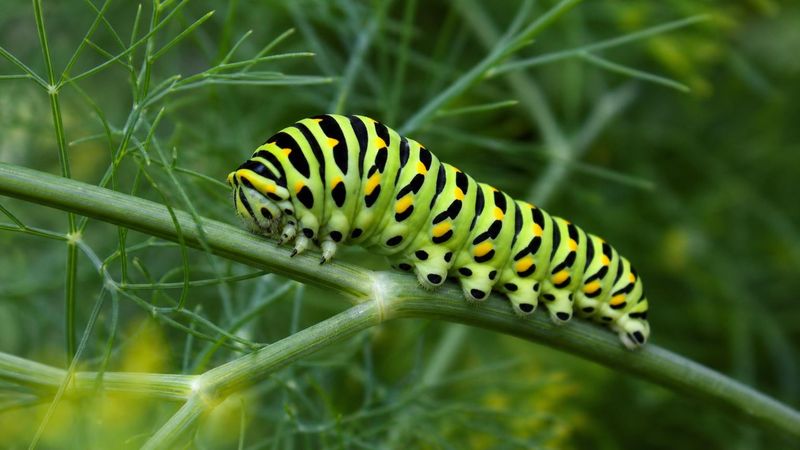
The caterpillar is the larval stage of a butterfly, whose main task is to eat and grow — accumulating about 99% of the energy needed for transformation.
What is a caterpillar
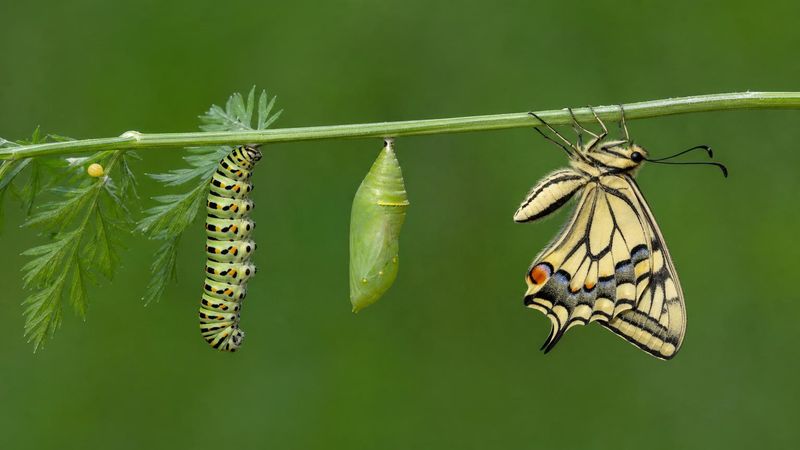
The caterpillar is the larval stage of a butterfly (and moth), the second of four phases of complete metamorphosis: egg → caterpillar → pupa → imago.
The biological task of the caterpillar is simple: eat and grow. During larval life it accumulates organic matter that becomes building material for the adult butterfly. Some species increase body mass 1,000–10,000 times compared with the newly hatched larva.
Body structure
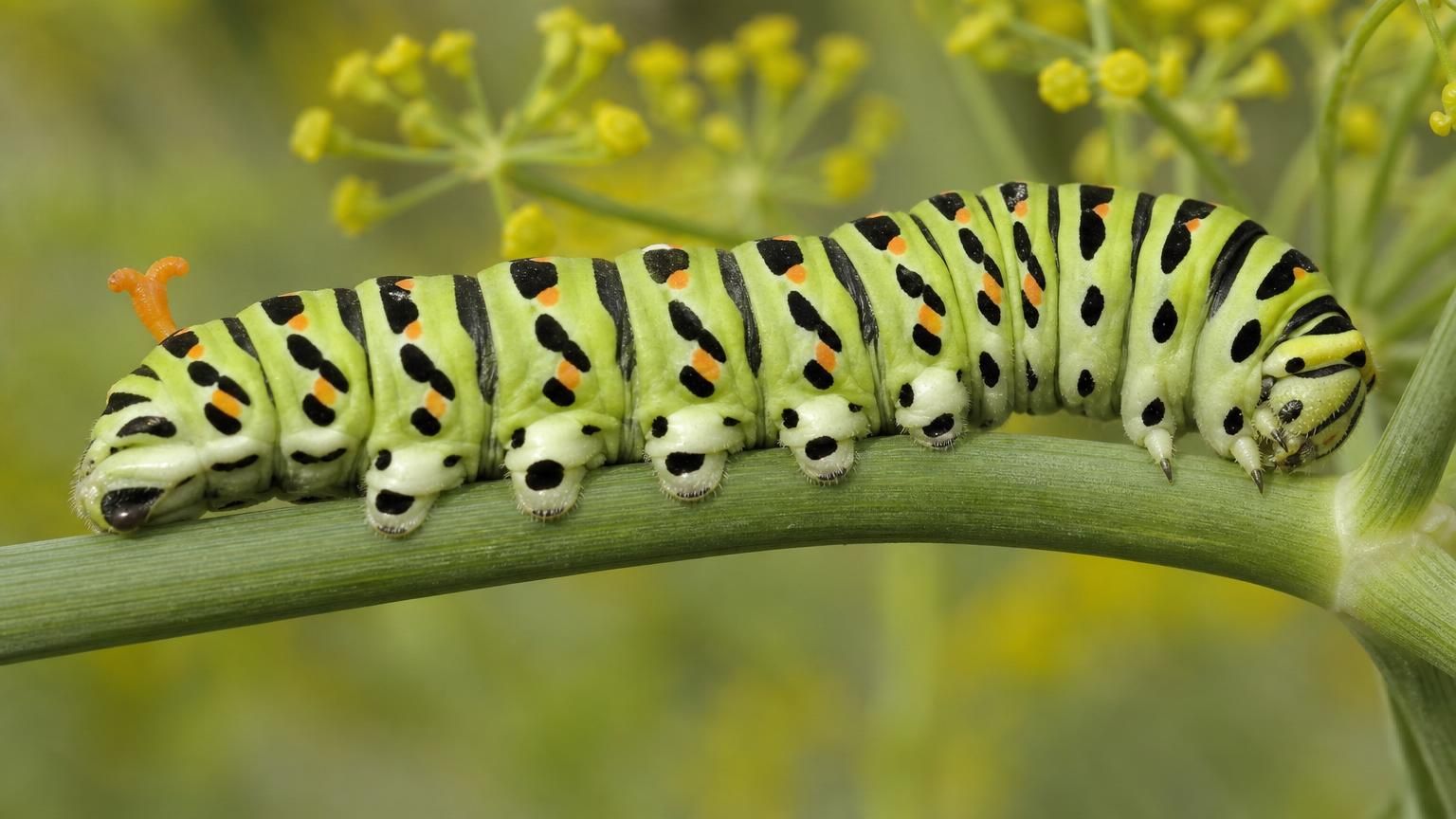
The caterpillar body consists of the head, three thoracic segments, and ten abdominal segments.
Head
A hard chitinized capsule. On the head are:
- Chewing mandibles — powerful jaws for chewing leaves
- Six pairs of simple eyes (stemmata) — only coarse perception of light and shadow
- Silk gland — silk-secreting glands opening at the base of the lower lip; the thread is used to attach to substrate, spin cocoons, and for protection
Legs
The caterpillar has two types of legs:
| Type | Number | Position | Structure |
|---|---|---|---|
| True legs | 3 pairs | Thoracic segments | Jointed, with a claw |
| Prolegs (false legs) | 2–5 pairs | Abdominal segments | Fleshy, with hooks |
Prolegs are unique to caterpillars; adult butterflies do not have them. Hooks on the sole let the caterpillar grip leaves and stems firmly.
Integument
Caterpillar skin is soft and elastic — unlike the chitinous armor of imago. Coloration is highly diverse: from green camouflage on a leaf to bright aposematism (warning of toxicity).
Molts and instars
The caterpillar's hard chitinous head does not grow — it must be shed periodically. This process is called molting (ecdysis). Between molts is an instar.
Most butterflies undergo 4–6 molts. The swallowtail caterpillar, for example, has five instars. After the last molt the caterpillar becomes a pupa.
Before molting the caterpillar stops feeding, attaches to the substrate, and splits the old skin at the base of the head capsule.
Caterpillar feeding
The vast majority of caterpillars are phytophagous: they feed on plant tissue. Each species is tied to specific host plants.
- Monophages — feed on one species or genus of plants (for example, silkworm caterpillars eat only mulberry leaves)
- Oligophages — several related plants (many blues)
- Polyphages — a wide range of plants (painted lady, some tiger moths)
Rare exceptions are predatory caterpillars: some blues feed on ant larvae.
Defensive adaptations
Caterpillars are favored prey of birds, wasps, and parasitic flies. Evolution has produced many defensive strategies:
- Cryptic coloration — camouflage as a leaf, bark, or bird droppings
- Aposematism — bright coloration warning of toxicity (caterpillars feeding on toxic plants accumulate toxins)
- Osmeterium — forked organ of swallowtails: when threatened it is everted behind the head and emits a sharp odor
- Hairs and spines — in many nymphalids and tiger moths; some can cause skin irritation
- Mimicry — resemblance to dangerous objects (for example, a wasp)
Caterpillar and pupa
When the caterpillar has stored enough nutrients and completed the required number of molts, it prepares for pupation. It stops feeding, empties the gut, and finds a suitable place — stem, leaf, soil, or tree bark.
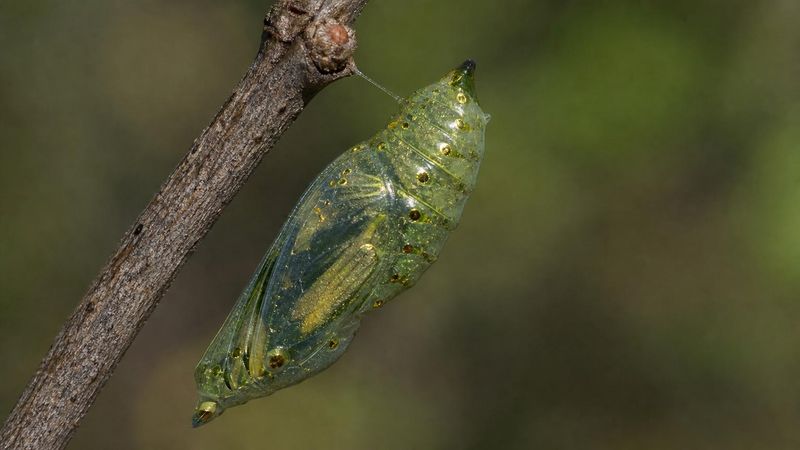
Then the caterpillar attaches with a silk thread and sheds the last larval skin, revealing the pupa beneath. The pupa looks immobile on the outside, but inside the organism is completely rebuilt.
The full glossary is in the glossary section.