Proboscis
The proboscis is the mouthpart of an adult butterfly, shaped as a flexible tube for sucking nectar and other liquids. At rest it is coiled in a spiral.
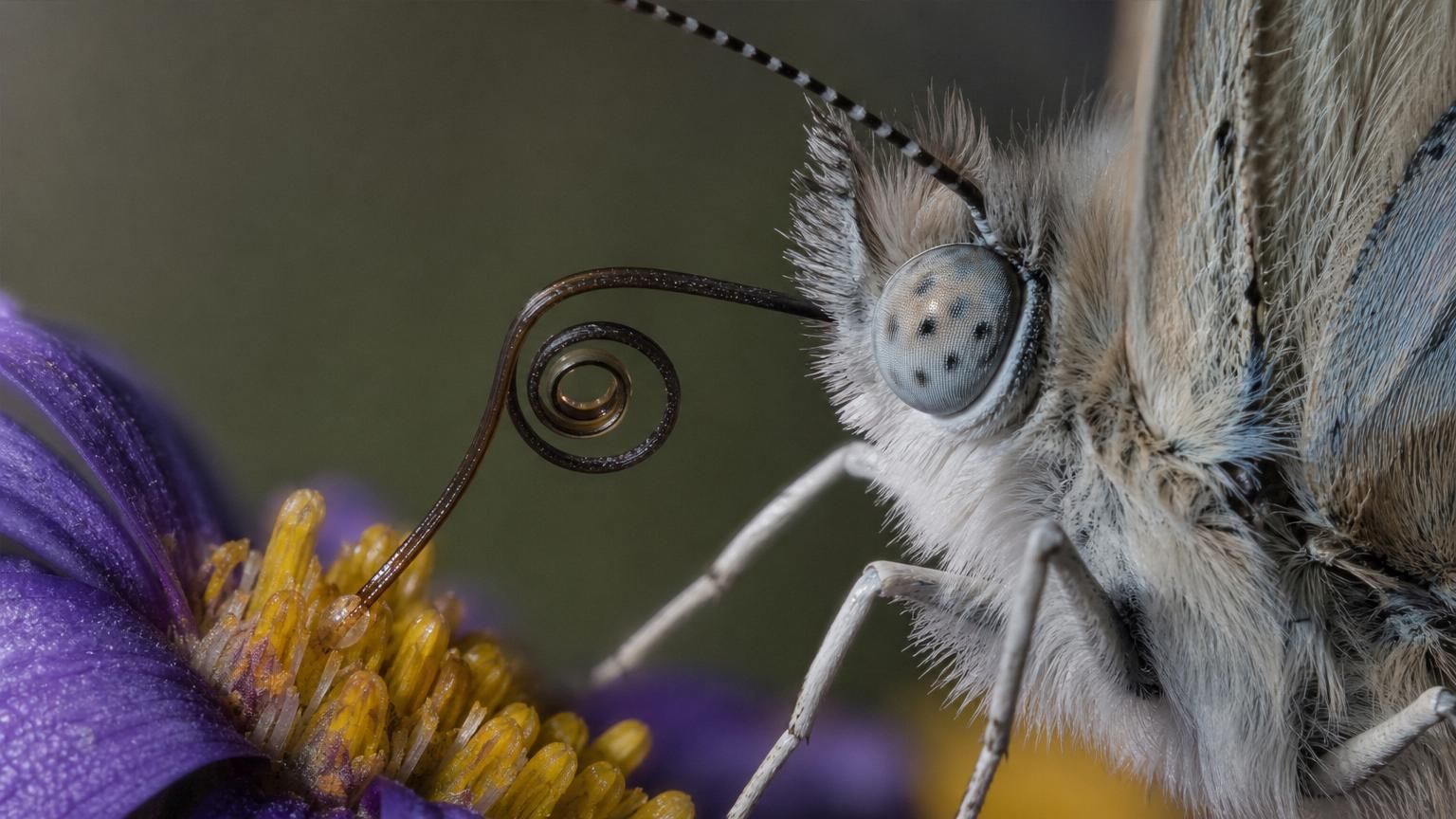
What is a proboscis
Proboscis (Latin proboscis) is a specialized mouthpart of an adult butterfly adapted for consuming liquid food. It is a flexible hollow tube formed by two fused galeae — modified parts of the lower jaw (maxilla).
At rest the proboscis is coiled in a tight spiral under the butterfly's head. When feeding, it straightens and is inserted into a flower or other food source.
How the proboscis works
The principle is suction: powerful pharyngeal muscles create a vacuum, and liquid rises through the tube. The proboscis itself does not contract — it is only a flexible guide.
Proboscis length varies greatly among species:
- In most day-flying butterflies — 1–3 cm
- In some hawk moths (nocturnal) — up to 30 cm (record — Xanthopan morganii praedicta)
Charles Darwin predicted a Madagascan orchid with a 30 cm nectar spur — and a corresponding pollinator with the same proboscis length. Both were found 40 years later.
Proboscis and feeding
The proboscis allows consumption of:
- Flower nectar
- Sap of overripe fruit
- Liquid from damp soil (puddling)
- Hemolymph from insect wounds (in some tropical species)
Species with a rudimentary proboscis
Some butterfly species do not feed at all as adults — their proboscis is underdeveloped or fused. They live on reserves accumulated as caterpillars. Such butterflies live 2–5 days, only long enough to mate and lay eggs.
More on feeding — in the article what butterflies eat.