Nectar
Nectar is the sweet secretion of flowers and the main energy source for adult butterflies, which drink it through the proboscis and carry pollen too.
What is nectar
Nectar is a sweet aqueous solution secreted by nectaries of flowering plants. It is the main energy food of imago in most butterfly species.
Nectar consists mainly of sugars (sucrose, glucose, fructose) at 10–80% concentration, and also contains amino acids, aromatic compounds, vitamins, and trace elements. The varied composition determines which butterfly species prefer which flowers.
How a butterfly drinks nectar
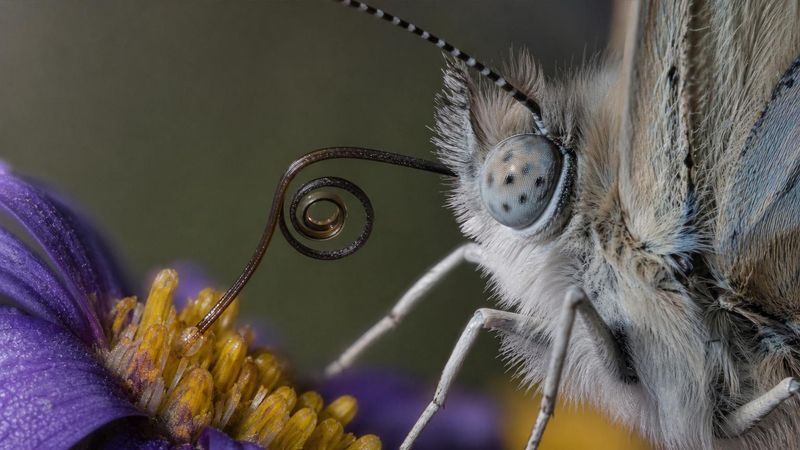
A butterfly finds a flower with compound eyes (sensitive to ultraviolet) and olfactory receptors on antennae. After landing it uncoils its proboscis and inserts it into the nectary.
Nectar is drawn through the proboscis like a straw — by a muscular pump in the pharynx. Feeding is fast: a butterfly can empty a nectary in seconds and move to the next flower.
Nectar and pollination
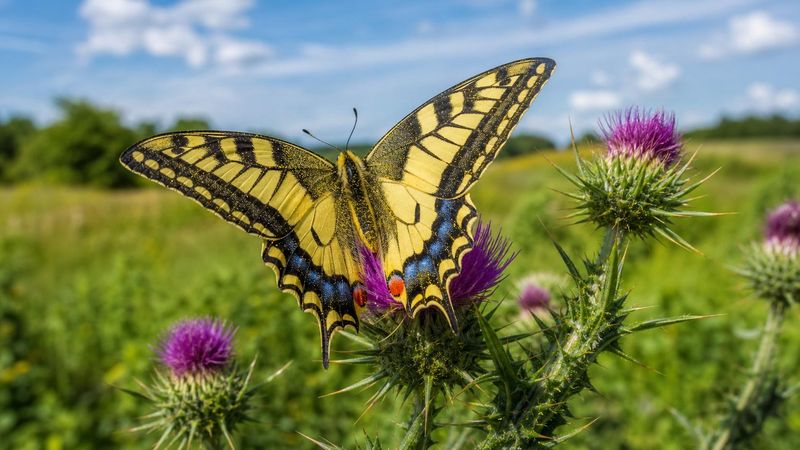
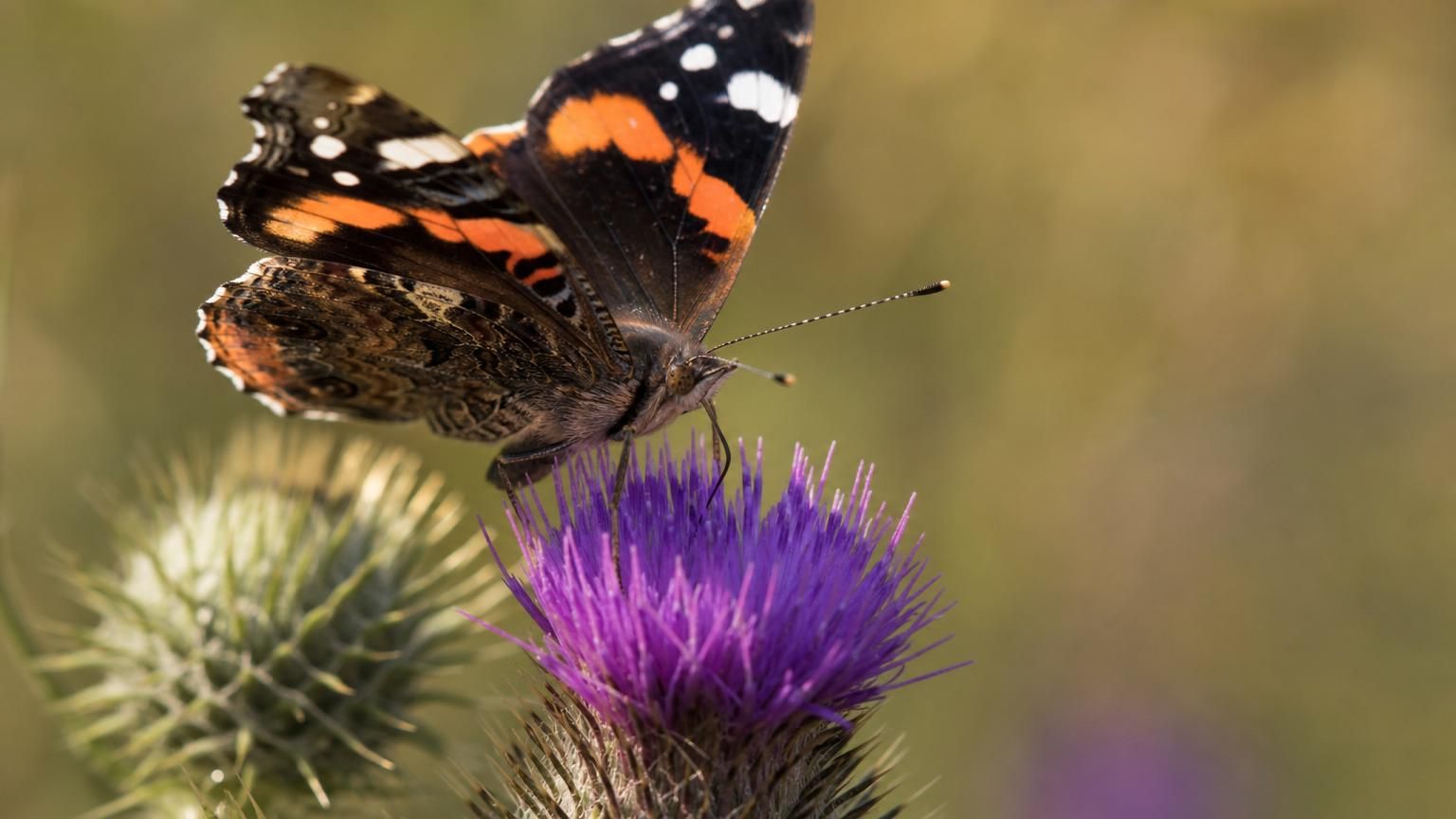
While feeding on nectar, the butterfly inevitably touches the flower's anthers — pollen sticks to its body, legs, and proboscis. Flying to another flower of the same species, it transfers pollen to the stigma — pollination occurs.
This is mutualism: the plant gets a pollinator, the butterfly gets food. Many flowers are adapted specifically to butterflies: tubular, fragrant, pink or purple (colors butterflies see well).
Not only nectar
Some species supplement or fully replace nectar feeding with other sources:
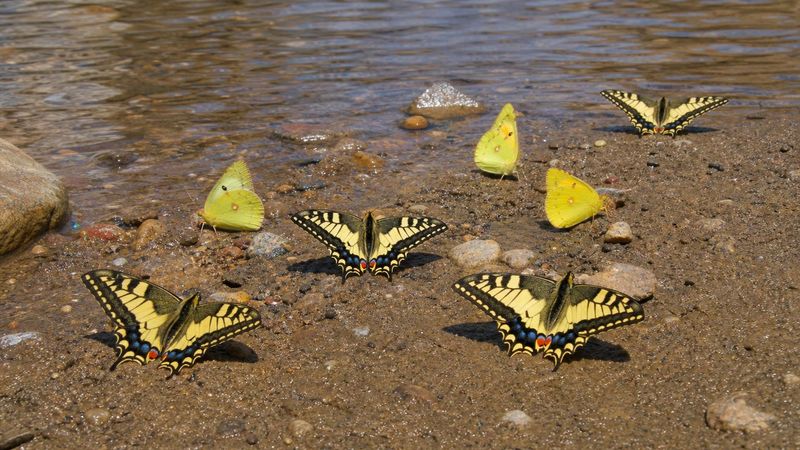
- Puddling — uptake of mineral salts from damp soil, droppings, carrion
- Sap of overripe fruit — rich in sugars and amino acids (painted lady, comma)
- Honeydew — secretions of aphids on tree leaves
Some species with a reduced proboscis (for example, some geometers and bagworms as imago) do not feed at all and live on reserves accumulated by the caterpillar.
The full glossary is in the glossary section.