Oviposition
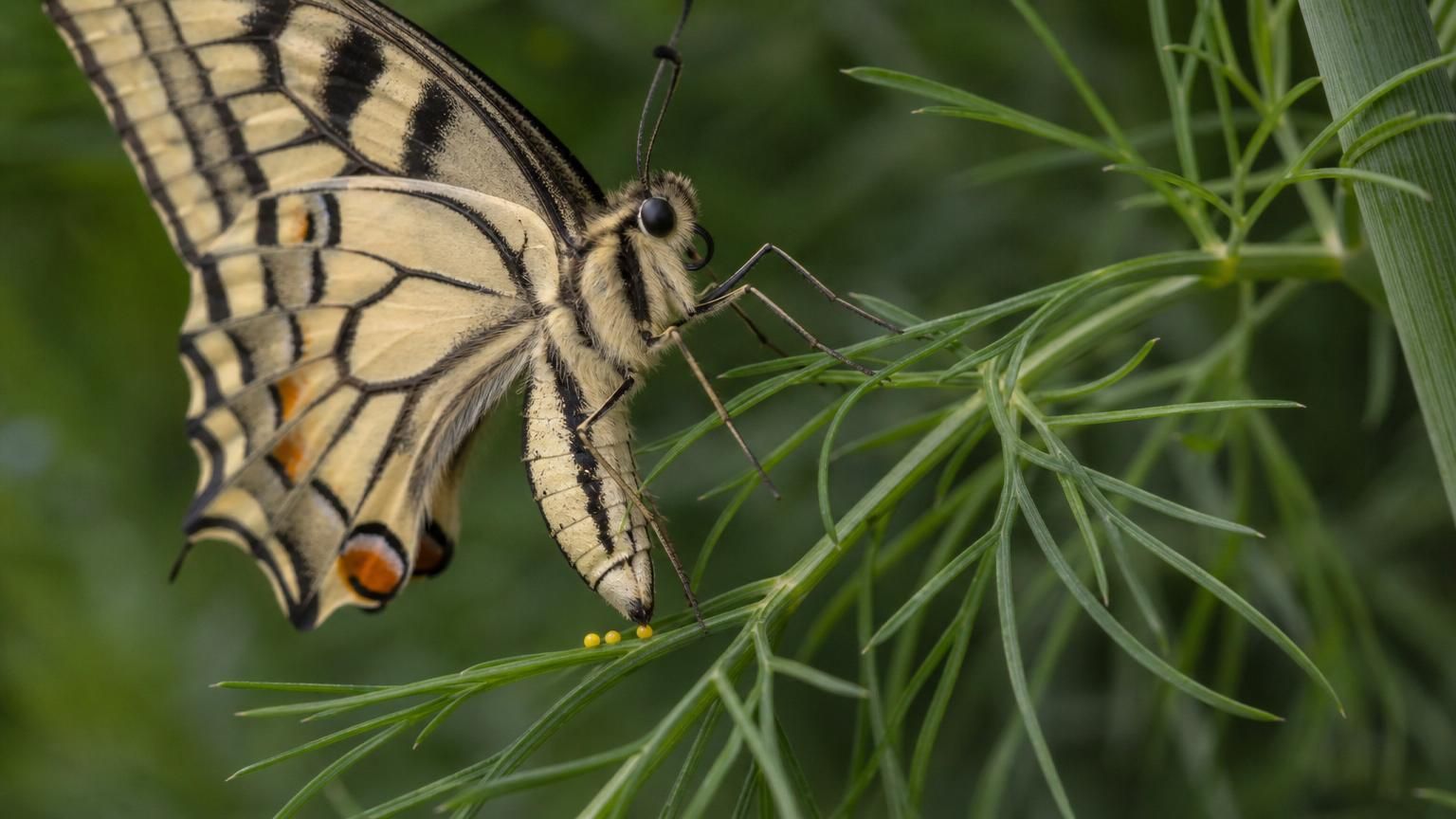
Oviposition is egg-laying by a female butterfly, who carefully chooses a host plant, tapping leaves with her legs, and lays eggs on the underside.
What is oviposition
Oviposition (from Latin ovum — egg, ponere — to place) is the process of egg-laying by a female insect. In butterflies it is a critical moment: choice of site determines offspring survival, because the caterpillar must find a suitable host plant right after hatching.
How the female chooses a plant
Site choice for oviposition is multistep:
- Visual search — the female orients to leaf shape, size, and color. Many species prefer a particular leaf form.
- Chemical check — the butterfly drums on the leaf with her legs. Taste receptors on the legs detect alkaloids, glycosides, and other substances typical of the host plant.
- Assessment of infestation — the female detects eggs already laid by rivals or signs of plant disease and often avoids such leaves.
Laying strategies
| Strategy | Description | Examples |
|---|---|---|
| Single eggs | One per leaf/shoot | Most swallowtails, blues |
| Clusters | Dozens of eggs together | Black-veined white, cabbage white |
| Mass clusters | Hundreds on one plant | Some nymphalids |
Single eggs are a “safer” strategy: if one plant dies, offspring on others survive. Clusters pay off when young caterpillars need a group for joint defense.
Number of eggs
A female butterfly may lay from several dozen to over a thousand eggs in her life (from about 100 in swallowtails to 1,000+ in some nymphalids). Mortality at egg and young caterpillar stage is very high — up to 90–99% — so high fecundity is necessary.
Where eggs are laid
Most species lay eggs on the underside of leaves — less direct sun (protection from drying), fewer predators, and the caterpillar is immediately next to food.
Some species lay on stems, in soil near the host plant, or even on dead plant matter — if the caterpillar feeds on detritus.
Egg diapause
In some species eggs overwinter in diapause — slowed metabolism. The female lays in autumn; hatching occurs only the following spring.
The full glossary is in the glossary section.