Monophage
A monophage is a species whose caterpillars feed on only one species or genus of plant. Monophagy makes a butterfly vulnerable if that plant disappears.
What is a monophage
A monophage (from Greek monos — one, phagos — eater) is a species whose caterpillars feed on only one plant species or one genus. This is the extreme of food specialization.
Monophagy is an evolutionary strategy opposite to polyphagy.
Examples of monophages
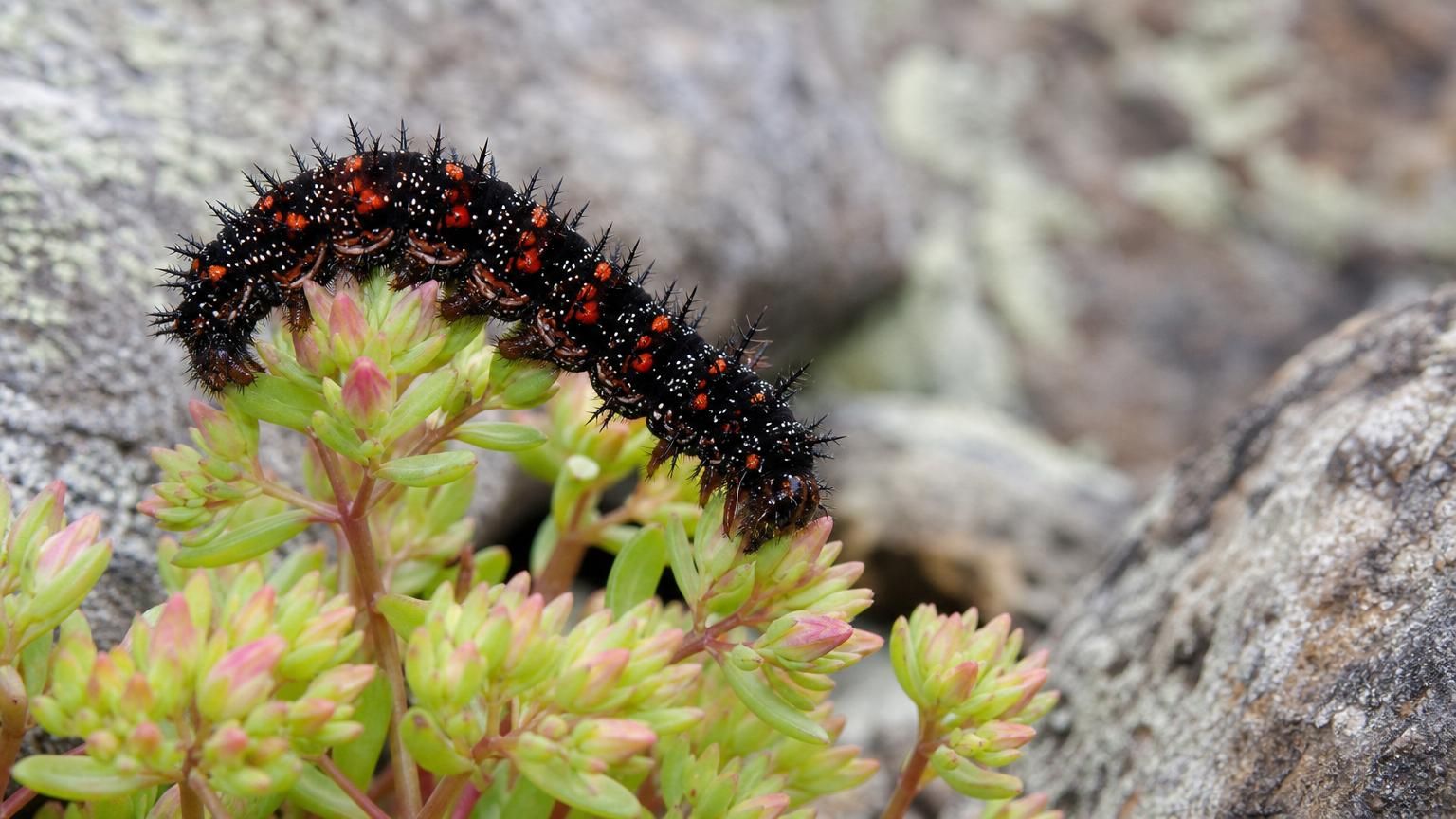
Apollo (Parnassius apollo) is a classic monophage: the caterpillar feeds only on stonecrop (Sedum). This explains the species' tie to rocky slopes with stonecrop and its decline when meadows are overgrown with tall vegetation.
Silkworm (Bombyx mori) is a strict monophage on mulberry leaves (Morus). Millennia of selection further strengthened this dependence: domesticated caterpillars can hardly feed on other plants.
Alcon blue (Phengaris alcon) is a monophage on gentian (Gentiana). Populations are strictly tied to sites where this plant grows.
Large white (Pieris brassicae) is a strict oligophage on brassicaceous plants, often called a monophage informally.
Causes of monophagy
Monophagy arises from coevolution of butterfly and plant:
- The plant produces defensive substances (alkaloids, glycosides)
- The caterpillar adapts enzyme systems to neutralize those substances
- Over time specialized enzymes work better than general ones
- The caterpillar gains the ability to find “its” plant by smell
Monophagy and conservation
Monophages are especially vulnerable to environmental change:
- Loss of host plant → direct loss of the butterfly
- Butterfly range is limited by the plant's range
- Habitat fragmentation splits populations
Many rare and protected butterflies are monophages. Restoring their populations requires above all preserving or restoring the host plant.
The full glossary is in the glossary section.