Pollination
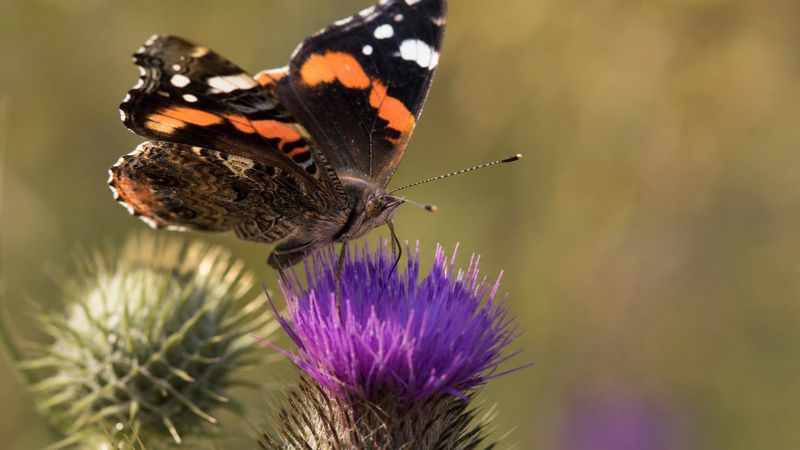
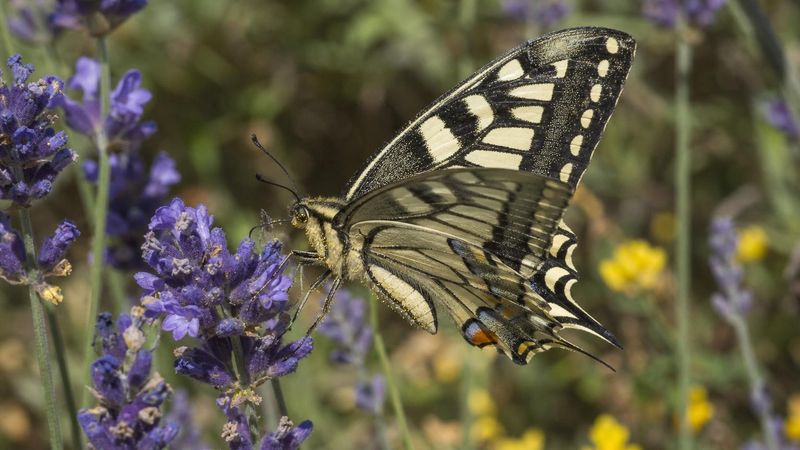
Pollination is transfer of pollen from anther to stigma. Butterflies are important pollinators: they move pollen between flowers while feeding on nectar.
What is pollination
Pollination is transfer of pollen grains from a flower's anthers to the stigma, necessary for fertilization and seed formation. In flowering plants we distinguish:
- Self-pollination — pollen reaches the stigma of the same flower
- Cross-pollination — pollen is transferred between different individuals of one species
Cross-pollination provides genetic diversity of offspring and evolutionary resilience of plant populations. Here the role of insect pollinators, including butterflies, is essential.
How butterflies pollinate plants
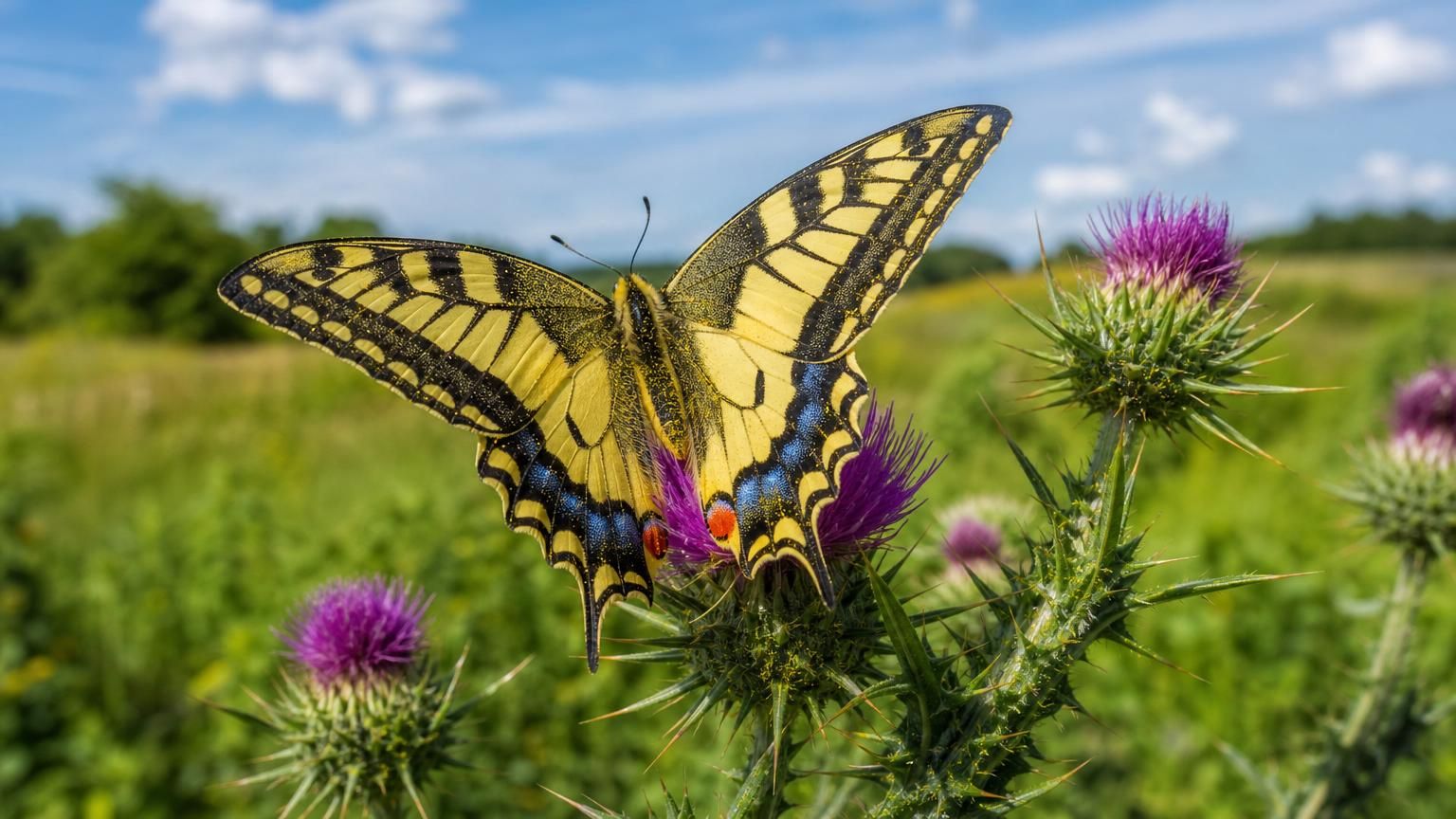
A butterfly lands on a flower for nectar. While feeding, pollen sticks to its body — to the proboscis, legs, abdomen. Flying to another flower of the same species, the butterfly accidentally leaves some pollen on the stigma.
The process is unintentional for the butterfly but evolutionarily fixed — plants are “interested” in attracting pollinators.
Which flowers butterflies pollinate
Butterflies are specialized pollinators: they have a long proboscis, good color vision (including ultraviolet), and preference for certain shapes and scents. Flowers adapted to butterfly pollination often have:
- Tubular shape — nectar deep inside, accessible only through a long proboscis
- Pink, lilac, or red color — these colors butterflies see well
- Persistent sweet scent — especially during the day
- Flat or slightly inclined inflorescences — easy to land on
Examples: thistle, red clover, oregano, phlox, verbena, buddleia (called a “butterfly bush”).
Butterflies vs bees: different niches
Butterflies and bees often visit the same flowers but occupy different niches:
| Parameter | Bee | Butterfly |
|---|---|---|
| Activity | Day | Day (nocturnal species — night) |
| Pollen transfer | Targeted (corbiculae) | Accidental (on body) |
| Efficiency | Higher | Lower, but wider reach |
| Flower preference | Blue, yellow | Pink, red |
Butterflies are less efficient pollinators than bees but visit flowers bees are not adapted to and play an irreplaceable role in pollinating some rare plants.
Ecological importance
Declining butterfly numbers is a sign of ecosystem degradation. Because many plants depend on butterfly pollination, loss of these insects reduces yield of wild and cultivated plants.
More detail — in the article role of butterflies in nature.
The full glossary is in the glossary section.