Thermoregulation
Thermoregulation in butterflies is maintaining working body temperature. Unable to generate heat, they warm up in sun, wings spread like solar panels.
Butterflies are poikilotherms
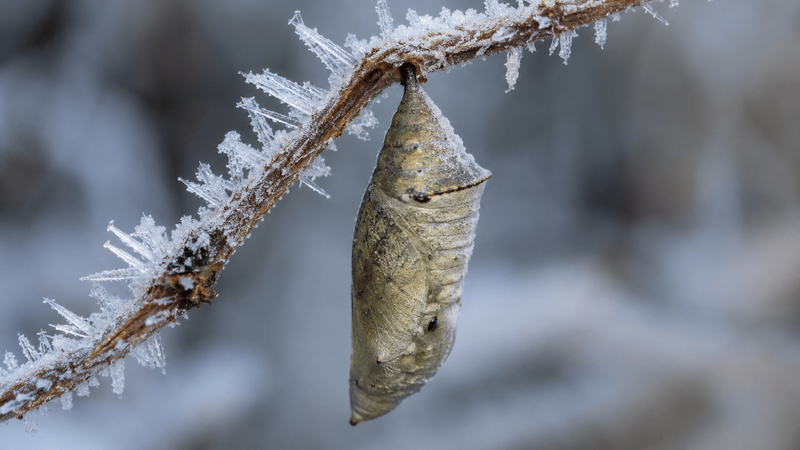
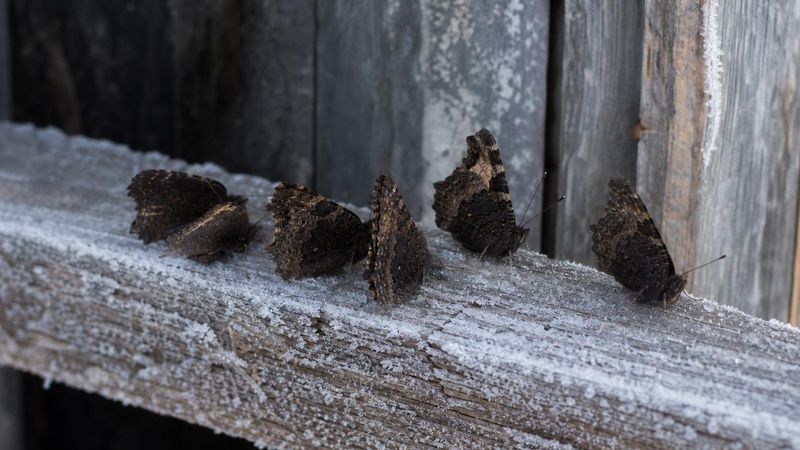
Thermoregulation is the process of keeping body temperature in a working range. Butterflies, like all insects, are poikilothermic (cold-blooded): they cannot produce heat by metabolism as birds or mammals do. Body temperature depends on the environment.
This explains why butterflies do not fly on cold, overcast days: wing muscles work normally only when thorax temperature is above about 28–35 °C (depending on species).
Heating: solar panels
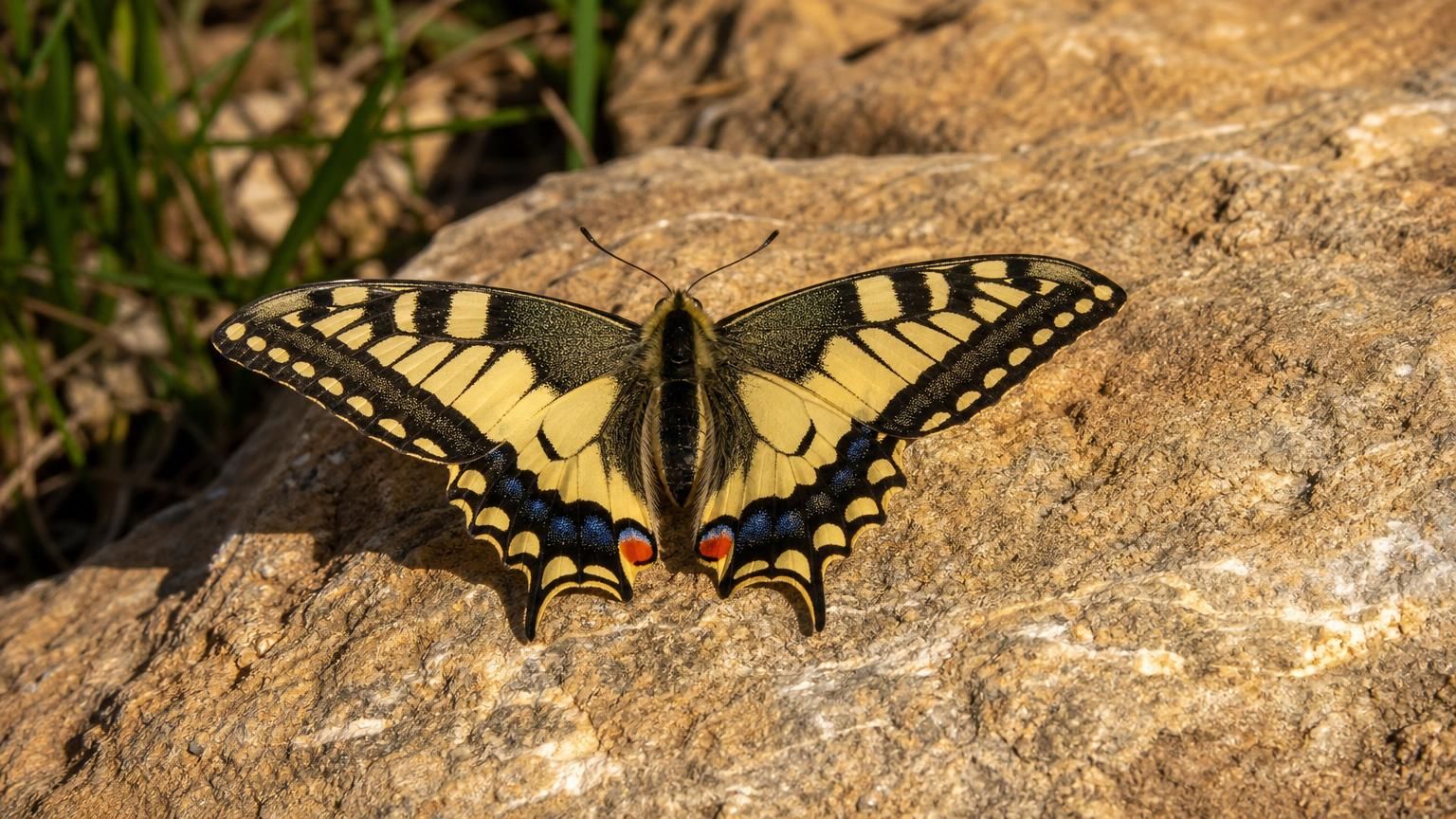
The main way to warm up is heliothermy, or basking. The butterfly spreads its wings in direct sun, turning them perpendicular to the light — wings act as a solar collector.
Two strategies:
- Dorsal basking — wings open, butterfly on a warm surface (rock, ground)
- Lateral basking — wings closed, butterfly tilts sideways to the sun; the dark underside absorbs heat
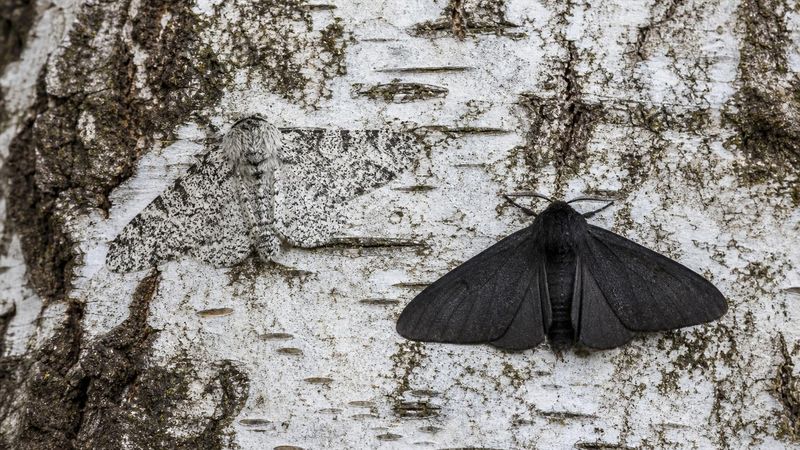
Dark-colored and mountain species warm faster — one reason for adaptive melanism in high-altitude species.
Overheating: how a butterfly cools down
At high temperature overheating is as dangerous as chilling. Cooling strategies:
- Seeking shade — under leaves or in grass
- Vertical orientation — folding wings and turning edge-on to the sun, minimizing heated area
- Active evaporation — through spiracles
Temperature and flight
Minimum thorax temperature for steady flight in most day-flying butterflies is 28–33 °C. Before takeoff on a cool day the butterfly “warms” flight muscles with shivering wing movements — like warming an engine.
In high-Arctic species (polar fritillaries, sulphurs) the threshold is lower — about 20–22 °C, allowing flight during short polar summer.
Thermoregulation and activity
This explains daily activity patterns:
- Morning — basking after night, slow warm-up
- Midday — peak activity (feeding, mating)
- Hot summer midday — some species may pause activity
- Evening — activity drops as air cools
- Night — rest in shelter
The full glossary is in the glossary section.