Painted Lady
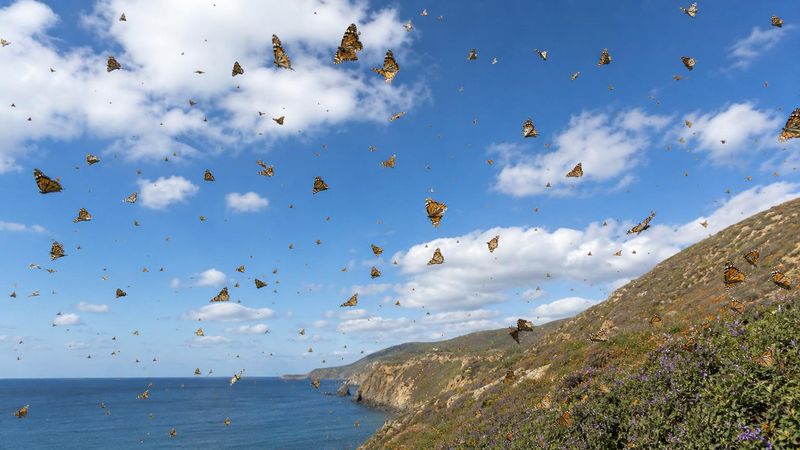
The painted lady is one of the longest-distance migrants among butterflies. Each year it travels thousands of kilometres from Africa into Europe and temperate Eurasia across its range.
Key facts
- Latin name
- Vanessa cardui
- Family
- Nymphalidae
- Wingspan
- 46-64 mm
- Flight season
- April — October
- Host plants
- Thistle, Burdock, Stinging nettle, Mallow
- Conservation status
- LCLeast Concern
Appearance
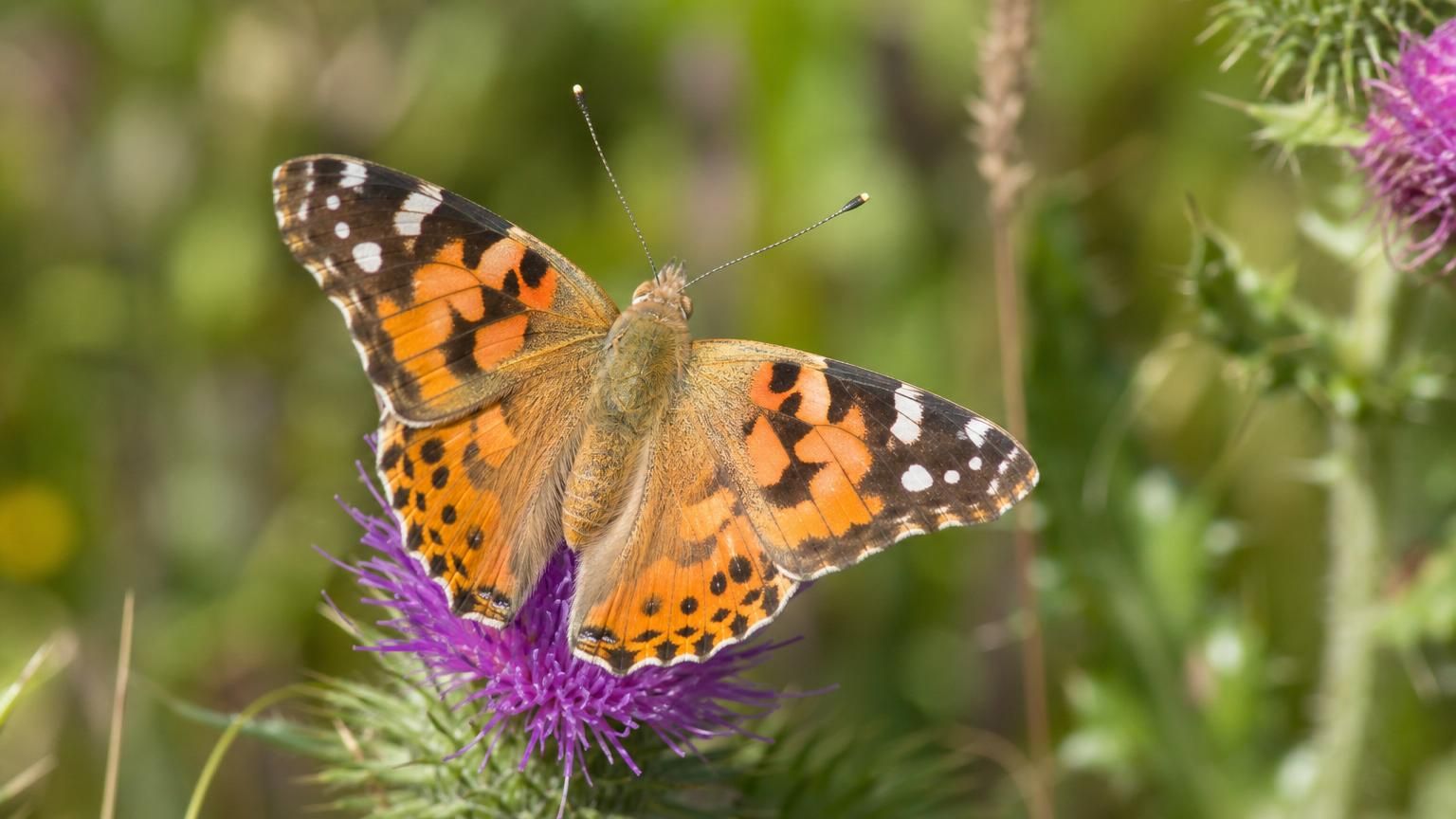
The painted lady (Vanessa cardui) is a medium-sized butterfly with a wingspan of 46–64 mm. The upper side of the wings is light orange with an ochre tint, marked with black spots and white speckles at the tip of the forewings. Along the outer margin of the hindwings — a row of small 'eyespots'.
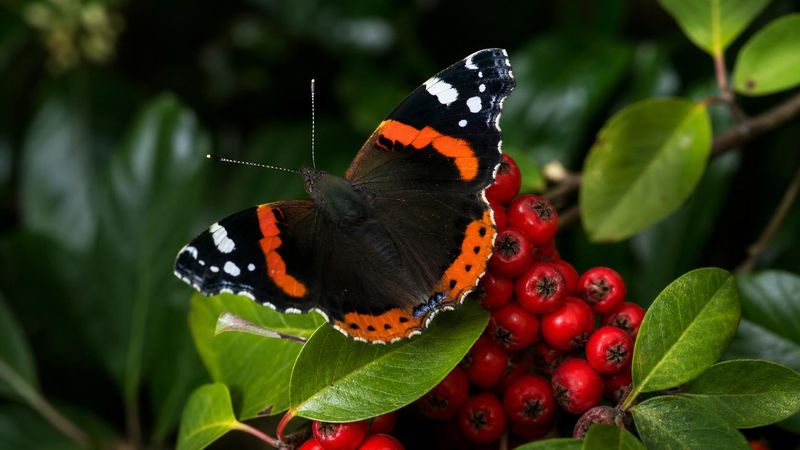
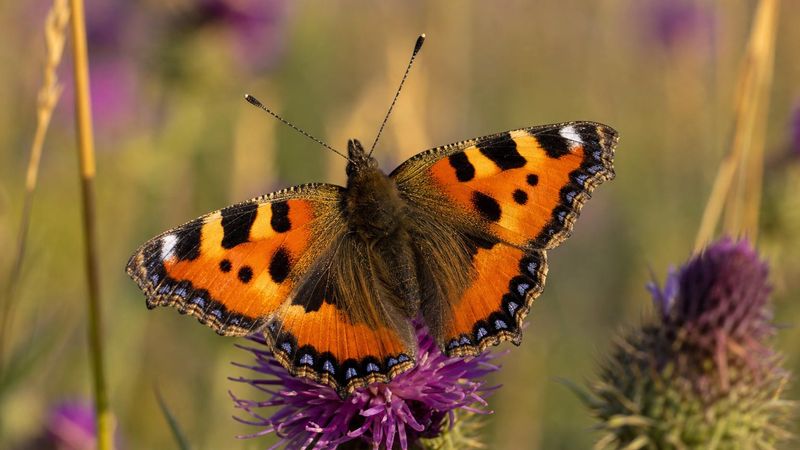
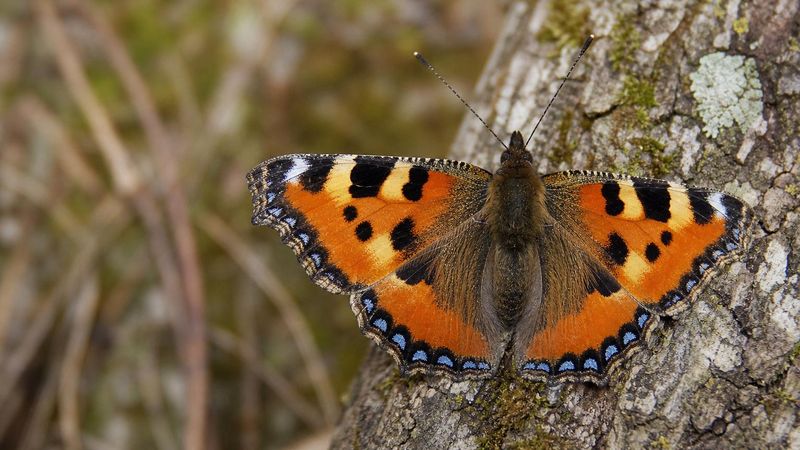
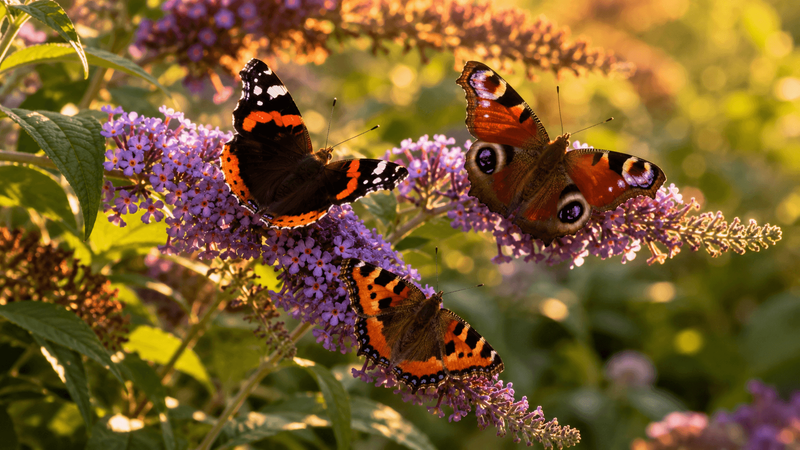
The underside of the hindwings is intricately patterned in beige, brown, and white — vague 'eyespots' can be made out. Thanks to the pale colour the painted lady looks 'faded' compared with the red admiral or small tortoiseshell.
Range — Worldwide
The painted lady is the only butterfly found on all continents except South America and Antarctica. It is one of the most widely distributed insect species on Earth.
In Russia it occurs throughout southern and central regions, more rarely in the north. Numbers in a given year vary greatly depending on the success of spring migration from Africa.
Record Migration
Research in 2019 using stable hydrogen isotope analysis of wings showed that painted ladies overwintering in West Africa fly north through the Sahara into Europe — a distance of more than 4,200 km. The autumn return to Africa uses six successive generations covering up to 12,000 km in total.
Life Cycle
The female lays eggs singly on the upper side of thistle and nettle leaves. The caterpillar is dark with branched spines and lives in a solitary shelter. The pupa may be green or brown with metallic tubercles.
In a temperate climate there are two to three generations per year, but the first generation appears only after arrival of migrants from Africa — usually not before May.
Behaviour
The painted lady is a fast, tireless flier. Males occupy elevated spots and conduct aerial duels with rivals. It readily lands on flowering thistle and burdock, giving the species its name. While feeding it often quivers its wings without folding them fully — allowing a quick take-off when threatened. In cloudy weather it rests in shelter: the marbled underside makes the butterfly almost invisible among last year's leaf litter.
Reproduction
The female lays eggs singly on leaves of host plants — thistle, burdock, nettle, mallow. The egg is ribbed and greenish. The caterpillar is grey-green or brownish with yellow stripes and branched spines, living alone in a rolled leaf shelter. The pupa is greenish brown with metallic tubercles. The full cycle from egg to imago takes about 30 days.
Overwintering and Migration
The painted lady does not overwinter in temperate latitudes. Autumn individuals migrate back to West Africa, crossing the Sahara. This route takes several generations and totals up to 12,000 km — an absolute record among butterflies. Chemical analysis of stable hydrogen isotopes in the wings allowed scientists to trace the full route in 2019.
Interesting Facts
- The painted lady is the only butterfly found on all continents except South America and Antarctica.
- With a tailwind it can cover up to 500 km in a day.
- The English name 'painted lady' refers to the complex, brush-painted pattern on the wings.
- Numbers in Russia depend heavily on migration success: in 'good' years the painted lady is seen everywhere; in weak years — only as single individuals.