Butterflies in Spring
Which butterflies appear first in spring and why. Overwintering species, flight periods, behaviour in March–May.
First butterflies: overwintering adults awaken
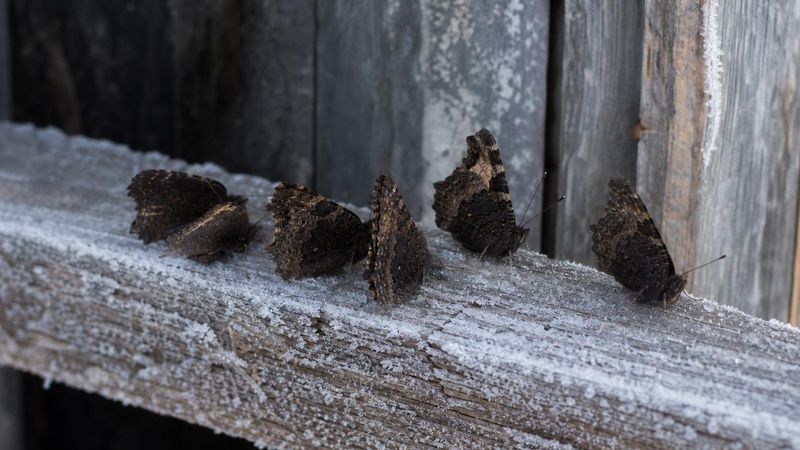
Butterflies do not vanish entirely in winter — many species overwinter as adults, tucked into bark crevices, dry leaves, attics, and sheds. The first spring warmth is the signal to wake.
The small tortoiseshell (Aglais urticae) emerges from hibernation at just +8 °C. It can be seen on sun-warmed house walls from late February to early March, while snow still lies. The butterfly basks with wings spread, warming its flight muscles with the sun. The brimstone (Gonepteryx rhamni) is another early overwintering species. Males are vivid yellow, females greenish-white. Unlike the tortoiseshell, the brimstone overwinters in foliage — its cryptic coloration mimics a green leaf, allowing it to hide right on the branches.
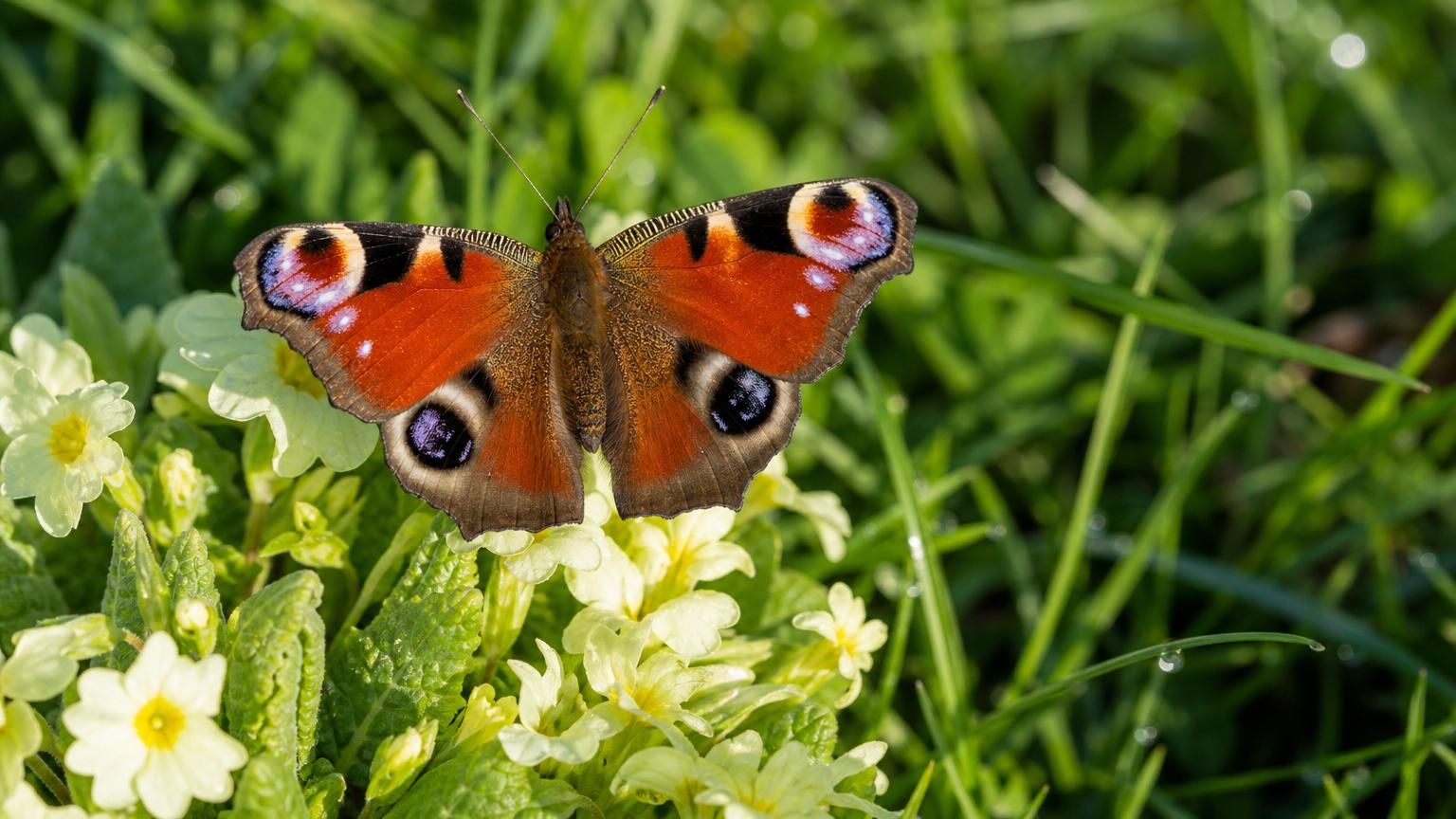
A little later the peacock (Aglais io) and the large tortoiseshell (Nymphalis polychloros) awaken. All four species are nymphalids that overwinter as adults.
First-generation spring species
Alongside the overwintering adults, the first generation of species that overwintered as pupae or eggs emerges. In April these begin to fly:
- Large white (Pieris brassicae) — a white butterfly with black tips to the forewings. The spring generation (form verna) is noticeably paler than the summer one: the pattern is reduced.
- Green-veined white (Pieris napi) — a small white with dark veins. One of the most common spring butterflies of woodland clearings.
- Pale clouded yellow (Colias hyale) — a pale yellow butterfly of clover fields.
- Black-veined white (Aporia crataegi) — a large white with translucent wings in black lattice work, typical of forest edges with hawthorn.
Spring behaviour: warming up and mating
After overwintering, butterflies need to warm up and replenish energy reserves. Overwintering adults feed actively on the nectar of early flowers: willow, coltsfoot, Gagea, crocuses. The dark coloration of nymphalid wings helps absorb solar heat rapidly — the dark-radiator principle.
Males of early species occupy "waiting posts" — warm stones, snowmelt patches, forest edges — and attack any moving object of appropriate size. Females after overwintering are already ready to mate. In the small tortoiseshell and peacock, mating occurs soon after waking, after which males die and females seek host plants for egg-laying.
Spring flight by region
In the temperate zone of Eurasia (central Russia, Central Europe) the first butterflies appear from late March to early April (in warm years — from late February). Peak diversity is in April. By May warm-loving species begin to fly: hairstreaks, some blues.
In the south of the temperate zone (southern Russia, Crimea, Mediterranean) overwintering adults emerge already in February. Here in March one can encounter swallowtails — the scarce swallowtail (Iphiclides podalirius) and even the first Old World swallowtail (Papilio machaon) on warm slopes.
In Siberia and the Urals spring arrives late: the first butterflies appear in April–May, and the short summer compresses spring and summer seasons into almost one.
Observer's guide for spring
Spring is the best time to study overwintering adults: faded tortoiseshells and brimstones are easy to distinguish from fresh summer individuals. Check sun-warmed house walls on sunny days from late February. Woodland clearings with flowering willows are the best spots to observe in March.
In April, head out to meadows with coltsfoot and dandelion — the first whites and yellows concentrate there. Species diversity increases by late April, when temperatures reliably exceed +15 °C.
Interesting facts
- The brimstone lives up to 12 months — a record among European species. The butterfly you see in spring may have emerged the previous summer.
- The small tortoiseshell can overwinter inside dwellings: it is often found in wardrobes and attics.
- In Great Britain the first spring flight of the small tortoiseshell has been recorded in citizen observations since 1736 — one of the oldest phenological data series for butterflies.
- Spring forms of some species differ so markedly from summer ones that they were historically described as separate species.