Butterflies in Autumn
In autumn butterflies prepare for winter or fly south. Which species fly in September–October, their behaviour before hibernation, and who migrates.
Autumn flight: the last warm days
From late August the composition of flying species changes. Fritillaries, most blues, and single-brood browns disappear. The stage is taken by long-lived nymphalids — overwintering adults who need to build fat reserves before retreating to a shelter. Autumn for them is not a fading but an active period of preparation.
Who flies in September and October
The small tortoiseshell (Aglais urticae) is active throughout September — visiting the last flowers of yarrow, buddleia, and thistle. By October it seeks winter shelters: bark crevices, attics, and sheds.
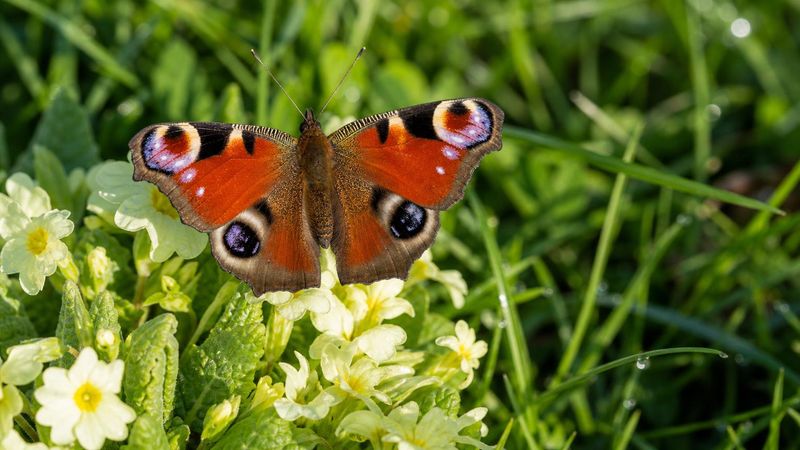
The peacock (Aglais io) behaves similarly. Notably, autumn individuals are much brighter than the spring overwintering adults — fresh coloration gradually fades over 6–8 months of storage.
The brimstone (Gonepteryx rhamni) is the last to fly. In October brimstones can be encountered on sunny days when other species have already gone to hibernate. It overwinters right in foliage of shrubs: the green underside of the wings makes it virtually invisible on ivy or evergreen bushes.
The large tortoiseshell (Nymphalis polychloros) is a rarer overwintering species; encountered until the end of September in the south of the range.
Autumn migrants
Some species do not overwinter in cold regions but fly south in autumn.
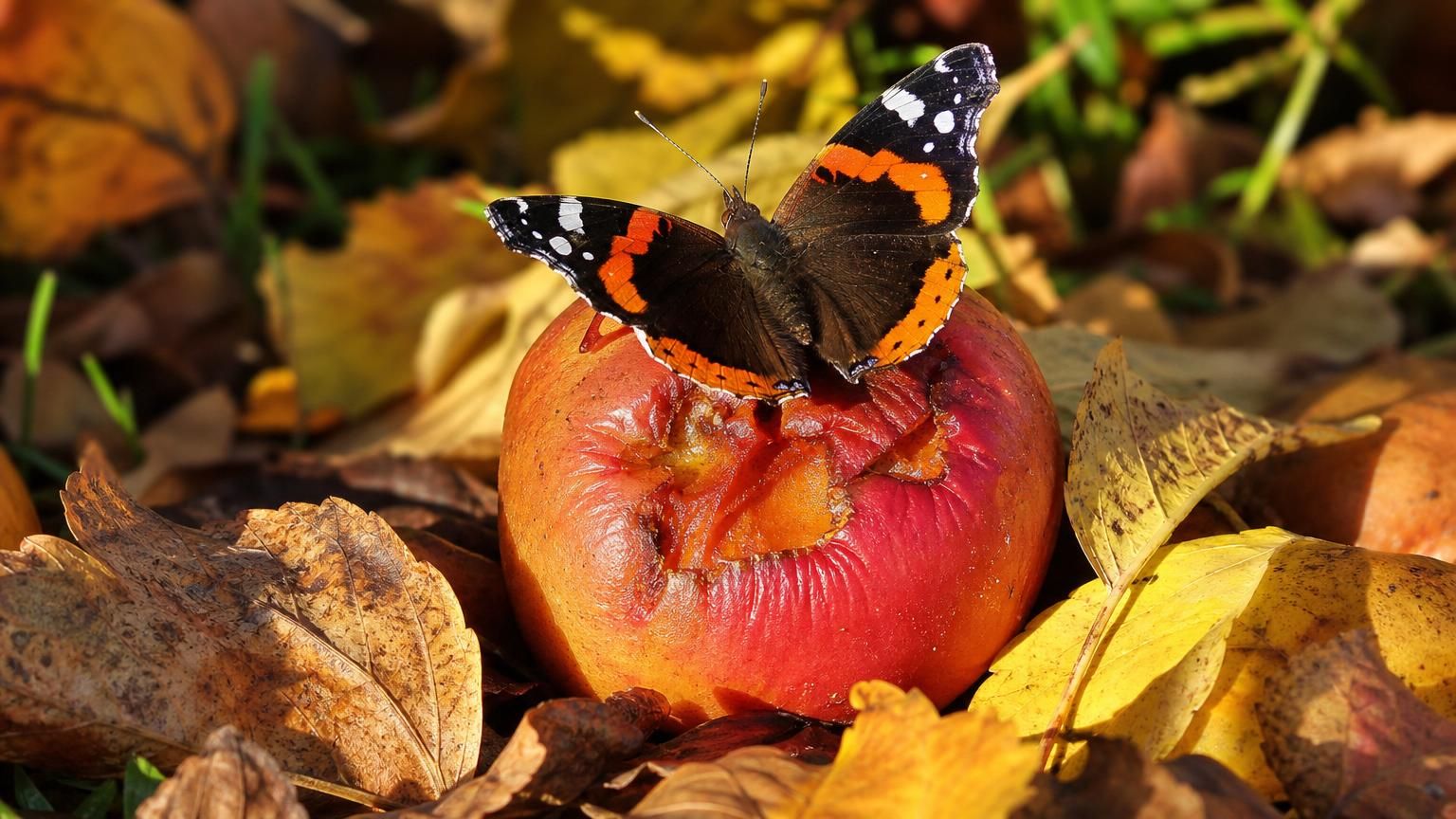
The red admiral (Vanessa atalanta) is a partial migrant. Most individuals from Central and Northern Europe move to Southern Europe and North Africa. In September red admirals can be observed at fallen apples and pears — the butterflies fuel up on sugar from fermented fruit. The return (spring) migration from Africa gives a new generation in Europe.
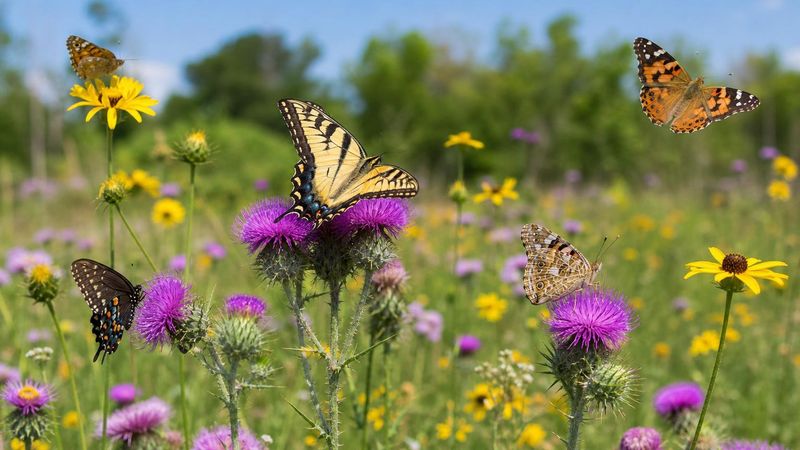
The painted lady (Vanessa cardui) is one of the long-distance migration record-holders. In autumn it flies from Europe across the Sahara to tropical Africa — a single route of up to 4,000 km. In spring the offspring return. Interestingly, one route spans several generations.
Preparing for hibernation
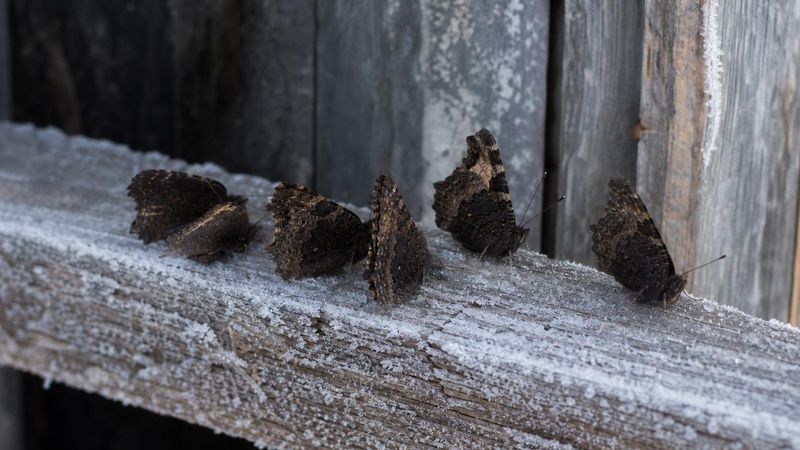
Overwintering nymphalids dramatically change behaviour in autumn: they stop mating, feed intensively, and seek shelters. Glycerol accumulates in the tissues — a cryoprotectant lowering the freezing temperature of cellular fluids and preventing frost damage.
Choice of shelter is critical. The small tortoiseshell readily climbs into attics, sheds, and hollow trunks. If the temperature rises in December or January the butterfly wakes and may fly out even in frost if the day is sunny — a mistake that costs it its life. A disturbed hibernating butterfly depletes its fat reserves and does not survive until spring.
Other overwintering stages
Species that do not overwinter as adults complete their cycle by autumn:
- Whites (large white, green-veined white, small white) overwinter as pupae in autumn. Pupae on twigs and stems tolerate frost well.
- Swallowtails — also as pupae. The Old World swallowtail chrysalis can overwinter for several years if spring remains cold.
- Black-veined white (Aporia crataegi) overwinters as a caterpillar: young caterpillars hide in a rolled hawthorn leaf bound with silk.
- Blues — in some species eggs overwinter, in others 1st–2nd instar caterpillars.
Autumn observation
Autumn provides a unique observation opportunity: in warm weather butterflies concentrate on late-flowering nectar-rich plants — buddleia, sedum, thistle, and mint. In cottage gardens in autumn one can often see several nymphalids on a single bush.
Fallen fruit in orchards attracts the red admiral, peacock, and small tortoiseshell from late August to September. Watching "drunk" butterflies on fermented pears is a classic autumn scene.
Interesting facts
- The brimstone withstands freezing to −20 °C through glycerol accumulation. This is one of the cold-hardiness records among temperate insects.
- The red admiral (Vanessa atalanta) is called "admiral" in English because of its characteristic red "ribbons" on the wings, resembling admiral's insignia.
- In Japan the painted lady (Vanessa cardui) makes transoceanic flights across the Pacific Ocean — a distance of more than 5,000 km without intermediate stops.
- Hibernating small tortoiseshells in dwellings often wake in February from the warmth of heating — it is recommended to carefully move them to a cool shed.