North America
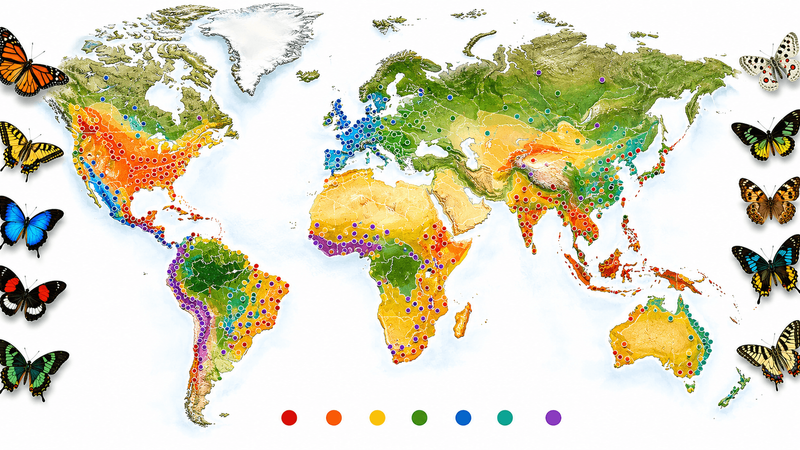
Butterflies of North America: about 800 day-flying species, monarch, swallowtails, blues. USA, Canada, Mexico — different climate zones with unique faunas.
North America: temperate and subtropical fauna
North America from Arctic Canada to tropical Mexico has about 800 species of day-flying butterflies. This is considerably fewer than in South America or Asia, but the fauna is diverse across climate zones: from Arctic satyrs of Alaska to tropical swallowtails of the Yucatán Peninsula.
North America is conventionally divided into three zones: Canada and northern USA (boreal zone), USA (temperate and subtropical), Mexico (transition to the Neotropics).
Regions and their fauna
Canada and Arctic Alaska
Cold climate shortens the season to 2–3 months. About 250 day-flying species occur in Canada. Characteristic species:
- Satyrs of the genus Oeneis — "Arctic satyrs"; fly on bare tundra slopes and rocks; some species have one generation every 2 years — they develop so slowly
- Sulphurs of the genus Colias — common in Arctic and subarctic zones; Colias hecla — Arctic sulphur, bright orange
- Apollos (Parnassius phoebus, P. clodius) — mountain species of the Rocky Mountains; closest relatives of European apollos
Eastern USA — Appalachians and Atlantic coast
Moderately continental climate with pronounced seasons. About 450–500 species for the eastern half of the country. Diverse meadows, oak forests, and wetlands create a mosaic of habitats.
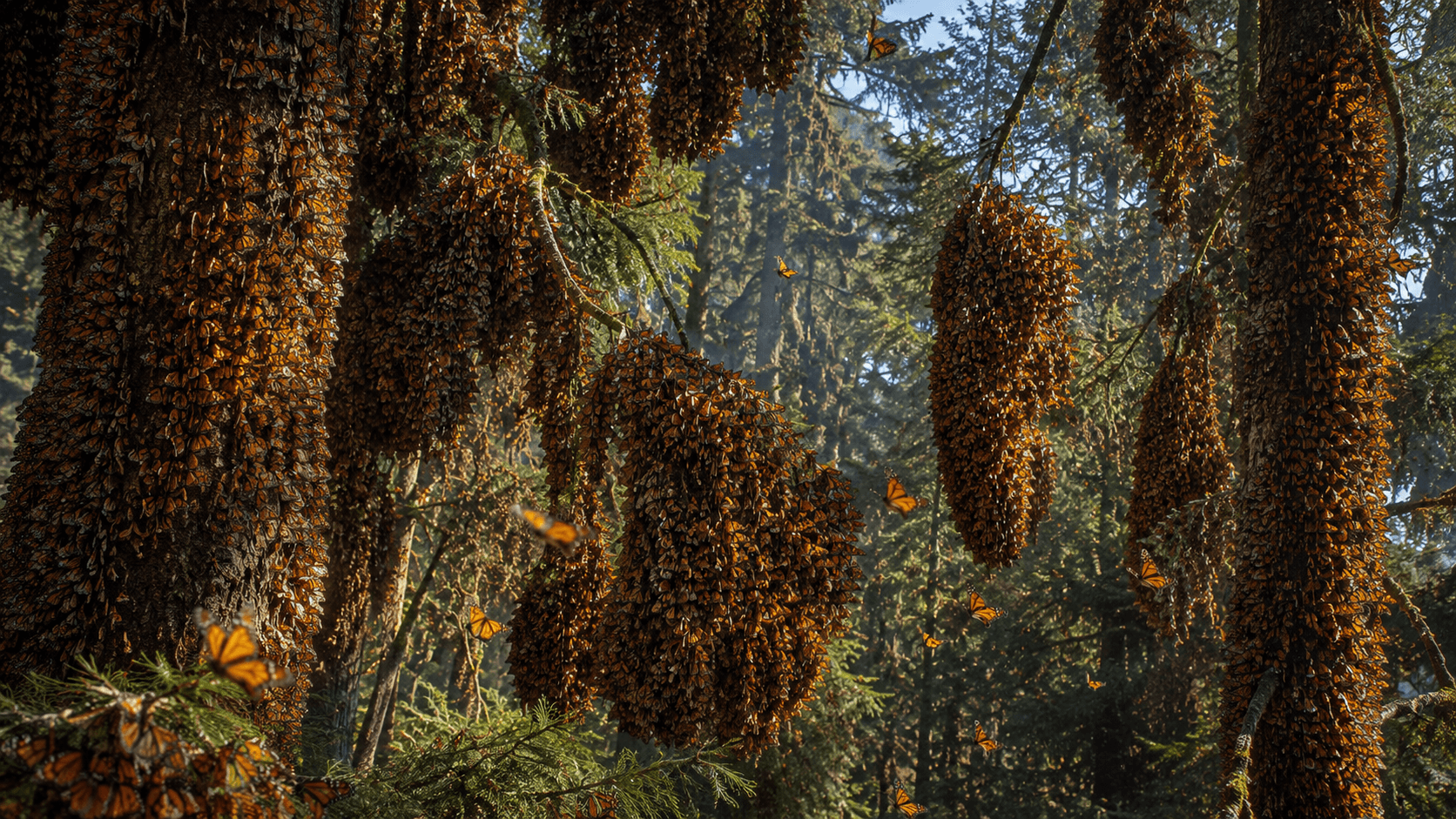
- Monarch (Danaus plexippus) — the main symbol of North America. Migrates in autumn from Canada and northern states to overwinter in the mountain forests of Michoacán (Mexico). Returns in spring — over several generations, each successive generation flying further north than the previous. Migration streams at Cape Hatteras and over New Jersey are one of the continent's natural spectacles
- Eastern Tiger Swallowtail (Papilio glaucus) — yellow-black, large; one of the most common day-flying swallowtails of the eastern USA; females polymorphic: dark form mimics poisonous Battus philenor
- Spicebush Swallowtail (Papilio troilus) — bluish-green with orange spots; in oak forests and along streams
- Giant Swallowtail (Papilio cresphontes) — largest swallowtail of the east; feeds on citrus
Florida and Gulf of Mexico
The Florida peninsula is subtropical with almost tropical fauna. About 160 species occur here, including tropical species penetrating from Cuba and the Caribbean.
- Palamedes Swallowtail (Papilio palamedes) — large brown-yellow; in swamp forests with magnolias
- Julia Heliconian (Dryas iulia) — bright orange nymphalid; permanent resident of southern Florida, vagrant in northern states
- Zebra Heliconian (Heliconius charithonia) — black with yellow stripes; official butterfly of the state of Florida
Texas — diversity hotspot
Texas is the richest US state for species: more than 450 day-flying species. Reason: the state spans several biomes — prairies, Davis and Guadalupe Mountains, subtropical Rio Grande valleys.
The Lower Rio Grande Valley is a special place: tropical Mexican species constantly penetrate across the border. Species typical of Mexico and Central America can be found here.
Western USA — Rocky Mountains and Pacific coast
The western half of the country with a drier climate. Mountain ecosystems of the Rocky Mountains and Sierra Nevada are refugia for specialised species.
- Western Tiger Swallowtail (Papilio rutulus) — western analogue of P. glaucus; in river valleys and gardens
- Anise Swallowtail (Papilio zelicaon) — west coast; similar to the European Swallowtail
- Blues of the genus Euphilotes — small blue species of Sierra Nevada highlands; many endemics of specific ranges
- Mennon Swallowtail — montane forest zones of the Rocky Mountains
Mexico
Mexico is a transition zone from the Nearctic to the Neotropics. About 2,000 day-flying species occur here — three times more than in the USA and Canada combined. Mountain areas of Oaxaca, Chiapas, and Guerrero are among the richest in North America.
- Forests of Michoacán state — monarch overwintering forests: millions of butterflies cover trees like living garlands
- Birdwings and several tropical swallowtails near the Guatemala border
- Yucatán Peninsula — tropical fauna with Caribbean influence
Monarch migration: mechanism and threats
The monarch is the only butterfly in the world that annually undertakes directed migration up to 4,500 km in one direction. The overwintering population of the eastern monarch is concentrated in 10–12 forest sites in Michoacán on an area of only 4–5 ha. The western population overwinters along the California coast.
Migrating numbers have fallen from 1 billion individuals in the 1990s to 50–100 million in recent years. Causes: destruction of milkweed (the sole larval food plant) on US farmland, logging of overwintering forests in Mexico, climate change.
Characteristic families
North America is rich in blues (Lycaenidae) — more than 150 species, many with narrow ranges. Hairstreaks (Callophrys) — small green species of early spring. Hairstreaks — several species with thin "tails" on the hindwings resembling antennae.
Checkerspots (Euphydryas, Chlosyne) — characteristic nymphalids of meadows and clearings; many are threatened due to habitat loss.
Best time and places for observations
- May–June — peak diversity in central states and Appalachians
- Late September–October — monarch migration; best sites — Cape Hatteras (North Carolina), Pismo Beach (California), Point Pelee (Ontario)
- November–February — monarch overwintering forests in Michoacán
- Texas (April) — greatest spring diversity; Santa Ana National Wildlife Refuge in the Rio Grande Valley
For adjacent fauna — see South America. General information on migrant butterflies — in the article role of butterflies in nature.
See also